


Healthy lifestyle
A healthy lifestyle is one which helps to keep and improve people's health and well-being.Many governments and non-governmental organizations have made big efforts in healthy lifestyle and health promotion.

Mental Health
Mental health can be considered a very important factor of physical health for the effects it produces on bodily functions. This type of health concerns emotional and cognitive well-being or an absence of mental disorder.

Public health
Public health can be defined in a variety of ways. It can be presented as "the study of the physical, psychosocial and socio-cultural determinants of population health and actions to improve the health of the population.

Reproductive Health
For the UN, reproductive health is a right, like other human rights. This recent concept evokes the good transmission of the genetic heritage from one generation to the next.

Health
Health is a state of complete physical, mental and social well-being, and not merely the absence of disease or infirmity.
vendredi 19 janvier 2018
All the Money in the World: The Intense True Story of the Getty Kidnapping

Image Source: Everett Collection
All the Money in the World hit theaters last month and was nominated for three Golden Globe Awards, and yet, many people still don't know the true story behind the film.
Michelle Williams (as Gail Harris), Christopher Plummer (as J.Paul Getty), Mark Wahlberg (as Fletcher Chase), and Charlie Plummer (as John Paul Getty III) brought to life the tale of John Paul Getty III's kidnapping and his mother's attempt to get his billionaire grandfather to pay the ransom. While the movie is great, the true story is equally as fascinating. So here's how it all went down:
The Family
When John Paul Getty III (who went by Paul) was kidnapped, his grandfather was the wealthiest man in the history of the world. According to People, Jean Paul Getty (who went by J.Paul Getty) was a millionaire by the young age of 25, which he originally earned from oil. The Getty family began in oil, and when Jean took over the business, he acquired a lot of American oil companies, which began his initial rise to fortune.
Image Source: Getty / Bettman
The bulk of his fortune was made when J.Paul (pictured above) made a deal with the Saudis to purchase land near the Kuwait border, which eventually led to the discovery of one of the largest oil reserves in the world. This discovery and the oil production that followed made Jean into the world's first billionaire.
J.Paul was married five times and had five sons and 14 grandchildren. Despite his massive fortune, he rarely gave any of his money to anyone, including charities and his children. The mogul did eventually bring his son John Paul Getty Jr. in on the oil business and moved him and his family to Rome to head up Getty Oil Italiana. Sadly, John Paul Jr. got into drugs in Morrocco, which led to his wife, Gail Harris, divorcing him and raising their son, Paul, in Rome on her own.
The Kidnapping
In 1973, when Gail and Paul were living in Rome, Paul (pictured below) was kidnapped by Italian gangsters who knew his name and wanted a massive payout. While the details around how he was kidnapped are a little sparse, we know that he was taken in the summer of 1973 in a van and that there was a ransom note.
Image Source: Getty / Bettman
"Dear Mother: I have fallen into the hands of kidnappers. Don't let me be killed! Make sure that the police do not interfere. You must absolutely not take this as a joke . . . Don't give publicity to my kidnapping," read the letter, which was originally published in Time's July 30, 1973, issue.
He was reportedly held in different hideaways, including a cave, over the next couple of months. He never actually saw the kidnappers, who wore masks, and wasn't able to identify the men when he later attended the trial. Ten days after the kidnappers first alerted Gail that they had taken her son, they made their demands for approximately $17 million.
What the kidnappers didn't know is that Gail and Paul didn't have access to the Getty fortune and that Paul's grandfather wasn't one to give away money, even to save his grandson's life.
The Waiting Game
When Paul was first kidnapped, his grandfather didn't believe it. He reportedly thought that Paul was staging the whole thing in order to extort money from him and he wouldn't help his son and daughter-in-law get their son back. Gail never gave up, but tried - and eventually succeeded - to get the kidnappers' ransom number down from its original price.
At the time, J.Paul said during a press conference that, "If I pay one penny ransom, I'll have 14 kidnapped grandchildren." He wasn't prepared to give a penny to save his grandson, and after four months of being held captive, the kidnappers took it a step further. They sent his severed ear to an Italian newspaper with a new note.
"This is Paul's ear. If we don't get some money within 10 days, then the other ear will arrive. In other words, he will arrive in little bits," the letter said along with the new asking price of $3.2 million.
It took a while, but eventually the head of the family did step in and negotiate with the kidnappers to bring the ransom down. He agreed to pay $2.9 million toward saving his grandson, with $2.2 million coming without strings attached, and then gave the rest to his son as a loan, which he had to pay interest on (four percent). Clearly, the billionaire wasn't prepared to lose a giant sum of money - even in the name of family.
The Aftermath
After the money was sent to the kidnappers, Paul was taken to a gas station and recovered on Dec. 15, 1973. According to The New York Times, Paul called to thank his grandfather for eventually paying for his release, but he refused to come to the phone.
As for the kidnappers, nine were arrested, but most were released because of the lack of evidence. Two of them were, however, convicted and imprisoned, although most of the money was never retrieved.
Paul got married young (to Gisela Martine Zacher, pictured below) and had his one and only child at the age of 18. He did become an actor, which was one of his dreams, but in 1981, he suffered a stroke after a drug overdose, which left him quadriplegic and partially blind. He divorced in 1993 and died in 2011 after years of illness. He was only 54 years old. (His son, Balthazar Getty, also became an actor.)
Image Source: Getty / Bettmann
J.Paul Getty died in 1976 in England and is buried at the Getty Villa in Los Angeles. Despite having his son and grandson go through so much trauma, when J.Paul died, he only left John Paul Jr. $500 and left Paul nothing - he was disqualified from having a stake in his grandfather's trust once he wed at 18 years old.
The Getty family was greatly affected by this kidnapping, and the only good thing to come from it was that Paul and his mother Gail's relationship grew stronger, and she watched out for him and took care of him until his death.

12 Photos of the Solar Eclipse That Will Make Your Heart Swell

For just a few minutes, all across the country, people stopped, looked up to sky, and witnessed the first solar eclipse to cross North America, coast to coast, since 1918. The event made people leave their phones, come together, and appreciate a moment of beauty that won't be seen again until April 8, 2024. Whether you missed catching a glimpse or just want to relive the event, ahead are some of the most incredible shots of the once-in-a-lifetime event - all of which will leave you counting down the days until 2024.
Lego Relased a Women of NASA Set, Since "Ladies Rock Outer Space"

Four of the most accomplished women in STEM are about to be celebrated with the highest pop culture accolade in America: a Lego set in their honor.
Nancy Grace Roman, Margaret Hamilton, Sally Ride, and Mae Jemison are the four NASA veterans featured in the special "Women of NASA" set, which will hit stores on Nov. 1. Included in the package are a Hubble Space Telescope, an Apollo Guidance Computer, and the Space Shuttle Challenger - all iconic images of the glory days of the historic NASA program. It's no surprise, then, that the set was the brainchild of the brilliant Maia Weinstock, deputy editor of MIT News, or that Lego hopes the set will not only serve as a way to laud the many, many accomplishments of women in the science and engineering fields but also encourage young women to consider careers in STEM in general. Weinstock originally submitted the concept to Lego's Ideas crowdsourcing platform, where the pitch quickly garnered widespread support among Lego's most diehard fans - and now, what was once a remarkably good idea is about to become reality.
"In all realms of science, engineering, and technology, pioneering women have historically been underappreciated for their often groundbreaking work. We have also seen that when girls and women are given more encouragement in the STEM fields, they become more likely to pursue careers in these areas," Weinstock said in a statement, adding, "With this project, I wanted to spotlight a fantastic group of women who have made seminal contributions to NASA history. My dream would be to know that the first human on Mars - or an engineer or computer scientist who helped her get there - played with the LEGO Women of NASA as a child and was inspired to pursue a STEM career as a result."
A few more images of the set are below, and be sure to pick one up for yourself in November - there's truly no better way to unwind than with the combination of female empowerment and a good ol' Lego set.
Nancy Grace Roman, one of the first female executives at NASA:
Margaret Hamilton, creator of some of the most vital software in the computer science field:
Mae Jemison and Sally Ride, legendary astronauts:
The Harry Potter: Hogwarts Mystery Trailer Just Dropped, and We Are Officially Obsessed
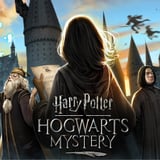
It's been a little over a month since we first got word that a new Harry Potter game was in the works (and that it would be all about letting you experience Hogwarts for yourself!), but on Jan. 18 we finally got additional details and a trailer for Harry Potter: Hogwarts Mystery, and we're calling it now: it looks freakin' awesome.
"Players will create a personalized student avatar, attend classes, learn magical skills, form friendships or rivalries with other students, and make pivotal decisions that will influence their character's story arc as they traverse their years at Hogwarts and grow as a witch or wizard," the press release issued by Jam City reads. But that's not all - we've also got a lot more info on what it is, exactly, that we can expect.
The game is set in the time between Harry Potter's birth and his enrollment at Hogwarts, when Nymphadora Tonks and Bill Weasley were students. The avatar customization system allows you to continually upgrade your avatar as you gain new expertise and magical skills - you can even choose your own pet. You will join one of the four Houses before progressing through your years at Hogwarts, participating in magical classes and activities such as Potions and Transfiguration. Building your skills will come in handy as you solve mysteries and go on adventures. As players improve their skills, they will unlock new locations, spells and other magical abilities.
Harry Potter: Hogwarts Mystery features both large plot arcs and smaller stories such as relationship quests. The game features a new encounter system in which players' decisions in both actions and narrative impact their quests, and how other characters regard and interact with them. These choices will allow Harry Potter fans to create the legacy of the witch or wizard they want to become.
And if that wasn't enough, here's the trailer in all its glory (and, yes, you might want to have your sound on for this):
For the superfans among us, there's an important thing to note: before the game officially launches on mobile phones everywhere, it'll be featured at the A Celebration of Harry Potter event at Universal Studios in Orlando, FL, on Jan. 26 through Jan. 28. There will be panels, swag, and even a chance to play the game itself at the Jam City booth - well before anyone else you know gets to lay eyes on it.
Suffice it to say, we can't wait for the game to be unleashed upon the world this Spring.
Sorry, Donald Trump: The Border Wall Won't Protect You From a Government Shutdown

We're only 18 days into 2018, but it already feels like business as usual in Donald Trump's America. We've been treated to the now-normal thrills and chills of his oversight - from casual warmongering to free press blasting - and have returned to one of his personal presidential touchstones: the hypothetical anti-immigration wall he wants built between the United States and Mexico. But what sets this new wall talk apart from all previous threatening and promising is that it might ultimately prevent our government from getting crucial work done. The anti-immigration barrier has become the president's sole shoddy bargaining chip as he attempts to come to an agreement with the Democrats regarding the Deferred Action for Childhood Arrivals program (DACA), but for whatever reason, in his mind, if DACA is to stay, so must the border wall - and there is no compromise.
But this debate, however stalemated it may be, does actually have the potential to be the straw that brings the hay house of Trump's government down. An agreement on the subject must be reached by end of day Jan. 19 - or there will be a government shutdown. To massage the issue, Trump's Chief of Staff John Kelly assured Democrats and members of the Hispanic Caucus on Jan. 17 that the president's view of the wall has evolved, that Trump's view was not to be taken literally. In typical early morning rebuff fashion, Trump took to Twitter to let his terrible truth be known, noting that "the wall is the wall" and that he has "never changed or evolved." In other words, you may think the the wall is figurative but, to Trump, it is very real.
The Wall is the Wall, it has never changed or evolved from the first day I conceived of it. Parts will be, of necessity, see through and it was never intended to be built in areas where there is natural protection such as mountains, wastelands or tough rivers or water.....
- Donald J. Trump (@realDonaldTrump) January 18, 2018
To boot, Trump barely expounded upon but duly reiterated his campaign promise that the Mexican government would pay for the structure. Perhaps this move was an attempt to appeal to his base, but sadly, this seems like a lose-lose situation given a recent CBS News poll which found that the majority of Americans support DACA and oppose the border wall. Granted, the poll did find that seven out of 10 Republicans support the wall - but let's look at the larger picture here.
The reality of this ongoing back-and-forth, he-said-she-said drama is that there are no clear winners here, at all. Trump's wall tweets have placed a wedge between a unified Republican message, despite Mitch McConnell having a clearer answer of what Trump actually supports. Trump's tweets weren't lone incendiary statements; instead, they came with another shutdown barrier: one regarding health care, as he also tweeted about removing the Children's Health Insurance Program (CHIP) from the stopgap bill, a move that goes against the Republican plan to court Democrat votes.
A government shutdown will be devastating to our military...something the Dems care very little about!
- Donald J. Trump (@realDonaldTrump) January 18, 2018
If we've learned anything from governance under Trump, it's that there is no concern for deadlines or care for handling finances, a view best exemplified by a shutdown solution that has continued to be pushed and pushed and pushed since September 2017. This new attempt to make headway will be a make-or-break day for both Trump's wall as well as his ability to oversee - and continue - keeping our bureaucracy moving. Given his mixed signals (and his party's love of talking from both sides of the mouth), from where we stand right now, the outcome isn't looking good.
The Unbelievably Sad Reason You Can't Pet These Puppies in Chernobyl

After the Chernobyl nuclear plant disaster in 1986, the area was deemed uninhabitable - for humans, at least. Wild animals have since prospered in the area, including man's best friend: dogs. When residents of Pripyat and Chernobyl evacuated, many people had to leave behind their dogs. Thirty-one years later, puppies now walk around the Chernobyl Exclusion Zone (CEZ), waiting for a pat on the head that will never come.
As the documentary Puppies of Chernobyl explains, the animals should be avoided at all costs, since they could carry radioactive particles in their fur. It's estimated that about 900 stray dogs exist around the area and it's unknown just how much (or little) radiation is affecting them. The dogs are receiving some care, however; organizations Four Paws and Clean Futures Fund (CFF) teamed up to spay, neuter, and vaccinate the dogs to protect power plant workers. "By neutering the strays, we will also achieve a long-term reduction in their population, improving the welfare of the dogs," Julie Sander of Four Paws said to the Vet Times. "This is important because their chances of survival are greatly reduced if their numbers increase, due to lack of food and shelter in the extremely cold Winters."
It is undeniably sad to watch the puppies frolic around Chernobyl in the documentary, but give it a watch anyways. You might feel sad enough to help them out.
What It's Like Being Asian-American and Feeling Left Out of the Race Conversation

During my junior year of high school, my friend Anna invited me on a student trip to New York City. The trip would be focused on a United Nations summit on globalization and peace, organized through a nonprofit foundation called Eracism. "What a clever name," I thought, before agreeing to go. However, what transpired on the trip did not erase racism; instead, it managed to erase any remaining shred of confidence I had in my own racial identity.
Revelers celebrate the start of the Chinese New Year on February 19, 2015, in New York City.
A few days into the trip - during which we visited the tenements of New York City's Lower East Side and met with various religious groups - our group found itself in Chinatown, on the famous Canal Street. While we were waiting to go to our destination, I heard one member of the Eracism group say to another, not in a hushed voice, "Don't tell anyone this, but I don't like Chinese people." The recipient of this indisputably racist statement was an Indian kid, who responded with, "But you like Indian people, right?" "Yeah, I don't mind Indian people." "OK, cool."
This was quite literally the most ironic statement anyone could ever utter on a trip for Eracism, whose very mission was to raise awareness about prejudiced attitudes like this.
To say I was sent reeling into an out-of-body experience is an understatement. After years of enduring countless instances of racism, including physical assault, this exchange on the Eracism trip was the final blow to my self-confidence and self-identity, and it would take years for me to recover. To this day, my chest still feels heavy when I think of that instance.
The Invisible Race
Given the egregious lack of awareness of being racist against Asians on a trip aimed at fighting racism, it's no wonder that many scholars and Asian-American identity experts have referred to Asian-Americans as "the invisible race." David Haekwon Kim, associate professor of philosophy and the director of the Global Humanities initiative at the University of San Francisco, told The New York Times: "I believe the invisibility of Asian-Americans in our culture has been so deep and enduring that Asian-Americans themselves are often ambivalent about how they would like to see themselves portrayed and perhaps even uncomfortable about being portrayed at all."
It seems Asian-Americans just want to stay above the fray. Being a minority already poses its challenges, but what's particularly disheartening is that oftentimes, Asian-Americans are made to feel like an other among the other, and sometimes among ourselves. I first realized this on that unforgettable trip to New York.
I was born in Wuhan, China, and moved to the US when I was 5. At that age, I had barely formed any sense of my own personality, let alone my racial identity in the context of an increasingly globalized world. My entire existence revolved around my favorite time of day, when Journey to the West came on TV after dinner, and my most loathed activity, nap time. I was never old enough to become cognizant of the privilege of belonging to the majority race. For my entire life, I have only been aware of being other.
"They're fine. They're doctors and engineers. What do they have to worry about?" That would be a gross reduction of the Asian-American experience.
Before we go any further, let's examine our country's current social climate around race issues. A tall order, I know, but an increasingly urgent one, as the 2016 election cycle hurtles potentially toward a new chapter of unprecedented bigotry, and as one particular racial group remains palpably absent from the conversation.
As both history and current events illustrate, the black community continues to face widespread racism in the US. Whether it's the shootings by law enforcement, examples of which are both steady and steadily disturbing, or institutional discrimination in jobs as varied as fast-food worker and airline pilot, these incidents reflect a deep-seated prejudice that continues to tarnish this country's integrity.
However, something positive has risen out of this relentless demoralization and plundering of the human spirit. The Black Lives Matter movement has reinvigorated a campaign for change that had quieted in preceding decades but never waned. Now Black Lives Matter is starting to gel into more than just a hashtag-backed movement; it's evolving into a political platform aiming to enact change through lobbying Congress.
At the same time, Muslim-Americans face increasing discrimination driven by Islamophobia, which stems from fear of the Islamic religion but which many scholars consider to be a form of racism. It's a hateful sentiment that flares up each time divisive figures like Donald Trump react to tragic acts of terrorism with incendiary rhetoric. Most notably, Trump has proposed a temporary ban on all Muslims entering the US, which a poll from March found that 50 percent of Americans supported.
Muslim-Americans aren't the only group in Trump's crosshairs. The very utterance of Trump's name conjures an expansive, hulking wall across the country's southern border. Astoundingly, when the Republican nominee reduced all Mexicans - and later, all Latinos and Middle Easterners - to criminals and "rapists" during his candidacy announcement last June, the crowd did not boo him off stage, nor did the country react by squashing any real chance of a campaign. Instead, much of America cheered his blatant bigotry, allowing Trump's remarks to set the tone for what has become a campaign fueled by hate and divisiveness.
The society we live in today is largely defined by its racial progress. While it's alarming to see the effects of systemic racism in certain communities and Trump's new brand of accepted bigotry take shape, it's also heartening to see Americans fighting with unprecedented rigor to stand with the black community, to stand with Muslim-Americans, to stand with the Latino population . . .
But wait a minute: what about Asian-Americans?
According to the United States Census Bureau, there were just under 21 million Asian-Americans in the US as of July 2015. That's roughly 6.5 percent of the US population, making us the country's third-largest minority group behind Hispanic Americans (17.6 percent) and black Americans (13.3 percent). In fact, Asian-Americans have been the fastest-growing minority group in the US for more than a decade, increasing in population size by 56 percent between 2000 and 2013.
But where are the movements advocating for Asian-American rights? Is it because Asian-Americans don't face discrimination, individually or systemically? Similar to the way that prejudice against black citizens has ties to our country's history of slavery and segregation, racism against Asian-Americans also has a long history in the US, including the Chinese Exclusion Act of 1882 (which restricted immigration) and the internment of Japanese-Americans during World War 2. But judging by our socioeconomic standing as a whole, which has led to Asian-Americans being dubbed the "model minority," one would be inclined to shrug and say, "They're fine. They're doctors and engineers. What do they have to worry about?" That would be a gross reduction of the Asian-American experience.
The Inherent Prejudice Against Asian-Americans
Like many teens, regardless of race, my high school years were challenging at times. Bullies have many reasons and motivations for tormenting others. One widely recognized psychological explanation is that they're insecure themselves and therefore they lash out at others to compensate for inner demons. But not all of my bullies fit into this neat explanation. Many of them were average kids - well-rounded, popular, even. These were the types of kids who would volunteer for Habitat For Humanity and help an old lady across the street. Aside from their encounters with me, many of these kids weren't bullies at all; they tormented me because of an inherent prejudice they thought was normal.
The author as a child, with her mom.
"I don't want my kids to look Chinese!" A boy yelled loudly in biology lab when we were conducting an experiment on genes and traits. His lab partner giggled. They knew I could hear them. I was working in the row in front of them.
"Chinese people can't cry; their eyes aren't big enough," another boy stated matter-of-factly in social studies class while we were watching a film on Chinese culture. I don't remember why the people on screen were crying, but knowing those educational films, it was probably a segment on something harrowing, something that would normally evoke sympathy.
Sometimes the prejudice became physical. I was sitting in the auditorium of our high school theater during rehearsal for My Fair Lady when I heard a voice in the row behind me whisper, "Not only does she have white hair, but she's also Chinese." Another voice giggled. Then, in an act that left me in pure disbelief, one of them tugged and pulled out one of my white hairs. (I've had white hairs since I was 14, which is not abnormal for Asians.) They laughed. I sat there, trying to pretend like what was happening was not happening. Then, they did it again. This time, I turned around and asked, "Did you just pull my hair out?" They just laughed. My friend, who had been sitting next to me the whole time, said and did nothing.
That wasn't the worst physical encounter. Pulling someone's hair out, one strand at a time, is upsetting, sure, but does it constitute assault? Maybe not. But what happened in the lunchroom definitely does.
I was sitting with friends, eating my sandwich and minding my own business, when one boy who particularly liked to pick on me started his usual routine of making noises that sounded like mock Chinese within earshot. Then, out of nowhere, he threw an aluminum lid at my head - or tried to. It whizzed past me and hit the floor, but had it struck me, I would have probably sustained a gash. What did I do? Nothing. I was terrified. My friends called him an assh*le but didn't dare face him either - how could you blame them? I didn't realize at the time, but our collective inaction, mine especially, was a microcosm of the imbalance in society's fight against racism.
I remember feeling hopeful when witnessing my fellow classmates react with outrage at the horrors of American slavery, Jim Crow laws, and the violence that they bred. Surely, these same kids would stand up against someone hurling a racial slur at me from across the room, right? Nope.
It was this same wishful thinking that I carried with me on the Eracism trip. This was a trip specifically aimed at raising awareness of racism. It should have, by all means, opened my eyes to the strength of unity among young people. It should have inspired me, instilled new hope in me that for every racist kid, there were dozens more who wanted to put that kid in his place. I couldn't have been more wrong.
As shockingly appalling as my experience on the Eracism trip was, my Indian peer's complacency and desire to stay out of the conflict was the most alarming part. Years later, I realize that this complacency is what keeps the Asian-American struggle out of the public discourse, that perpetuates the harmful "model minority" stereotype, which has been used by white Americans to pit one minority group against another. The mentality essentially boils down to this: "If Asians can succeed in America without causing trouble, why can't you?" But exhibiting outward complacency does not necessarily equate inner peace. Even if one does not react to prejudice, simply enduring it can cause acute psychological effects.
Hair pulling and lid throwing aside, there were countless instances in between, which were perhaps imperceptible to anyone who was not Asian. For example, a boy nonchalantly saying, "This old chink lady . . ." while walking right behind me down the hall or the persistent chorus of mock Chinese that followed me from classroom to classroom, to the mall and grocery store, and even on sidewalks. I was constantly anxious that someone near me was going to make fun of me and my race. As a result, I've developed a superpower: my ears can pick out the words "Chinese" in even the densest crowds.
Besides being a human sensor for nearby prejudice, experiencing racism on a regular basis during my formative years manifested in another way. I had never recognized this condition before my friend, who is half Korean, half Caucasian, put it into very simple and straightforward terms: "Every single person I meet, I have to wonder beforehand, 'But what if they're racist?'" Huh. Yeah. I guess that's a thing I do too, I thought. At least that was the case all through college, before I moved to New York City and its diverse population slowly dismantled the suspicious scope through which I met every single human. I had yet to even hear the term "white privilege" at the time, but I already fully understood what it meant.
Clint Smith writes about this subconscious - or sometimes conscious - anxiety in the black community in his piece "Racism, Stress, and Black Death" for The New Yorker. Of course, the context he describes is far more grave than my adolescence. As a result of this country's long history of racial profiling, which has led to dozens upon dozens of fatal police shootings, black men and women have developed "profound psychological implications" that endure and linger after an incident of profiling is over, Smith writes: "Simply perceiving or anticipating discrimination contributes to chronic stress that can cause an increase in blood-pressure problems, coronary-artery disease, cognitive impairment, and infant mortality."
Although I have experienced the same anticipation of discrimination, my anxiety pales in comparison to the perpetual fear that one's life may be in jeopardy that the black community feels all too often. The psychological ramifications I was left with were far less harmful, ranging from a blanket distrust when meeting new people to a naive acceptance of Asian fetishism, because compared to the anti-Asian sentiment I had experienced, any kind of appreciation was a welcome change.
The Start of a Movement
Make no mistake: I have been fortunate in my encounters with racism. I have yet to experience real violence or institutional discrimination, but that does not mean that either does not exist. While there may be far fewer hashtags advocating for Asian-American rights, there is indeed a cause for them.
On Oct. 9, New York Times editor Michael Luo published an open letter to an anonymous woman who had yelled at him to "Go back to China!" In recounting his personal story, he opened up a dialogue with a national audience, and soon his story started trending. In the days that followed, the Times published several follow-up pieces, including a video of Asian-Americans recounting their own instances with racism using the hashtag #thisis2016. This is exactly the kind of dialogue that needs to be started in order for Asian-Americans to join the overall conversation on race.
In June of this year, 17-year-old Michael Tarui launched a hashtag, #BeingAsian, that has been used hundreds of times to describe what it's like, well, being Asian, whether that's being met by strangers with "ni hao" because they automatically assume you're Chinese or being perceived as "not Asian" enough if you're multiracial.
In May, a group of Asian-American cultural leaders, including comedian Margaret Cho, YA author Ellen Oh, and The Nerds of Color founder Keith Chow, launched the hashtag #whitewashedOUT to raise awareness of Hollywood's tendency to whitewash Asian characters. One tweet in particular, posted by comedian Hari Kondabolu, cited financial motivation as a major factor: "Capitalism fuels Racism. Whites are cast over Minorities, not out of hatred, but because of the assumption of higher profit.#whitewashedOUT."
This assessment extends beyond Hollywood. A former colleague of mine experienced this profit-driven discrimination at a media company. The site's "Identity" category on the homepage listed black, Hispanic, and even "white privilege" as topics. But according to her, when she asked her manager why there was no Asian or Asian-American subcategory, he responded, "Asian doesn't sell."
This is mild on the spectrum of anti-Asian discrimination. While the vast majority of hate crimes are directed against African-Americans, Asian-Americans are far from exempt. According to an NBC News report from February, members of New York's congressional delegation urged the NYPD to investigate a recent spike in crimes against Asian-Americans in the city. In a letter, they pointed out that between 2008 and 2014, "Asian/Pacific Islander" was the only group for which the percentage of victims rose for every type of crime. One month later, leaders in NYC's Asian-American community met with police officials to address their concerns that these crimes were not being labeled hate crimes, even though they believed the victims were targeted because of their ethnicity.
As heinous as these crimes are, they don't fit neatly into the law enforcement and frayed community narrative and therefore struggle to fit into the collective conversation on race. However, as this 2014 Time piece points out, there have been plenty of cases of police violence against Asian-Americans in recent history. Perhaps the fact these incidents make up a small fraction of police brutality cases overall explains why no movement to advocate for Asian-American rights has ever solidified to gain national attention.
So where does that leave Asian-Americans in the fight for racial justice and equality? I don't pretend to have the answers, but if my experience is any indication, then I think it all comes down to not staying silent. We must join the conversation, like Luo did.
Asian-Americans must remember that, despite the different circumstances, they need to stand united with other minority movements like Black Lives Matter, because justice for one group is a precedent for justice for all. And those who would unabashedly support Black Lives Matter should not hesitate to stand up to discrimination against their Asian-American peers - this is something I hopelessly wished for in high school. Take inspiration from the many Asian-Americans who actively support the Black Lives Matter movement and use your voice; use your vote. For other minority groups and for your own. This is precisely the type of social awareness that needs to be created and championed in order to give Asian-Americans a seat at the racial justice table. It starts with us, because we owe it to ourselves to enact change.
If I've learned anything at all from 28 years of living as a minority in America, it's that the ongoing fight to end racism should not be a segregated effort. Though there are different nuances that plague the Muslim community vs. the black community and there are prejudices in the Latino community that Asian-Americans will never understand, we all have one common thing uniting us: we all want to be treated equally. And, at the very least, that includes not being discriminated against on student field trips to end discrimination.
Editor's Note: An earlier version of this story contained a lead photo featuring actress Constance Wu, which mistakenly implied that she participated in the story. Wu was not involved in the writing of this story, nor was she a source. POPSUGAR apologizes for the error.
I Won a Fake News Award From President Trump, and I'm Scared For Our Country

I can definitively report that I was not expecting to receive a personal notification from Donald Trump on Wednesday night.
In fact, I had just muted @realDonaldTrump a few days prior. I used to receive push alerts on my phone every time the president fired off another angry rant to his millions of real followers (and nearly the equivalent number of bots and fake accounts). A short vacation from the madness was well overdue, and I figured that, just like everyone else, somehow, some way I would manage to remain aware of Trump's latest tweets every day of my life - since, after all, this is our society's collective new reality.
Turns out, I was right. But on this Wednesday - Jan. 17, to be specific - my phone was on fire by about 10 p.m., the approximate moment when the Republican Party's website stopped crashing long enough to actually debut the president's long-awaited "Fake News Awards." Let's be honest, when your phone is buzzing relentlessly late on a weeknight, it's generally a good indicator that proverbial sh*t is hitting the fan. But when you're a journalist, it's 2018, and those notifications are arriving predominantly from Twitter - well, there's always the minuscule chance you were just attacked by the President of the United States.
"What did you do?" A concerned relative wrote. "You won!" a former editor tweeted. Messages of support were scattered throughout my inbox. My heart nearly skipped a beat. "Holy sh*t," I thought. "Did I just win the president's fake news awards?"
And the FAKE NEWS winners are...https://t.co/59G6x2f7fD
- Donald J. Trump (@realDonaldTrump) January 18, 2018
I hate to admit this, but like many others in my industry, there was a sick part of me that had been looking forward to Trump's Fake News Awards ever since he announced his social media brainchild in early January. The president was planning an old-fashioned, WWE-style smackdown of his least favorite media outlets and, if I was lucky enough, I might just be one of those reporters included in the phenomenon. Surely, the president would create an awards program centered around his favorite term that was so outlandish and extravagant, it would be an unmissable event. Had Stephen Miller kept a naughty list of his least favorite reporters throughout the year and was planning on using the president's platform to exact his revenge? Was Trump going to place a caricature of Maggie Haberman's face on top of gold-plated trophies for award recipients? Would Jake Tapper be hosting the red carpet?
As the president and his party bungled the rollout for the awards, I quickly realized the event would be much less of a spectacle than I had hoped for.
"The interest in, and importance of, these awards is far greater than anyone could have anticipated!" Trump boasted in his typical used-car-salesman-style pitch, hyping the awards while simultaneously acknowledging he would miss his own deadline. But then again, as we all quickly learned once the list of recipients was actually released, the whole thing appeared to have been a rushed and disorganized nothingburger - clearly written 10 minutes before it was released.
And then there's the fact that the GOP website, graciously hosting the president's Fake News Awards (and ostensibly attempting to rescue the president from the inevitable ethics investigation that would ensue as a result of publishing this list on a government website) was utterly unprepared for the onslaught of Americans who had been driven to the site as a result of a tweet from Trump, as countless users posted screenshots of their failed attempts to access the page.
The recipients of the Fake News Awards were mostly stories from national news outlets, stories with mistakes that were corrected the same day they were released online. One was a Washington Post report saying Trump's crowd size in Florida was less than YUGE. Another was an op-ed - which, for the record, isn't considered news in the first place - but then, there it was, my pièce de résistance. A post I wrote on an awkward handshake Trump shared with the Polish President Andrzej Duda's wife, Agata Kornhauser-Duda, was featured as No. 8 on the list.
By way of background, here's what the story was about: initial videos shared online from Trump's encounter with the Polish president showed him reaching out his hand to greet Kornhauser-Duda as she swept past him to say hello to Melania Trump. The president had been entrenched in one of the least important - but arguably most hilarious - scandals from his first year in office: not having any idea how to physically conduct himself around other world leaders during political events. He refused to shake German Chancellor Angela Merkel's hand prior to his trip to Poland and had several controversial handshakes with French President Emmanuel Macron, Japanese President Shinzo Abe, Vice President Mike Pence, and Canadian Prime Minister Justin Trudeau. As psychologists were writing think pieces about Trump's handshakes, the world was watching in real time to see whether he'd have another awkward encounter in Poland.
My story on the botched handshake was published almost instantly after the exchange occurred. It was also updated that same day, once I received extended footage from the event that showed Trump eventually receiving a handshake from Kornhauser-Duda. Other outlets corrected their own reports the same day as well. To this day, the clip of Kornhauser-Duda seemingly passing over Trump as he looks her up and down remains just as hilarious as when it happened in July and can still be interpreted as a slight toward the president - even if the two did, eventually, shake hands.
I no longer find any of this funny, though. Instead, I'm deeply concerned about the state of the union, about our president's vision for the future of this country. Harvard lecturer Yascha Mounk put it best, saying, "The Fake News Awards are the Trump administration in a nutshell: A serious attack on America's founding principles - in this case, the freedom of the press - carried out in such a ludicrously ham-fisted manner that it's deceptively difficult to take it seriously."
In the end, the president's awards are meaningless. The fact that Trump and his staff are forcing a journalist to defend one of the least-consequential posts they've ever published in their entire blog, story, feature, and longform-writing career about a handshake that didn't seem to have happened, and then happened over six months ago - that reflects something much more concerning than humorous. The president is deeply self-conscious; he's more concerned about the American people thinking he's a billionaire with big hands, firm handshakes, and huge crowds than the American people themselves. The time he's spent focusing on his troubling obsession with reporters like me in recent weeks could have been used for so much more: fixing DACA, saving CHIP, preventing a government shutdown, aiding hurricane-ravaged Puerto Rico and the US Virgin Islands, or even building his beloved wall.
That said, perhaps this whole thing was a presidential deflection: as the world has been focused on the "fake news media," the president has unleashed over 2,000 false claims and counting.
7 Features That Finally Make the New Apple Watch Worth It

Despite releasing the Apple Watch Series 2 just one year ago in September 2016, Apple has decided to amp up its game with a new device in the lineup: the Apple Watch Series 3. However, unlike the previous two models, this Apple Watch finally comes with LTE service. Find out what else Apple revealed about the Apple Watch Series 3 at an event on Sept. 12:
- It has cell service: You no longer need your iPhone near you at all times to receive or make calls on the Apple Watch!
- It shares the same number as your personal phone: Instead of coming up with a new number and giving it to your friends and family, it'll carry the same one as your personal phone.
- It has a new crown color: The crown, instead of matching whatever color your watch is, will be red.
- It'll come in the following colors: Gold aluminum, silver aluminum, and space gray, as well as a gray version in ceramic.
- New sports and Hermés bands: The Apple Watch Series 3 will be available with a more breathable sports loop band, as well in new Hermés styles and watch faces.
- It still has some of the awesome features of Apple Watch Series 2: It'll still come with a built-in GPS tracker and have a water resistance of 50 meters.
- A new watchOS: With watchOS 4, out on Sept. 19, the Apple Watch will come with a slew of new features, like smart activity coaching, new Toy Story watch faces, and a new Heart Rate app that can measure your heart rate while it's resting, during a workout, and while it's recovering.
The Apple Watch Series 3 starts presale on Sept. 15 with the 38mm and 42mm models retailing for $399. Apple is also offering a noncellular Apple Watch Series 3 option at $329. It ships out on Sept. 22. Check out more photos of Apple's newest watch ahead.
The Pope Flawlessly Called Out Trump's Hypocritical Antiabortion Views
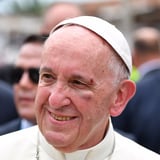
Pope Francis has never been one to shy away from expressing his thoughts, especially when it comes to President Donald Trump's administration. Back in February, he threw shade by calling out Trump for his travel ban without even mentioning his name. This time, however, the Pope felt the need to address the president on a far more personal level about his decision to rescind the Deferred Action For Childhood Arrivals (DACA) program, leaving about 800,000 young immigrants subject to deportation and without a path towards citizenship.
As the pope wrapped up a press conference in Colombia on Sept. 10, he spoke about DACA - and how it doesn't match up with Trump's antiabortion views. "The President of the United States presents himself as pro-life and if he is a good pro-lifer, he understands that family is the cradle of life and its unity must be protected," he said. Though the pope admitted he wasn't too well-versed in what DACA was and how it came about, he expressed that he was hopeful that Trump might reconsider his move to rescind it, saying, "I think this law comes not from parliament but from the executive. If that is so, I am hopeful that it will be re-thought."
The Pope isn't alone in this sentiment, or in having sympathy for the DACA recipients who are also known as Dreamers. On Sept. 5, the US Conference of Catholic Bishops (USCCB) announced that the Catholic Church would always support the group. "As people of faith, we say to DACA youth - regardless of your immigration status, you are children of God and welcome in the Catholic Church," USCCB said in a statement. "The Catholic Church supports you and will advocate for you." The group also asked Congress to come up with a solution that would help the Dreamers.
As Pope Francis expressed in a TED Talk in April, "We can only build the future by standing together, including everyone." Trump would serve to learn from this statement, as well as the compassion towards Dreamers and immigrants that the Pope and frankly, many Americans, have shown.
Here's How to Make Multiple Stops in Just 1 Uber Trip

Uber just made our lives even easier, just in time for the official kickoff of the holiday season. On Oct. 26, the ride-sharing app launched a feature called Multiple Destinations, which does exactly what we've all always wanted Uber to do: pick up or drop off multiple people at multiple stops, using just one single ride. No longer do you have to wait for several drivers to arrive before parting ways with your friends at a party, and it makes it even easier to make sure that your significant other or loved one gets to an event on time.
Adding multiple stops in the Uber app is easy. Just tap "where to?" and then click on the plus (+) sign to add the addresses you'd like to stop at on the way to your final destination. The driver is also instantly delivered directions to the next closest stop, removing the insta-headache of trying to explain to a driver how to get to a place that you may or may not have actually tried to drive to before. And the best part? It doesn't even require a commitment. The person who booked the ride can add or delete additional stops at any time throughout the ride, so that means when you get a text from someone who somehow still hasn't left yet, you can instantly swing by and add them to your ride, too.
There are some limitations to Multiple Destinations, but most of them can be accounted for by thinking through your travel plans before starting your ride. First, there is a maximum of three stops per Uber ride, so be sure to take that into consideration while figuring out your ride-sharing plans. Second, there isn't currently a way to map out each rider's cost based on distance, so you'll be splitting the ride equally across everyone you pick up - and if you know that someone in your crew is a stickler, you probably want to have that conversation before you arrive at your destination. And third, the feature is not compatible with UberPOOL, which means that you can't just try and split a more costly ride over the cost of three random people on the way to where you're going.
Multiple Destinations is available in the Uber app now, and for more information on the new feature, head on over to the Uber site.
11 Printable Signs to Power Your Women's March Protest

Get out your p*ssy hats and dust off your comfiest walking shoes, because the second annual Women's March is going down on Jan. 20. No matter which worthy causes are bringing you out to this year's march, we've created 11 posters to help you amplify your very own personal protest message. Print these signs and take them with you when you hit the streets on Saturday, or post them on social media to tell the world just why it is that you're joining the 2018 Women's March.
And finally, be sure to check out this handy list to find a Women's March happening near you, then round up your pals - because we've serious got work to do.
Lupita Nyong'o's New Book Teaches Girls of Color to "Walk With Joy in Their Own Skin"

Lupita Nyong'o has always been an absolute beauty icon in our eyes, but her latest move is making us look up to her even more than we already did. The Black Panther star announced that she's releasing her very own children's book titled Sulwe, which translates to "star" in her native language of Luo. The animated picture book will aim to teach kids between the ages of 5 and 7 an empowering lesson about self-love and beauty, according to The New York Times.
"Sulwe is a dark skinned girl who goes on a starry-eyed adventure, and awakens with a reimagined sense of beauty," Lupita explained in an Instagram post about her upcoming book. "She encounters lessons that we learn as children and spend our lives unlearning." She also noted how although the book is technically made for "the little ones," she hopes it serves as "an inspiration for everyone to walk with joy in their own skin."
Through the years, the Oscar-winning Kenyan-Mexican actress has been very vocal about how she struggled with her own self-image while growing up. During an iconic and heartfelt speech at the Essence Black Women in Hollywood Luncheon back in 2017, she powerfully spoke about the beauty of being dark skinned. Lupita recalled feeling "unbeautiful" because she was "teased and taunted" about her "night-shaded skin" as a child. Later on, she realized that "beauty was not a thing that I could acquire or consume; it was something that I just had to be," she said during the speech.
More recently, Lupita unabashedly called out Grazia magazine for altering the natural texture of her hair in the cover photo. "I embrace my natural heritage and despite having grown up thinking light skin and straight, silky hair were the standards of beauty, I now know that my dark skin and kinky, coily hair are beautiful too," she wrote on Instagram while explaining her disappointment with the publication's move. "Being featured on the cover of a magazine fulfills me as it is an opportunity to show other dark, kinky-haired people, and particularly our children, that they are beautiful just the way they are."
Sulwe will hit shelves in January 2019, and we already can't wait to snag our own copy!
Have You Tried the $6 Sephora Lip Balm Everyone's Obsessed With?
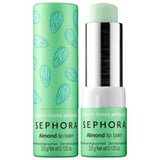
Winter's moisture-sucking air doesn't own you! Unless, of course, you're sans holy grail lip balm and dealing with cracked, painful lips. There are plenty of options to choose from, of course, and lots do a fabulous job. That said, Sephora's $6 Lip Balm - which comes in five different flavors including almond, coconut, goji, tangerine, and rose - is an all-out fave. Just check out the string of 5-star reviews.
One person wrote, "I have to say I absolutely love this balm! I bought the scrub and the Goji balm and I have never been happier with a $6 lip balm. I am going back today to get the Tangerine and Almond flavors as well."
And another person said, "This is the first time I've ever felt the need for a review! I have severely dry skin, and that includes my lips. I live in lip balm. My lips are dry, flaky, and I can't even LOOK at liquid matte lipsticks . . . this stuff is amazing! . . . The coconut balm turned my lips from the desert to an oasis!"
The balms are made with shea butter, castor seed oil, and a specific extract for each option. There's also a honey lip scrub, which pairs nicely with all of these as a way to exfoliate and hydrate your lips. Here's to a happier, healthier pucker!
10 Setting Sprays That Will Make Sure Your Makeup Can't Budge

The oppressive humidity and scalding temperatures of Summer exacerbate any standard makeup gripes tenfold, but what no one's sharing with you is that there is one single product that cures all these woes for up to 16 hours at a time. Yes, really! Melted foundation, oily skin, vanishing blush, even sun damage - these issues can all be solved with setting spray.
This genius invention isn't new. In fact, it's been around for nearly 50 years but was an insider secret, available only to Hollywood makeup artists and other pros. Skindinavia is largely credited as the brand that made the category more real-girl-friendly. "They had been around since the 1970s as 'hair spray' for the face," explained Allen Goldman, CEO of Skindinavia. "We are the ones who helped blow up the category by making them comfortable to use and nonaerosol."
So how do setting sprays work? Skindinavia's formula actually features a patented cooling technology. Your skin temperature is approximately 90 degrees (which can of course get warmer or cooler depending on the weather). That heat is not conducive to durable makeup - it causes melting, color fade, and oiliness. Skindinavia creates an invisible web on the skin that works to lower the temperature of the makeup on your face, making it last.
Setting sprays also use special polymers to seal your makeup in place, creating a breathable mesh on top. They're super simple to use. Just spritz them across your face just like a standard facial mist. Many brands suggest misting in T or X shape. "This is a way to get a full application with the minimum amount of product," shared Goldman.
If you're convinced that using primer is enough for a long-lasting makeup look, reconsider. "Priming sprays are a bit more skin-care-focused and offer more texture for a smooth surface," Goldman said. "Finishing sprays are about a healthy, luminous look and extended wear."
Once you incorporate setting spray into your beauty regimen, you'll be able to party at a music festival, sweat it out on the tennis court, or work a full day and hit up happy hour looking like you just applied your makeup. Read on to discover some of our favorites.
Pamper Yourself From Head to Toe With These 20 Incredible Beauty Products - All Under $20
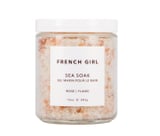
This season, there's no excuse not to pamper yourself. Whether you're just exhausted and need a pick-me-up or you're trying to combat dry Winter skin, one way you can treat yourself is by stocking up on refreshing beauty products. And you don't have to spend a fortune because there are so many amazing and affordable brands to shop. We made it easy and rounded up a list of everything from face treatments to hair masks and even soothing shower oils. In addition to helping you feel your best, all of these items have one thing in common: they're under $20!
This Genius $30 Makeup Bag on Amazon Will Help You Get Your Life Together
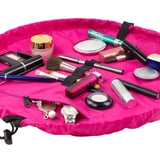
My makeup bag used to be a giant black hole of cosmetics that I was constantly digging through to find that one eye shadow. Everything changed when I discovered this Lay-n-Go Cosmetic Bag ($30) on Amazon. I quickly purchased it and used it on my last trip - I can safely say I'll never use anything else again.
The drawstring design allows the bag to lay flat so all your products can be spread out and easily viewed. Its design has raised edging so that small round items and brushes won't roll off when the bag is flat. It also features a convenient zipper pouch inside that is perfect for storing jewelry. But by far my favorite part is that it's machine washable! I always found that my cosmetics cases seemed too used and dirty after a certain point; being able to clean this one makes it an investment that's totally worth it.
If you're ready to organize your makeup collection, this bag has your name all over it. It comes in 13 different colors and designs that you can use at home or on the go!
Harry Styles Wore That '90s Hair Clip You Still Have Lying Around Your Bathroom
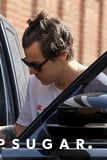
Harry Styles: he's just like us when it comes to sloppy ponytails. This is a man with a beautiful head of hair, but here he is in Los Angeles with an old-school butterfly clip, looking like a hot mess - emphasis on hot, and I say this with love. I'll take a guess that he's either coming from or going to the gym, so I get needing to keep your hair off your face while working out, but I much prefer headscarf Harry to hair clip Harry.
But I digress. The very important part of the story here is that this means Harry's hair is growing out, and there's a glimmer of hope that long-haired Harry will be back in our midst. We may get to see his flowing locks dancing free while he prances around a stage on tour and singing every track from Harry Styles by Harry Styles and covering songs by his favorite bands, like Fleetwood Mac! Or maybe he just got lazy and grabbed one of his mom's butterfly clips the last time he was in England and is now using it to keep his hair out of his face when he doesn't feel like doing anything else with it. I feel you, pal. I've been there.
Harry's hair has been many variations of "short" since cutting it to film Dunkirk in 2016. Any time it starts to grow a little longer and fans' hearts go pitter-patter, he goes and gets a trim, dashing our dreams of once again living amongst long-haired Harry. Maybe this time he'll let it grow. We can certainly hope.
The 1 "Bad" Hair Habit an Expert Says You Don't Need to Stop Doing in 2018
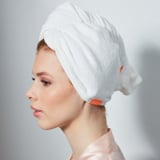
I am so guilty of this: I totally go to bed with wet hair. Often. I am lazy, and my hair takes 20 minutes to blow-dry - which cuts into my Hulu binge-watching time. You might be thinking, NBD. Or you might be horrified. The old wives' tale is that going to bed with damp hair can break the ends and damage it. Yet, some experts say it's totally fine.
To get to the bottom of this debate, I consulted with KMS Global Stylist Lori Panarello.
"Yes, it is OK to go to bed with wet hair," she confirmed via email. "Leaving your hair damp can enhance a natural wave pattern or even put wave into your hair, giving it a natural, lived-in look. Of course, letting your hair dry naturally is always better for the health of your hair because you avoid removing the hair's natural oils. This allows hair structure to remain intact while also keeping hair from drying out and splitting."
That said, there is a big difference between hitting your pillow with damp hair and walking right out of the shower into bed. "Never go to bed with your hair soaking wet," Panarello warned. "It will never dry overnight; it should only be damp. Also, do not towel dry your hair vigorously, as this will cause the hair to become frizzy. Instead, squeeze the water out gently so it won't disturb the hair cuticle. I also recommend staying away from heavy oils, which tend to coat the cuticle and are only a temporary solution that make hair seem healthier than it is."
I definitely have the issue of hair that doesn't always dry overnight. "If your hair is still damp in the morning, gently diffuse it on high heat, low speed," Panarello instructed. "Once the hair is dry, release the set, shake it out gently, and add a lightweight styling product, such as a working hairspray or styling creme."
So the good news is that my my "bad" habit isn't so bad. That said, when I do it, my hair often looks crazy in the morning. I never wake up with nice curls and great volume. Usually my hair is frizzy and matted. Sometimes, I even look like a baby lion.
Panarello offered tips on how to style wet hair to avoid this. "Braiding hair using a simple three strand braid left in overnight will give the hair a beautiful wave in the morning," she explained. "For more of a dramatic wave, section out the sides and back into four braids. For control, wrapping hair tightly in a scarf or headband will relax frizz but will leave hair in a more natural state. Another trick would be wrapping small sections of hair in rags while you sleep; this will give hair a beachy texture."
You also may need a little help - in the form of products - before you pass out postshower. "Depending on the texture of the hair, I would recommend the use of product to help enhance or control the outcome," she said. "For instance, a frizzy texture would definitely benefit by using a product to control the hair, while a finer hair type might use a volume product to enhance texture."
Try KMS Tamefrizz Curl Leave-In Conditioner ($21) if you want to polish your curls or Bumble and Bumble Surf Foam ($31) to give fine hair more texture. I personally love a good wave-enhancing spray - like Redken Curvaceous CCC Spray ($24) - in the morning to help reshape hair. And if all else fails and your sort-of wet, sort-of dry hair still looks funky, put on a damn hat, and head out the door!
Find Out Exactly How Many Grams of Protein You Need to Lose Weight
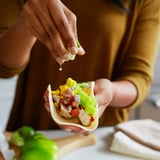
We know that protein helps with weight loss and that you need more of it to shed pounds . . . but how much exactly?
We asked Alexandra Miller, RDN, LDN, and corporate dietitian at Medifast, if there was a magic number. As it turns out, while everyone's body and diet is different, there IS a bit of a "magic formula" when it comes to adjusting your protein intake for weight loss.
How Much Protein Do You Need to Lose Weight?
Miller noted that "protein needs are based on body weight or, in some instances, a percentage of calories," but the minimum recommended dietary allowance for protein is "about 0.4 grams of protein per pound for women." Her recommendation? Bump it by about 50 percent for weight loss.
Miller said, "0.54 to 0.68 grams [of protein] per [bodyweight] pound is about 70 to 90 grams per day for a 130-pound woman." This shift in added grams of protein will "help promote lean muscle mass retention during weight loss, particularly when coupled with strength-training exercises," as well as help you better control your appetite.
Eat your protein throughout the day - "aim for 25 grams at meals, and try to incorporate a source of protein with snacks."
What Kind of Protein Do You Need?
Not all protein sources are created equally; lean proteins will help you with your weight-loss goals. "Remember, in order to lose weight, there needs to be a caloric deficit; therefore, look for lean sources of protein that are rich in vitamins, minerals, and other health-promoting nutrients." Here are some of Miller's recommendations for healthy sources:
- Dairy products, such as milk, yogurt, and low-fat cheese
- Lean meats, such as chicken breast, lean ground meats, and white meat turkey
- Egg whites
- Fish and shellfish
- Pork chops that have been grilled, baked, or broiled
- Nuts and seeds are also a good source of protein and fiber; just watch the serving size. Try single-serve packs for portion control.
- Beans, lentils, and other legumes, as well as lots of nonstarchy vegetables; plant-based sources of protein are naturally free of saturated fat and are more environmentally friendly
How Do You Adjust the Rest of Your Diet?
Increasing your protein doesn't just mean you add more food to your diet. In order to lose weight, Miller noted, "You'll have to adjust your fat and carbohydrate intake to ensure you stick within your daily allotment of calories. The amounts will vary based on your personal caloric needs and your protein intake."
So how does that work? You adjust your macros. To determine this, you have to first calculate how many calories you need per day, and then determine how many calories come from protein, how many from fat, and how many from carbohydrates. "This is where food trackers and/or the assistance of a registered dietitian nutritionist can be helpful as both can speak to your individualized needs," said Miller.
Using Miller's example of 70-90 grams of protein per day, 80 grams of protein equals 320 calories (4 calories per gram). If your weight-loss caloric intake is around 1,600 calories, that means protein is about 20 percent of your diet. You'll then get the other 80 percent from fat and carbohydrates, depending on how you choose to split it up for your dietary preferences.
But whatever you do, don't eliminate fat or carbohydrates. "What you don't want to do is eliminate any of the macronutrients; that is, don't eliminate carbohydrates or fat as your body needs all of the macronutrients for optimal health," said Miller.
"To ensure your diet stays balanced, be sure to include a source of protein, carbohydrates, and fat at each meal. Opt for lean sources of protein, wholesome carbohydrates (e.g., low-fat dairy foods, whole grains, starchy vegetables), and healthy fats (i.e., mono- and polyunsaturated fats, such as olives, nuts/seeds, olive oil, avocados, etc.)."
Crush Those Cramps With These 5 Yoga Poses

Got cramps? You're not alone. Many women suffer from severe menstrual pain (known as dysmenorrhea) with sharp, throbbing, burning, or nauseating cramps in their lower abdomen and back. The cramps may come right before you get your period or during, but thankfully they go away when your period is over.
These crippling, can't-get-through-your-normal-day kind of cramps are caused by uterine contractions and can be aggravated by emotional stress. They tend to cause headaches and a really heavy flow - twice the fun. Some women take pain meds to deal, but you may want to give these yoga poses a try, since getting your body moving (and out of fetal position on the couch) can really help with cramps.
Half Bound Squat
Hip pain can be part of the whole cramp scene, so stretching them out feels really good. Here's how to do Half Bound Squat.
- Stand with your feet slightly wider than hips-width-distance apart. Bend your knees, and lower your hips all the way down. Take a peek at your feet, and see if you can press your heels out, bringing your feet parallel.
- Press your elbows against your inner knees, and lengthen through your torso. Hold like this in a Wide Squat for five breaths.
- Then bring your left arm between your knees. Lower your left shoulder as far under your left knee as possible, so you hug your knee with your armpit as you reach your left forearm around your back with your palm facing away from your body.
- Reach your right arm up as high as you can, bend your elbow, and bring the back of your right palm to your lower back. If they're close enough, hold your right wrist with your left hand, with the right palm facing behind you.
- Stay here for five deep breaths. Come back to Wide Squat for one complete breath to release the pose, and repeat on the right side.
Arching Pigeon
Pigeon Pose also opens your hips, but sometimes it feels better to work one side at a time. This variation will also stretch out the lower belly.
- Sit on the floor with your right knee bent and your left leg extended behind you.
- Place your hands on your hips, and gently arch your back. You should feel a nice stretch in the front of your left hip, but if this variation is painful, then lean forward, placing your hands on the floor in front of you. If you want more of a stretch, raise your arms in the air.
- Hold for five or more breaths, and then repeat this pose on the other side.
One-Armed Camel
Stretching out your abs and the front of the hips can also relieve cramps. Here's how to do One-Armed Camel.
- Stand on your shins so your knees are underneath your hips.
- Reach your right hand back, placing it on your right heel or on the mat behind your right toes. Extend your left arm in the air.
- Shift weight forward onto your knees to increase the stretch in your quads, belly, and chest. Lower your head behind you, and stay here for five breaths.
- Switch sides, holding for another five breaths, and then lift the torso up to release.
Wide Child's Pose
If you feel cramps in your lower back, then Wide Child's Pose is sure to offer relaxation and relief.
- Place your knees on the floor, widen them to a comfortable distance, and then fold forward, extending your arms in front of you.
- Rest your forehead on the mat or turn your head to one side, holding for five breaths. Turn your head to the other side for another five relaxing breaths.
Reclining Twist
Here's a relaxing way to increase side-to-side spinal flexibility, which can also help relieve pain in the lower belly and lower back.
- Lie on your back, and cross your left knee over to the right side.
- Extend your arms out wide, gazing to the left.
- Hold here for at least five breaths, feeling your spine lengthen and twist. You may even hear some "cracks."
- Use your abs to lift your knees back to center and repeat on the other side.
Love what you're reading? Head over to our Snapchat for more awesome, bite-sized content!
7 Reasons It's Not Too Late to Start Your Fitness Resolution
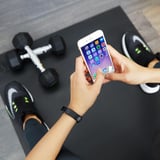
Many of us had grand plans to sprint into 2018 by immediately tackling those ambitious New Year resolutions, but somewhere along the way we decided to binge-watch The Crown with a pint of Ben & Jerry's instead. If you've spent the past three weeks procrastinating, you're in good company - but you can still crush your January fitness goals! Read on to discover why digging into that resolution a few weeks late isn't the end of the world.
1. The Weather Is Finally on Your Side
The first two weeks of January left many of us feeling like we'd been banished to Hoth. Whether you were battling frostbite in New York or Instagramming the snowfall in Florida, record-breaking weather patterns left even the most committed workout junkies sidelined. After all, who wants to go for a jog when the ground is frozen? If you're getting started on your fitness regimen now, the weather won't pose quite as much of an obstacle as it did a mere two weeks ago.
2. But Continued Hibernation Is An Excellent Excuse For a Home Workout
If you're still cringing at the thought of stepping a toe into the frigid weather even without the threat of a superstorm, the still-frosty forecast is an excellent excuse for a home workout that'll keep you toasty and toned.
3. 2018's Influx of New Shows and Movies Are Perfect For a Netflix and Tone Session
Forget your plans to Netflix and chill. If you're looking for a distraction from your workout, there's nothing like an episode of The End of the F***ing World or Comedians in Cars Getting Coffee to distract you from the intense pain of your triceps workout.
4. Winter Sports Are Perfect For Getting Fit While Having Fun
If you're already an avid skier or a snowboarding pro, consider your 2018 fitness resolutions sorted. Snow sports happen to burn major calories, whether you love cross-country skiing or ice skating. As long as there's a chill in the air, it's not too late to engage in these muscle-chiseling activities.
5. Skin-Baring Season Is Still Months Away
If your fitness goal is motivated by aesthetics, fear not: bikini season is far in the future. Even if you kick off your resolutions in February, you'll still have ample time to develop that toned booty by Memorial Day.
6. 2018's New Workout Trends Will Make You Want to Ditch Your Old Plan
Taking a beat before launching into your 2018 fitness regimen is an act of unexpected genius, because the new trends brewing this year will put your prior workout plan to shame. From mindful workouts to animal flow, getting active has never been more entertaining - and all you had to do was wait an extra few days to let the trends develop before diving in! The odds of success are greater if your routine actively engages you, so find a class or home workout that feels more like a guilty pleasure than a chore.
7. Slow and Steady Progress Always Trumps a Quick Fizzle
Your besties might already be burnt out from attacking their wellness goals, but not you! Tackling your objectives is a marathon, not a sprint, and there's nothing worse than over-exerting yourself early in a fitness regimen and hitting the wall before you reach your goal. By taking your time easing into a new plan, you're allowing for an adjustment period instead of plunging into the deep end. That being said, the journey toward your objectives has to start sometime, so get ready to jump in today!

 Articles


