


Healthy lifestyle
A healthy lifestyle is one which helps to keep and improve people's health and well-being.Many governments and non-governmental organizations have made big efforts in healthy lifestyle and health promotion.

Mental Health
Mental health can be considered a very important factor of physical health for the effects it produces on bodily functions. This type of health concerns emotional and cognitive well-being or an absence of mental disorder.

Public health
Public health can be defined in a variety of ways. It can be presented as "the study of the physical, psychosocial and socio-cultural determinants of population health and actions to improve the health of the population.

Reproductive Health
For the UN, reproductive health is a right, like other human rights. This recent concept evokes the good transmission of the genetic heritage from one generation to the next.

Health
Health is a state of complete physical, mental and social well-being, and not merely the absence of disease or infirmity.
dimanche 16 septembre 2018
I am Latinx, and Accepting My Mental Health Was the Bravest Thing I've Done

Image Source: Ashley Jimenez
I have struggled with depression and anxiety since the youthful age of 13. Reflecting back, I always thought it was either a temporary feeling that would come and go around that time of the month or an emotion that would go away if I simply channeled happy thoughts, like Peter Pan.
It's no secret that in the Latinx community, mental health isn't a hot topic. Being a Puerto Rican and Dominican Latina from the South Bronx, feeling sad or depressed wasn't a thing. I was taught to be a woman warrior at all times by any means necessary. That's why, for years, I kept my sadness a secret as I wore my best smile and showed off my fun personality to my family and friends.
Related: I'm Latina and Go to Therapy - Here's How I Live With Both
I kept on being the cheerful girl everyone wanted me to be instead of actually feeling pain.
When I started battling depression during my teen years, I tried to justify my feelings with the loss of my father to stomach cancer when I was 9. I would have trouble sleeping and couldn't get out of bed on some days, which led to having poor attendance during my sophomore year. Though I did go to counseling after my dad's death, my counselor at the time never explained the "seven stages of grief" - shock, denial, anger, bargaining, depression, testing, and acceptance. Explaining death to a little girl can be extremely tricky, but I couldn't face the fact that my father passed away. I never took the time to go through the different phases of grieving a loved one's passing. I kept on being the cheerful girl everyone wanted me to be instead of actually feeling pain.
Image Source: Ashley Jimenez
I was raised by a Boricua from Spanish Harlem. My single mother taught me about compassion, humility, virtue, love, and strength. As a proud daughter, I saw my creator overcome trials and tribulations repeatedly with a smile on her face. She would sometimes say things like, "I don't have time to be sad; I just have to get over it," and, "It will pass; I just have to let it go." So I associated my mindset with hers, but it got harder as I dealt with my own "grown-up" issues. I couldn't "just get over it" as quickly as my mom did. I saw this as a sign of weakness within myself, which led me down a dark path to a deeper depression. At my worst, I didn't want to groom, struggled to get out of my bed, and lost motivation to do day-to-day activities.
As I felt less motivated and struggled to fight the dark cloud in my mind, I was in complete denial of what I was feeling. It wasn't until I went to college that I realized I wasn't the only one feeling this way; I wasn't alone.
Related: Stop Saying Happiness Is a Choice, Because It's Not
A young woman in the back of the room blurted out, "I'm Cuban and Dominican, and we don't have time to be depressed - those are rich-people problems."
I recall sitting in a psychology class, where the subject was depression and anxiety. I was extremely interested, as I felt this was my time to ask all the questions I'd been keeping to myself, but as you may guess, my sweaty palms and trembling legs kept me quiet while the professor polled the class with the question, "Have you ever experienced a state of depression or nervousness periodically?" Some, including myself, raised their hands to say yes. As other classmates voted no, a young woman in the back of the room blurted out, "I'm Cuban and Dominican, and we don't have time to be depressed - those are rich-people problems."
The professor didn't acknowledge the Latina student's comment, but after class, I did. We spoke for hours about depression and anxiety, our upbringings, and the stigma of mental health in the Latinx community. The sense of acceptance I felt after our conversation was authentic and pure.
A little before completing my senior year, I decided to face the music, because I had a major anxiety attack after picking up my cap and gown for graduation. I was graduating with honors, with 10 internships under my belt and a job, yet I was still feeling unworthy, sad, and simply miserable. After the attack, I acknowledged myself - I suffered from anxiety and depression, and that was OK, but I wanted to do something about it.
After being real with my mom, she advised me to seek out professional help. Now, that was a challenge. Finding the right therapist is like dating. After you get past the Tinder-like requirements of insurance acceptance and professional background, it turns into a weekly meetup of seeing if it works for both patient and doctor. You should feel safe, comfortable, and willing to work with your therapist on an honest healing level.
Related: How to Know You Found the Right Therapist If You're Busy and Broke
Over the past three years, I saw four different psychologists on and off before I found a medical professional who understood me. During my therapy sessions, my counselor helps me overcome social anxiety, honor my feelings, and practice self-love on its most authentic level. When it came to the topic of medication, I was open to discussing my options, but as I read about the different drugs and side effects, I made a personal decision to seek natural ways to break through my mental health. It was a personal choice, and I believe those who choose to take medication are just as brave as those who don't. With compassion in my heart, I think we all should do what works best for us.
When life threw me lemons, I struggled to make lemonade, but I looked deep within my Latinx roots and became my own Wonder Woman, showing my best self in my own way. I work out at least three to four times a week, journal, and have fallen in love with nature as a whole. Along with those activities, I took advantage of my millennial advances by using app-guided meditation and gratitude apps.
I came to realize I was never alone, but it was in the act of being vulnerable that I found my strength.
Seeking help was one of the most courageous acts I did for myself, and though I was scared of what most people in my family and community would think, with time, I let it go. Simply put, those who judge don't matter, and those who care won't judge. I hope you find your voice from within to take care of yourself and live your best life as well. I came to realize I was never alone, but it was in the act of being vulnerable that I found my strength.
Today, I can own my truth and be at peace with myself. To the outside world, I'm a ray of sunshine, and though this theory is correct, make no mistake: I fought hard for my light, so fight for yours, too. Tell someone you trust what you're feeling and get the love and support you deserve.
If you or someone you know is in emotional distress or suicidal, contact the National Suicide Prevention Lifeline. Trained crisis workers are available to talk 24 hours a day, seven days a week.

I'm Teaching My Daughter How to Speak Spanish For This Important Reason

Image Source: Eva Marie Photo
I was recently asked, "Why do you want your daughter to learn Spanish?" I was completely dumbfounded and, to be totally honest, offended. I didn't know what to respond.
My husband and I are used to receiving compliments when we explain we are primarily teaching our daughter, Julianna, to speak Spanish, even though both of us are fluent in English. Not only do we want her to have a deep connection with her culture, but we also want to emphasize the power that comes with knowing Spanish and what it means to be a Hispanic woman in today's country. The question threw me for a loop. I had never been questioned or needed to explain this to someone before.
To me and my family, Spanish is not just a language. It's an art, deeply instilled in us. It's in countless songs that instantly trigger memories I am fond of, from reggaeton to rock en Español - I want my daughter to listen to those songs and have a connection with them. It's brought me my own set of inside jokes that do not make any sense if translated to English and make me feel a special bond to those who understand and laugh with me. It has given me a way to communicate with people, even in locations far away from home. Spanish is a place I can always go back to and feel like I am at home. I want my daughter to have that same feeling.
I remember going on trips with my family to my grandparents' home in Ensenada, Mexico. It still is the family's go-to place when we need to reset. Taking trips to the Bufadora (the second largest marine blowhole in the world), eating the amazing (and cheap!) food, and making unforgettable memories as a family are things I do not want to take away from my daughter. She could do all those things even not speaking Spanish, but it wouldn't be the same. She has become close to my grandparents because she understands the language they speak. She has been instilled with a sense of great pride in our loud and colorful culture, learning not be ashamed about it, but to celebrate it. Part of embracing that culture is speaking fluent Spanish.
Image Source: Eva Marie Photo
Perhaps the biggest reason we want to teach our daughter the value of being bilingual is because it can open opportunities, not just professionally but also to emotionally, letting her connect with other people every day.
The United States is home to 40 million Spanish speakers. Just in my city of Los Angeles, almost half of the population is of Hispanic origin. Julianna will come across Hispanic and Latinx people, and I want her to be able to speak to them in a more personal way.
I interned at a shoe store when I was 15 years old. A Spanish-speaking customer walked in and needed help buying a pair of shoes. I made a connection with the customer in Spanish and he ended up purchasing over $800 in merchandise. I left the store that night amazed at what I was able to do just because I was able to communicate with this person in his native language. I was soon offered a full-time job after that, so you can say knowing the language opened an opportunity I might have not had. It also also allowed me to help someone.
I will do everything in my power to teach my children where their culture and language comes from, and that starts with teaching my daughter how to speak and understand our native language. She will be tomorrow's leader, doctor, teacher, whatever she wants. It's imperative that she knows the language not only so she can stand out in a competitive job market, but to expand her horizons, meet others like her who speak Spanish, and travel to countries that primarily speak it.
Perhaps the question we should be asking is not why, but why not teach our children Spanish?
A Moment I Had With a Hotel Maid Reminded Me Why I Should Be Proud of My Roots
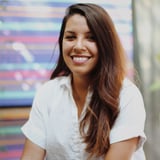
Image Source: Sarahi Rojo
"¡Buenos días, señorita! ¿Es un día grande? Good morning, miss! Big day?"
"Morning, ma'am! No, no. I'm headed to a training," I replied.
"¡Ah! Pues, no dudo que será la más presentable. ¡Me gusta su saco! Oh! Well, I have no doubt you'll be the most presentable in the room. I like your suit jacket!"
Ding. We hit the fourth floor and she walked out of the elevator. "¡Espero que haya disfrutado su estancia, señorita!" The elevator doors closed.
My mother used to clean hotel rooms, too. She decided to pick up extra shifts on the weekends to help my dad, who worked weekends just to make ends meet. She didn't want to leave us home alone, so she'd bring me and my siblings to her four-hour shifts at the hotel on Saturdays and Sundays. She taught me how to perfectly form right triangles on the corners of the sheets so the bed looked neat.
When the señora in the elevator said I looked presentable so many years later, I was taken back to 11-year-old Ana Maria who used to love stacking the hotel soaps in the most impeccably straight rows. I guess I've always been quite the type A.
Ding. The elevator made that noise as it descended. Third floor.
My mother's boss was an angry man. I remember he often yelled at her and her coworkers. I had no idea what he was yelling about - I hadn't picked up English yet. Whenever he did so, my mother would say "Tenemos que apurarnos. Andale." We have to hurry. So, I'd fold the corners of the sheets as fast and as neat as possible so the man would stop yelling.
Ding. Second floor.
There was a vending machine in one of the hotel hallways, and if I helped my mother would give me enough coras - quarters - to buy a can of soda that I never wanted to share with my little brother.
Ding. First floor.
"Será la más presentable . . . You'll be the most presentable." I wanted to go back up and tell the señora I would never be as presentable as those neatly folded sheet corners I knew she'd take care of all day. As I walked to my car, I couldn't get her words out of my head - or the way she looked at me.
I finished my bachelor's degree at the age of 29. After high school, my parents couldn't afford to put me through college, and I couldn't get financial aid because I was undocumented. Even if they could have, I don't think I would've attended. Back then, I didn't think I was good enough for books.
The day of the elevator encounter, I was wearing a suit jacket because I was headed to an American Bar Association training. At the time, I was a legal assistant for RAICES, the organization that to this day allows me to fulfill my desire to help the immigrant community. I'm not an attorney - yet. I'm a 30-year-old who's just now getting a taste of her dream profession.
I feel like I've joined the game so late. I'm often very hard on myself for not being on par with my peers, but the señora made me reflect in a way I hadn't before. She looked and talked to me as if I was a big shot. I'm not, but something tells me that even if I had told her that, she'd still look and talk to me the same way, because my mother looks and talks to me that way, too.
I came to this country on Aug. 1, 1998. This August marked my 20th year in this country I proudly call home. As I walked out of that elevator, I was reminded that, despite expecting so much from myself and often feeling like whatever I do is not enough, my mother would beg to differ. She'd say I've come a long way.
My parents knew we needed to leave our country in order to have suit-jacket opportunities. I'm so appreciative of those seven-day workweeks, sometimes with double shifts, and all the sacrifices they've had to make so I could be here.
My parents knew we needed to leave our country in order to have suit-jacket opportunities, and they were so brave to actually do it. I'm so appreciative of those seven-day workweeks, sometimes with double shifts, and all the sacrifices they've had to make so I could be here, in this elevator. All that work so that their kids could one day wear a suit jacket to a training in Houston, TX.
I was humbled by the señora. I felt grateful. I felt a little accomplished, and while I'll always struggle with not feeling like my efforts are enough, I've realized the importance of acknowledging them. While I may think playing catch up isn't good enough, my mother has expressed how incredibly proud she is. She has given up so much that I'm only doing a disservice to her by taking the product of her efforts as something menial.
I'm grateful for the elevator encounter with a hotel maid in Houston because she reminded me of this: from presentable sheet corners to presentable suit jackets, I am doing all right.
I'm Ashamed of My Accent When I Speak Spanish, but It's the Heart of My Identity

Spanish was my first language despite the fact that I'm second-generation on my mother's side (she was born in California to Cuban parents). My parents had always spoken to me in both English and Spanish, but I picked up on the latter first. In home videos from 2000, you can hear me singing along with Shakira, and making jokes in my native and only tongue.
When I entered pre-K in Miami, I learned English very quickly as most non-native speakers do at that age. I talked to my friends, read books, listened to music, all in English, now my second language. Spanish was no longer my primary mode of communication, so I reserved it for my grandparents exclusively.
At 7 years old, we moved from Miami, where almost everyone spoke Spanish and it felt like a basic requirement for survival, to a small city in Florida named Fort Myers. People there sooner knew morse code than Spanish, and us loud Cubans coming into town did not go unnoticed.
I was "accidentally" put into English For Speakers of Other Languages (ESOL) classes not once, not twice, but three times in elementary school because my last name is Perez, only to be moved to the gifted classroom a week into the school year (you know, because being the new girl wasn't enough in the second grade or third or fourth). Nevertheless, I harbored no ill will as I didn't realize the why behind these mistakes back then. It became my new normal to hear Spanish in the house and nowhere else except my Spanish class in school. I became used to being the teacher's assistant and learning the colors over and over again. All things considered, it was an easy A.
I was used to being told I didn't "look Spanish," but now I didn't even sound sound like I was Cuban-American?
After I had been in school for a few years, every time we would go back to Miami and visit family, my grandmother would be the first to point out how "American" I sounded. Now, do not get me wrong: I love being an American. My grandparents sacrificed so much for me to be able to wear that title, and I wear it proudly. Still, the comment hurt. I didn't want to sound like my friends back home.
With my fair skin, I was used to being told I didn't "look Spanish," (never mind the fact that Spanish is my language, not my ethnicity), but now I didn't even sound like I was Cuban-American? I was, and I still am, fluent in Spanish, but I'll admit I developed an inevitable accent. An accent that makes me hesitate before using Spanish to order in a Cuban cafeteria in Miami or speaking to another Latinx, afraid to reveal myself as a fraud, an American who speaks Spanish and not a Latina who is bilingual.
I am forever grateful that my parents taught me Spanish at such a young age, and made a point not to let me forget it. It's the reason I'm so proud of my heritage today. Growing up around clueless people who wished me a happy Cinco de Mayo every year has made me hold onto my culture all the more. So, I study my grandmother's recipes religiously, jam out to Marc Anthony at my desk at work, and basically lose my mind when I find a fellow Cuban in New York City.
I am working on accepting my accent, but the experiences that led me to have it have made me appreciate who I am and where I came from so much more. The honor of being Latina is not lost on me, and I have my small, American town to thank for it.
Rihanna's Makeup Artist Gets Real: "I Am Where I Am Because of My Roots"

Image Source: Courtesy of Priscilla Ono
My grandparents, who are both first-generation Mexican immigrants, raised me here in Los Angeles. Growing up, they were very adamant about me being in either the medical field or in law. There was no in-between. I never thought about being a makeup artist - I just knew I loved makeup.
My grandma was my biggest beauty inspiration. As a kid, I used to sit in the bathroom while she did her makeup. I watched every step, from her putting on her individual lashes to lipstick. Then later in the afternoon, I would sneak in the bathroom, lock the door, take her makeup bag, and re-create everything I'd seen. I did that for years; I was so young when I started, I wasn't even in school yet. That was my "me" time. When I got to high school, I would go 20 minutes before class started to do my friends' eyeliner in the bathroom. I was everyone's go-to makeup girl.
Still, it wasn't until I was 20 when I thought about making it a career. My now-husband was doing a music video for Dawn Robinson from En Vogue and wanted me to do the makeup. I did it more so to impress him; I wasn't really thinking about it as a job because, again, that was never an option growing up with strict Hispanic grandparents. It wasn't until I was on set that I fell in love with what I was doing.
I would sneak in [my grandmother's] bathroom, lock the door, take her makeup bag, and re-create everything I'd seen. That was my "me" time.
Growing up in the '90s, watching music videos was a big part of my life, so that moment was life-changing for me. That day, I said, "This is what I want to do with my life." I was in college at the time, studying something completely unrelated, and I quit school. My grandparents were mortified. My grandmother didn't speak to me for two years. I kept hearing from my family members that she wouldn't eat; she wanted to stay in bed; she was so disappointed. She came here from Mexico and wanted a better life for her daughters. When she had a granddaughter, she put all her eggs in my basket. I was her pride and joy, so for me to completely go off course, I think that really hurt her.
Image Source: Courtesy of Priscilla Ono
The turning point was when she saw me on a morning television show. I used to do makeovers at an outdoor/indoor mall in Lynwood called Plaza Mexico. There, I met one of the producers for a Spanish TV show for channel 34. I became their go-to girl for consejos. I would give makeup tips and talk about trends for the different seasons. That's when my grandma knew I'd made it. She would get all her girlfriends to come over and watch me. I could tell her that I'm working Fashion Week with Rihanna and that still wouldn't prove to her that I made it quite like being on Spanish TV does.
Being a Latinx Woman in Beauty
In my eyes, that's why I always pushed myself to be the best and to work with the best - to make my grandmother proud. I am where I am because of my roots. Hard work was always instilled in me growing up. My grandparents would say, "You have to work extra hard because you are Latina, and people won't always give you the chance. You'll have to prove yourself more."
I am where I am because of my roots. Hard work was always instilled in me growing up.
That is true, but I never pay much attention to that negativity. There have been times where I've been on set and people would treat me a certain way in the beginning, like I was inferior because I am Latina, or judge me because of the way I looked. But once they saw my work, everything changed. So I have tunnel vision in that regard; I've always wanted to let my work speak for itself.
Before Fenty, I had a hard time finding the right shade of foundation. Latinas come in a range of skin tones. We have a unique undertone - we're not warm, we're not cool; we're almost more of a beige-y undertone. So a lot of times foundations can look ashy. Being a makeup artist, not only doing my own makeup but working on other Latinas as well, I had to mix foundations a lot. I had to use multiple brands with different undertones and make my own shades.
Getting in Front of the Camera
I met Rihanna about eight years ago. I was assisting a makeup artist at the time, and she was unable to work as an extra for the "S&M" music video, so I was doing the makeup on set. When Ri saw me on that first day of shooting, she came up to me right away and said, "Wow, I love your hair. I love your style. I love your skin." She was just so nice, so cool, so chill. Later that day, the director came up to me and said, "Hey, Rihanna really loves you and wants you to be in the music video. Are you interested?" I was like, "Um, yeah."
So that was how I first met Ri - by being an extra in "S&M." We've been friends ever since. I would bump into her at award shows; we would send each other DMs on Instagram. When I heard she was coming out with a makeup line, I contacted her creative director and said, "If she needs any help at all, please reach out." And they did. They let me know they were launching a huge search for a makeup artist, so I tried out, and here I am.
Landing the Dream Job at Fenty
You ever just not want to go to sleep because you're living a dream and you don't want to stop reliving what you just did over and over again?
My biggest pinch-me moment was the day I did Rihanna's makeup when I was trying out for the role of Fenty global makeup artist. Thousands of people flew in from all around the world to try out, and they narrowed it down to three: myself, Hector [Espinal], and another artist. We were all in a room, and they called us in one by one where we each had about an hour to do her makeup. I remember being so nervous - the stakes were so high! - but she loved it. She kept saying how happy she was with the look.
Afterward, I was in an Uber on my way home and I just started crying. I was like, "This is f*cking amazing. Even if I don't get the job, the fact that I made the cut out of thousands of people is amazing." That night, I didn't sleep at all. You ever just not want to go to sleep because you're living a dream and you don't want to stop reliving what you just did over and over again? That's what it was like. To think I was doing $25 makeovers at Plaza Mexico and now I'm here doing Rihanna's makeup. And then I made the cut. It was just a cherry on top - I couldn't believe it.
Image Source: Courtesy of Priscilla Ono
Demanding More Inclusivity in Beauty
From my experience growing up in Los Angeles, makeup has always been a huge part of our culture. Latina women hold such a stake in the beauty industry when it comes to purchasing products and loving beauty in general.
Fenty was a trendsetter, in that Rihanna paid attention to every detail and wanted to make sure every skin tone was covered from very fair to very dark. She goes to every meeting; she gives her input on every product. Brands are now starting to follow suit, and my hope is that the beauty industry continues to put as much time and energy into everything they put out as she does. It really does make all the difference.
How Pop Culture Helped Me Embrace My Mixed Latina Identity

Image Source: POPSUGAR Photography / Jessica A. Gonzalez
From childhood through young adulthood, I've always had (at best) a vague sense of diasporic confusion - I never felt truly American, nor Hispanic, nor Asian enough. At its worst, the confusion would manifest into a form of self-loathing and envy of those around me who could seamlessly identify with whatever they chose (at least, to my eye). My ethnically ambiguous appearance didn't help things. Straightish hair, almond-shaped eyes, and brown skin with yellow undertones were not especially defining.
My father is from Vega Baja, Puerto Rico - the same place Bad Bunny hails from - and my mother is from Manila, Philippines. They met in New Brunswick, NJ, and I was born about a decade later. I grew up eating arroz con habichuelas and chicken adobo. By age 4, I was responding to both of my respective grandmothers in either Spanish or Taglish (a Tagalog and English hybrid commonly spoken among Filipinos in both the US and the Philippines).
Image Source: POPSUGAR Photography / Jessica A. Gonzalez
Being raised closely in both cultures as a half-Puerto Rican, half-Filipina-American, identifying as simply "mixed" didn't feel like enough. It didn't feel fair.
Being raised closely in both cultures as a half-Puerto Rican, half-Filipina-American, identifying as simply "mixed" didn't feel like enough. It didn't feel fair. Along with my Philippine culture, I wanted to reclaim my Latina heritage in my own right. That was very important to me. This naturally took a toll on my confidence and sense of belonging.
Eager to carve out my own take on the identity I was given (later realizing I was blessed with), I looked to different outlets to help me feel more in tune with being Latina and connect to other Latinos around me. I wanted to feel like I shared something in common with them even if it wasn't at first obvious.
Music has always been emphasized in my family. Because of my parents and grandparents (I was raised by all of them), I listened to a mix of salsa, merengue, bachata, boleros (I like to think my Filipino grandpa embraced his Spanish roots this way), '70s disco, and '80s and '90s pop a la Janet Jackson.
I didn't turn to music to consciously help me further embrace and learn my Hispanic culture until I was about 9 years old. At the time, I had just started at a new school that wasn't as culturally diverse as my old Catholic one, where mixed Hispanic and Filipino kids were everywhere (looking back, this wasn't too weird since many Hispanics and Filipinos tend to be Catholic). In fact, until I switched schools, I thought it quite common for people to be mixed in general. Because of the lack of diversity at my new school, I had the desire to hold on to my culture and found music a potent way of doing so.
I learned the words to Spanish songs I'd only heard in my dad's car or blaring from the basement while he practiced the congas. I started with salsa classics like "No Le Pegue a La Negra" by Joe Arroyo and anything by Celia Cruz, El Gran Combo, Marc Anthony, and Victor Manuelle. These were songs I'd heard my whole life, but I was now intentionally listening to the words and connecting with them.
Image Source: POPSUGAR Photography / Jessica A. Gonzalez
I looked to fashion and beauty, getting to know empowered style icons, from Selena Quintanilla to Bianca Jagger. It helped me pick pieces that I felt my best in and learn how to do my makeup to help me accentuate and ultimately learn to love the features I used to feel confused about.
I can't deny how discovering Latina and mixed-race style icons has helped me feel more comfortable in my skin. I looked to Selena and Jennifer Lopez growing up, but as I got older, I found seeking out mixed-race celebrities and models helped me feel more comfortable with my less-than-common physical features. I found people like model Jessica Gomes, who is a half-Chinese and half-Portuguese and proudly credits her mixed-race heritage for her striking appearance.
Image Source: POPSUGAR Photography / Jessica A. Gonzalez
I also turned to literature and language, reading Latinx authors to strengthen my Spanish and improve my understanding of Hispanic and Puerto Rican history.
I felt more empowered as a mixed Latina, armed with more knowledge of the beautiful history that nourishes my roots. Using pop culture, I was able to piece together my own interpretation of my mixed Latina identity.
Taking Spanish-language history classes in high school and college opened my eyes to the importance of understanding Puerto Rican history. My method of choice was reading memoirs and poetry. The gateway to my interest in Latinx authors and literature was a memoir about legendary Puerto Rican baseball player Roberto Clemente. His story of selfless courage - from occupying the space as one of the first Puerto Rican professional baseball players to his tragic but heroic death (he passed away in a plane crash on his way to deliver food and supplies to hurricane survivors in Nicaragua) - inspired me to learn more about important Puerto Rican figures in history.
From here, I discovered other Spanish-language authors, like Gabriel García Marquez, Pablo Neruda, and Jorge Luis Borges, among others. I learned about their respective countries' histories, strengthened my Spanish reading and writing, and garnered inspiration for my own writing. I felt more empowered as a mixed Latina, armed with more knowledge of the beautiful history that nourishes my roots.
Using pop culture, I was able to piece together my own interpretation of my mixed Latina identity. As Latinx people, we should always be looking for ways to empower ourselves and connect to those around us. It is only in these ways that we can keep the culture thriving and contribute to making the world a more accepting, comprehensive, and culturally fulfilled space.
Here's Why I Think It's a Great Time to Be a Latina in Journalism

Image Source: Omar Vazquez
I was born in Houston to a Peruvian-born mom and a white American dad. Since Houston is a very diverse city with a huge Hispanic population, I never really felt defined by my half-Latina status as a young child. But after my mom passed away when I was 11 and my dad moved us to the small town of Newport, OR, I was suddenly more aware than ever of the fact that I was different.
Since I was 14 and a freshman in high school, I knew I wanted to go to college in New York to study journalism and be a writer. When I expressed these dreams and goals to friends and relatives, they often laughed them off. When I was handed back an English paper with an A and very few grammatical corrections, I was sometimes met with suspicious looks from teachers. These comments and actions definitely stung, but I never really let them affect me. I was disciplined and a hard worker. I had no reason to believe I couldn't make my dreams happen. As my mom always said, "lazy people work twice."
When I got to college in New York, I hardly felt different. My university had a large Latinx population, even in the communications school I was enrolled in. When the time came to apply for internships, it was admittedly challenging and super competitive, but it was the same scenario for all of my peers, regardless of background.
Even though I'm half-Latina, I'm proud of the diversity I bring to any company or outlet I work for.
The same happened after college. While the postgraduation job search period was challenging and often discouraging (you've got to love graduating in the middle of a recession), I feel fortunate that I never experienced any blatant discrimination during interviews or at any of my jobs. In fact, my culture and background have only helped further my career through opportunities like this very writing job. Even though I'm half-Latina, I'm proud of the diversity I bring to any company or outlet I work for.
There are also personal life experiences that have played a role in my career path. My mother was murdered when I was 11 years old, and despite the facts that my family's situation was thrown into the public eye and I saw my childhood home transformed into a crime scene, I felt that the media did a good job of respecting my sister's and my privacy and personal space during that time.
This definitely helped me become comfortable openly writing about my experiences as an adult. It taught me the importance of sensitivity when reporting on difficult subjects, something that can be hard to come by in today's day and age of social media, where people often share inappropriate videos and images in real time.
I know I'm lucky and perhaps even the exception. During my adult professional life, I've only ever lived in New York City and Houston, both of which are known to be two of the most diverse cities in the US. Every company I've ever worked at has had a diverse employee base, especially in Houston. In fact, when I worked as an editor at The Houston Chronicle, I was one of dozens of Latinx people on staff.
Research showcases that when it comes to representation in the media, we've made progress, but we still have a long way to go. In 1978, the American Society of News Editors pledged to achieve equal representation between whites and people of color in major newsrooms across the US by the year 2000. Not surprisingly, that goal wasn't met, and a new one was set for 2025. Recent data still shows that we're not even close. Not only that, but it's no secret that women across all industries still earn less than men, but according to the Institute For Women's Policy Research, at the current rate of progress, Hispanic women have it worse and will have to wait until 2233 to see equal pay.
In Houston, luckily, I can turn on the TV and see many Latinas on the news, but they've had to fight hard to get there.
Image Source: Sofia Ojeda
Sofia Ojeda, a reporter and weekend anchor at KPRC Channel 2 in Houston (an NBC affiliate) was born in Lima, Peru. Her family moved to New York City when she was 2 years old, and like me, her dream to be a journalist was sparked during childhood.
"My abuelito was a TV and radio host in Peru in the 1950s and 1960s. I always saw pictures and heard stories about his success, and it definitely intrigued me," she said. "But it wasn't until high school that I knew I wanted to go into broadcast journalism. I knew I wanted to be a voice for those who did not have one."
Growing up in a predominately white area in New Jersey, she was never made to feel different. "In fact, one of my sixth-grade teachers (a Polish immigrant) made me love being different. She encouraged me to speak and read aloud in Spanish, which helped me embrace my background wholeheartedly. Years later, I wrote her a letter thanking her for that experience."
While Ojeda also agrees that she's never felt like her background has been an obstacle when it comes to moving up in her career, she recalled one experience when a news director told her that if someone assumed she was of a different ethnic background (such as Hawaiian, Indian, Greek, or Italian), she should just play along and go with it.
"I really wasn't sure how to feel about that one. While I think all of those backgrounds are lovely, that is not who I am," she said. "I am Peruvian, my family is Peruvian, and I may have Incan and European ancestry, but I am not of any other ethnicity."
Ojeda also noted that she hasn't always worked in markets as diverse as Houston, and she recalled an incident that made her feel threatened on the job.
"For several years, I was the only Latinx reporter for the entire market size, almost half of the state of Pennsylvania."
"I worked for a station in Pennsylvania for almost five years before coming to Houston. For several years, I was the only Latinx reporter for the entire market size, almost half of the state of Pennsylvania," she said. "On the day I made my on-air debut, I received a voicemail from a man who told me I was different from everyone there, that some people would not like that I was there, and that I should be careful and watch my back. I felt terrified and ended up reporting it to my boss and to the police. I remember thinking, 'Is this for real? Do people feel this way?'"
The terrifying experience didn't stop her, but it did open her eyes. "My young, naïve self quickly realized, yes, there are still people who feel this way, there are still many out there who do not want people of color on their television sets, who do not want to see diversity in schools, businesses, and the community. And for some time, I was a bit afraid to do my job every day," she said. "But I told myself I won't let that person or anyone else make me feel bad about who I am or dictate how hard I will work toward my goals and my dreams."
Image Source: Mayra Moreno
Mayra Moreno is an anchor and reporter for ABC13 in Houston, known for her signature "Buenos Días" greeting every morning. She was born in Guanajuato, Mexico, and moved to Houston with her family when she was 4 years old. She didn't realize she was interested in a career in journalism until she was in college.
"I did encounter some 'negative Nancys,' who would say I was 'too ethnic' and had a thick accent; that people like me don't make it on TV news. It was hurtful, and I was determined to prove those people wrong."
"While I was fortunate to have mentors and teachers who pushed me to push myself, I did encounter some 'negative Nancys,' who would say I was 'too ethnic' and had a thick accent; that people like me don't make it on TV news. It was hurtful, and I was determined to prove those people wrong," she said.
Moreno agrees she has seen the broadcast market open itself more to diversity and Latinxs, but like Ojeda, she has also experienced hate from viewers. "I have been fortunate to work in cities that have a large Hispanic population, so I've never been faced with a big culture shock or felt like I struggled because of my background," she said. "The biggest challenge now is learning how to ignore the 'internet troll,' someone who will hide behind a computer or cell phone and make it a point to come at you because they don't like the way you look, talk, or say something."
Moreno noted that she is currently the only TV personality at her station who is 100 percent fluent in Spanish, and while it'd be great to have more diversity, her heritage helps her stand out and offers opportunities she might not have gotten otherwise.
"It's mind-boggling, especially since the Hispanic population is huge here," Moreno said. "Being from Mexico and speaking Spanish fluently has helped me get certain stories because the people being interviewed felt comfortable. There's a lot of crime that happens within some predominantly Hispanic neighborhoods here, and many people often don't want to talk because they fear for their safety. But when I'm able to explain in their own language how I can help, more often than not, I'm able to report on that situation and give them a voice."
Ojeda agrees, saying now more than ever is a great time to be a Latina in the field of journalism. "I think the world of broadcast journalism has changed so much over the years, and many, if not all, companies want to be more diverse. I think many are looking to hire more people of color," Ojeda said. "I know it's definitely an advantage when I encounter a potential interview subject who only speaks Spanish and I'm able to communicate with them. But even so, I think in major markets and networks across the country, Latinos are still underrepresented, and I would hope that more Latino students would want to work toward a career in journalism."
I would definitely echo that sentiment. Generally speaking, many students might be hesitant to pursue a career in journalism due to the state of the industry in today's economy. But media is always changing and evolving. (Case in point: my major was "print journalism," and almost all of the writing I do now is published exclusively online.) There will always be a need for people to tell the world's most important stories, and Latinx people rightfully deserve a seat at that table.
50 States of Scary: The Most Terrifying Haunted Houses You MUST Visit in America

You know what time of year it is?! Just kidding, it doesn't matter if it's Halloween or not, the people who are truly committed to the holiday are always ready for a good scare. We have scoured every corner of the country to bring you the most terrifying and entertaining haunted houses you must visit in America.
Why Do We Love to Scare Ourselves? An Expert on Fright Has Some Surprising Answers

Image Source: Everett Collection
For some, Halloween is a time for sweaters and pumpkin spice everything. For others, it's a time for gory films and haunted houses. Did you ever wonder if there's a reason some people are thrill seekers and others always choose to sit it out?
Sociologist Dr. Margee Kerr did. She built her research and lecturing career out of a childhood fascination with scary stories: "I was intrigued by the unknown. I knew getting into my academic career I still needed to incorporate some of that adventure, otherwise I would be miserable." That adventure led her to globe-trot for scares to write a literal book on the topic before serving as the researcher for Pittsburgh's Scarehouse, and even appearing as herself in the sequel to the haunted house horror flick The Houses That October Built. Whether fear is your goal or enemy this Halloween, Dr. Kerr has the answers to how and why we react to things that go bump in the night - and how thrill seekers can amp up the scare power.
Dr. Margee Kerr says the "fun scary" kind of fear's physical and psychological effects can be highly rewarding. Photo courtesy of Jake Bradbury.
POPSUGAR: For starters, why do we love haunted attractions so much?
Dr. Margee Kerr: We do love it for the physical high. Our body, when it's thrust into that fight or flight mode, releases all sorts of chemicals. In the right context, mainly one of choice and entertainment, that physiological response can feel really good. We feel euphoric and strong and kind of primal. Also, when we're scared, our brain reprioritizes, so it's focused on all our physical elements. We're not getting caught up in what we have to do in the future. We're grounded more in the present. There's also this big social component. Being scared with friends creates stronger bonds. It enhances the experience. We get a sense of accomplishment. Even though we know we're safe, it feels like we've completed a challenge and made it out the other side. It also can increase our resilience and our tolerance in the moment. When we face something really challenging and intense, everything else is not going to upset us as much.
PS: Do you have any insight into the history of haunted houses?
MK: They have a varied history. A big part of it was Haunted Mansion at Disney. That was actually based off of the Winchester Mystery House after Walt Disney toured it and wanted to create something similar. The Winchester Mystery House was this house that this woman kept building on. After her husband passed, she was the heir to the Winchester estate. She had a house, and she believed all the people who had been killed by Winchester rifles, that she could act as a conduit [to channel them]. And then the Haunted Mansion influenced the creation of modern attractions today. Jaycee groups played a big role in it, too. Then volunteer firefighters started making charity haunted attractions. And so it was the big influence from Disney and then the backyard attractions that started sprouting up. Today you can see that packed history of the sort of DIY backyard attractions and then the big amusement side of it. Now there is that middle type of attractions that do, say, over 50,000 people a year. That's like Terror Behind the Walls or Netherworld.
PS: What separates those who love haunted attractions and those who won't go near them?
MK: A lot of it is our history. Some of it is genetic. Even the way our genes are expressed is so tied into our experiences and our childhood. All the different moments in our childhood when we experience fear go into creating how we give meaning to different experiences. So, if you never had any folder in your mind for "fun scary," then you might not like it too much. I grew up going to haunted houses from a very young age, so my experience with fun scary is very long and rich. I always encourage people to test themselves every few years because we do change.
PS: You helped develop the Basement at Scarehouse, Pittsburgh's premiere haunted attraction. What research was involved there and what trends do you see in immersive haunts?
MK: I haven't been at Scarehouse for a couple years, but in working with Greg Siegle, the cognitive neuroscientist, we set up the lab in the Basement and we were able to measure people['s moods] before and after they went through. Our first year of data collection will be coming out this month in the journal Emotion. But we found that mood did improve and people did feel better. In terms of haunted house trends and what I've been seeing over the past few years, a lot of people are going for more interactivity and more sense of immersion, making it more personal in a scalable way. Like at Terror Behind the Walls, you can opt in with the glow necklace if you want the more interactive experience, but if you don't, you just take it off. But there's been a lot of work in trying to make it more interactive. Incorporating puzzle elements, making it more gamified like escape rooms.
PS: The Basement allows guests to utilize a safe word. Some extreme haunts don't. Where do you think the line should be drawn in extreme haunts?
MK: I think that any commercial business that doesn't have a safe word is essentially violating the law. If they don't allow people to exit an experience, they're essentially holding someone hostage at that point. There's a range: some places don't have a safe word because they didn't think that they would need one, but if someone said, "I have to get out of here," they would respect it and let people leave. The places that don't let you leave - I don't know if they even really exist beyond tall tales and folklore - but any place that doesn't let you leave is violating the law. It's not fun anymore, and your attention shifts to actual survival. The boundaries should be communicated to guests up front. You can do that without giving anything away.
PS: How can those who hate to be scared still enjoy the season, and how can those who love thrills get the most out of it?
MK: For those who don't like to be scared, there are so many cool harvest specials and pumpkin patches. You can feel the nostalgia and the connectedness without any of the fear. And those who are really looking for a good scare, I would recommend taking the approach of saving all your money and trying to get to a really well-known and highly rated attraction, or to mix it up and do a handful of backyard attractions that aren't going to break the bank and compare them at the end of the season. For those looking for something good or new or unique, it's worth doing some research.
There you have it! Whether you'll be scaring yourself silly or playing it safe, now you have some insight on how your brain works when you're afraid . . . and how to make the most out of Halloween.
Black Women Are Exhausted

June 17, 2015, was the day I knew I was tired. One week before the first day of Summer, a white supremacist walked into the historical Emanuel African Methodist Episcopal Church in Charleston, SC, and was welcomed with open hearts by members of the church during a Wednesday evening Bible study. Then he opened fire on the black men and women as they stood to pray.
I first read about the hate crime where many of us discover news of the latest surprise album drop, a friend's engagement, or mass shootings: on social media.
I immediately wanted to stop what I was doing and go home. But I couldn't; I was just four months into a new job. Instead, I continued drafting light-hearted social media posts for TV shows that have long been forgotten, even though the weight of the event and the attack on a group of people - people who could have been members of my own black, Southern, Christian family - felt as if it had just happened to me. I felt powerless. After years of working to design a coping mechanism against never-ending microaggressions and stereotypes in my own life, all while struggling to make sense of how the senseless deaths of those like Trayvon Martin, Eric Garner, and Aiyana Jones regularly go unpunished, I was emotionally depleted.
"Having to wake up daily and feel like the world around you is crumbling, then going into these hyperwhite spaces and feeling like no one understands . . . I'm exhausted."
Adrienne Thomas, a 26-year-old powerlifter and student studying urban elementary education at the University of Illinois at Chicago, knew she was exhausted when she began crying midsentence during a 7 a.m. meeting at work. "People asked me what was wrong and I said, 'It's everything,'" Thomas recalled. "Having to wake up daily and you feel like the world around you is crumbling, then going into these hyperwhite spaces and feeling like no one understands . . . I'm exhausted."
In her 2005 book Post Traumatic Slave Syndrome: America's Legacy of Enduring Injury and Healing, researcher and historian Dr. Joy DeGruy Leary explores how centuries of trauma and post-traumatic stress from oppression and systemic racism directly affect descendants of slaves. This theory has been explored in several studies on how abuse and trauma might actually alter human DNA and be passed down through generations via a process called transgenerational epigenetic inheritance. The theory - while scientifically controversial - has been studied in populations including black Americans and descendants of Holocaust survivors.
Cheryl K. Webster, an LA-based clinician studying at the California School of Professional Psychology, points to research suggesting the trauma black women experienced during slavery, Jim Crow, and the civil rights era may still have a compounding impact on black women today. "We have a lot of stress because we put so much on our shoulders," Webster said. "Whether it's with our black men being attacked and now our black women, it's just a little too much to deal with."
The feeling of simply being overwhelmed by factors that are out of my control returned when Nia Wilson was murdered this Summer. Wilson was an 18-year-old black woman on her way home following a family gathering when a white man fatally stabbed her at a BART station in Oakland, CA. At first, I avoided reading the details of her attack; I also refuse to watch any video of a black person being killed by a police officer. But as soon as I could bring myself to do so, that familiar feeling of sadness, anger, and exhaustion returned. I felt alone in my frustration, but it didn't take long to realize I wasn't.
The day after Wilson was killed, teacher, lecturer, and activist Rachel Cargle posted an image of the words "You OK Sis" on her Instagram page. The gesture was meant to provide women of color with an opportunity to share how they were feeling and coping - not just with Wilson's death, but in their own day-to-day lives.
#YouOKSis was originally created by activist and author Feminista Jones in 2014 as a response to the street harassment black women face. The image Cargle shared was of an art piece by Kate Just, which served as a tribute to the movement. Hundreds of women shared how Wilson's death impacted them on Cargle's post - only for the post to be taken down by Instagram because it was reported as being in violation of the platform's hate speech guidelines. (It was restored two days later.)
These feelings aren't just feelings. They are rooted in hard data and a reality that affects black women in nearly every aspect of their lives.
In the post's nearly 600 comments, women wrote that they were fearful for their safety and the safety of their children. Others addressed having anxiety. A common theme, however, was simply that black women were tired. "I'm feeling anxious and exhausted," wrote Régine Kalala, a newlywed who lives and works in Texas. "I'm feeling invisible at work and [to] white people who are blissfully unaware of this and other murders of black people and people of color in this country."
Kalala told POPSUGAR that while she's trying to remain hopeful, she can't help but feel defeated. Like Thomas, continuing on with daily tasks and having to be enthusiastic about her job after a troubling event in the news cycle affects her on a personal level. "Having to go to work and continue to exist while white coworkers don't understand why this particular week is extra hard. People talking about their plans for the weekend and just talking about things where you feel like you can't relate. It never stops being heavy," she said.
These feelings aren't just feelings. They are rooted in hard data and a reality that affects black women in nearly every aspect of their lives. Black women are undervalued at work, where they are paid 38 percent less than white men and 21 percent less than white women. Statistics show that black women are three times more likely to die during childbirth than white women, a reality that impacts even wealthy, famous black women like Serena Williams and Beyoncé. According to an extensive report by Mic, one in 2,600 young black transgender women are murdered annually vs. one in 12,000 in the general population of young adults. Is it any wonder that, along with the daily tasks of combatting racist stereotypes and confronting microaggressions, many black women are emotionally, spiritually, and physically drained?
Kalala remembers the moment three years ago when she broke down crying in the middle of a flight. She was on a plane in the Summer of 2015 when she read about the death of Sandra Bland. Bland was arrested that July 10 in Prairie View, TX, during a routine traffic stop. Three days later, she was found dead - apparently hanged - in her jail cell. Her death was ruled a suicide, but many suspected foul play. Not only did the arresting officer use physical force in arresting Bland, the disturbing footage of which was captured on a dash cam, but her family and friends said she was not suicidal. On the contrary, they said, she was excited for a new job that brought her to Texas from Chicago. Bland's arrest and subsequent death left many women like Kalala feeling angry, confused, and vulnerable.
The constant stress and exhaustion of simply existing as a black woman can pose very real psychological and physiological responses that can threaten one's mental and physical health
Black women are not alone in feeling vulnerable under the weight of discrimination and prejudice. We live in a time when the man who is the President of the United States has a history of demeaning women; who publicly said there were "very fine people on both sides" of the 2017 Charlottesville Unite the Right white nationalist rally; who regularly positions Muslims, Mexican immigrants, and refugees as a threat to American safety; and who has hired, endorsed, or nominated individuals with anti-LGBTQ+ rights track records.
Sociologist Patricia Hill Collins, a leading voice of black feminism and author of Black Feminist Thought: Knowledge, Consciousness, and the Politics of Empowerment, explains, however, why the impact of our culture takes a particular toll on black women. Collins pioneered the theory of "matrix of domination," or the "matrix of oppression." This paradigm posits that systems of inequality as they relate to race, class, and gender - as well as sexual orientation, religion, and age - compound exponentially. "Race, class, and gender represent the three systems of oppression that most heavily affect African-American women," writes Collins in Black Feminist Thought. "Race, class, and gender may not be the most fundamental or important systems of oppression, but they have most profoundly affected African-American women."
The oppression is compounded even further for black transgender women. Antitransgender bias has lead to a rise in reported violence against transgender people, according to the Human Rights Campaign, which suggests many more instances go unreported. Fatal violence disproportionately affects transgender women of color who may be more vulnerable due to factors related to antiblack racism, misogyny, transphobia, and, often times, socioeconomic disparities.
Twenty-nine-year-old Pia K. Murphy says the violence that some trans women like her have suffered, with often little to no mainstream media coverage or public outcry, makes her "want to change the narrative around transgender women." The social media talent manager, who is based in LA, says the realities of hate crimes toward trans women affect her on a personal level. Still, she has found that being a source of strength for others during difficult times has helped her throughout her own journey as she works to be more vocal about both the beauty and challenges of the trans community. Finding an online community of women who can relate to her experiences has also proven to be invaluable. Murphy mentions #GirlsLikeUs, the trans women of color empowerment movement created by author, advocate, and Pose producer Janet Mock: "It's connecting all of us and our supporters."
Atlanta-based psychologist Dr. Joy Harden Bradford created an online community called Therapy For Black Girls in 2014 to encourage black women to make mental health a priority. She said, among other challenges, setting healthy boundaries in relationships can be a challenge for women she works with. Dr. Bradford said "saying yes to too many things and people, and not having enough time and energy to really refuel themselves and cultivate good self-care practices" are just some of the contributing factors that have caused many black women to feel emotionally tired on a recurring basis.
Feeling overwhelmed isn't reserved for black women in America. For Canadian Jessy Thermil (below), the January 2017 mass shooting at a mosque in Quebec - which occurred blocks from her home - was a turning point. In that moment, she realized that hate-driven violence could occur in her own neighborhood. "This can happen in Canada. It has happened and it might happen again," Thermil said. For outsiders, Canada is often painted as a bastion of safety in contrast to America, but Thermil said it's not that simple. "My life is not struggle-free. There are microaggressions daily, and for me, it's a matter of always having to prove my humanity."
Black women have found safety in online communities like #GirlsLikeUs and those created by Cargle and Dr. Bradford, especially as the importance of a safe space for women of color to address their concerns, even if it's virtual, continues to grow.
"'You OK Sis' was a microcosm of group think, so that black women don't feel alone," Cargle said of her Instagram post, which drew both praise and backlash from some men and white women for being only open for the voices of women of color. Cargle has seen her following balloon by 70,000 since the Spring, and while most of her followers are white women who look to her for guidance on how to speak about race, feminism, and intersectionality, her voice has helped her black followers feel more prepared to address issues surrounding race and intersectionality both on and offline. "I get a lot of messages from people telling me how they use my work in real life, and it makes me so happy."
As social media continues to be a tool for healing among black women looking to connect with likeminded people, Dr. Bradford suggests defining your relationship with the platforms on your own terms to avoid making exhaustion or anxiety worse.
"I think everyone's relationship to social media is different, and so much of how it impacts us is an individual reaction," she said, noting that the platforms we seek out to find community can also be the source of the information we seek refuge from. "The constant news and images related to injustice and oppression are not healthy for us and can absolutely lead to feelings of overwhelm. I encourage people to be very careful of the media they're consuming."
When feelings of exhaustion begin to surface, she recommends taking a few minutes to exercise, dedicating the start of your day to journaling, praying or meditating, learning how to say "no " with conviction, and keeping a gratitude list.
For Cargle, her responsibility as an activist and her role as a public figure have reminded her just how important it is to lean on likeminded people while also making routine self-care a habit. "Be each other's space of comfort and sharing," she said. "Remind yourself of who you are, and reclaim yourself, even if you have to do it every day."
7 Nontouristy Travel Destinations For Those Who Hate People

Some of us just don't like people, and that's OK. But the struggle of not wanting to be surrounded by crowds becomes even more real when it comes to travel - unless you know where to escape to. We've searched for stunning destinations that aren't overridden by tourists so that you don't have to sacrifice your sanity on your next vacation. The next time you really need to get away from everyone, look to these seven spots around the world.
10 Urban Outfitters Tech Gadgets That Are a Blast From the Past

Throughout recent years we have witnessed many different comebacks - from those on the television screen (hello, Will and Grace) to those in fashion (like the resurgence of '80s sportswear and '90s scrunchies). However, one of our favorite blasts from the past may be the one involving tech gadgets. Princess phones, cassette players, CD players, and vintage Polaroid cameras are all re-emerging, and we are so excited for it.
Many of these tech gadgets from yesterday can be found at Urban Outfitters, which is kind of bonkers but awesome. It has a whole section dedicated to audio and cassette, so you can pick up your boombox or tape recorder all in one place, and it also has other amazing tech goodies, like clear CD players and pastel pink corded phones. Click through to see some of our favorites!
50 States of Unbelievable Tourist Attractions

It's amazing how much there is to get out and do in the United States. Whether it's beautiful beaches to relax on or national parks to admire, there really is something for everyone. So pack your bags for a beautiful Fall vacation and check out one of these tourist attractions wherever your destination may be.
6 Reasons to Visit Disneyland Alone

As my 31st birthday crept up on me, I knew I wanted to feed my travel bug. I tossed around ideas like a train ride to San Diego, a trip to Salt Lake City to hang out with my little sister, or a road trip to San Francisco. After going over those ideas, I decided to stay close to my new home in LA and go to Disneyland. Since my friends weren't able to make the trip with me, I decided to go solo. Yes, this single 30-something went to Disneyland with no children and no friends and had more fun than I've had in years. The Disney brand has a special place in my heart since it's where my family and I spent time at least one family vacation per year. We (OK, my dad) would pack up our van and drive eight hours to visit the most magical place on earth. We even went on a Disney cruise! So spending the day at Disneyland not only helped me create new memories but also helped me relive memories from my childhood.
Of Course These Surf Shop Owners Threw the Chillest (and Prettiest) Wedding in the Keys

Florida saw nothing but rain in the first few months of 2017, but for one incredible day, the skies cleared and the sun shined just for Nikki and Matt's big day. As the owners of JIVA Active, the beautiful couple live and breathe all things ocean. So it's no surprise that the two decided to marry in the Keys at the gorgeous Coconut Palm Inn. The ceremony and reception were both outdoors by the water, and they were the perfect combination of laid-back and chic.
Matt and Nikki originally planned to tie the knot in September, but called their photographer, Sara, to let her know that they had bumped the date to Spring because somebody special would be joining them. She even captured a shot of the bride's growing baby bump as she got ready to walk down the aisle. On May 23, 2017, Matt and Nikki were surrounded by friends and loved ones, and officially became husband and wife under the sun.
See the photos!
This Sleep Mask Is Also a Pair of Headphones

I love listening to music or podcasts to help me quickly drift off into sleep. Most nights I spend a bit of time before bed to set up a soundtrack of relaxing or inspirational music, something that will help me sleep better and allow me to wake up refreshed. According to a study done by the Sleep Foundation, 45 minutes of relaxing music before bed is shown to help people fall asleep faster and sleep better.
But you know what I don't love so much? All the discomfort that comes along with lying down with headphones on. I usually wake up in the middle of the night with my headphones thrown across the bed, the wires wrapped around my arms, and the music still playing. Yes, it does look as awkward as it sounds.
So when I found out about this awesome Music Sleep Mask ($35) from Urban Outfitters I became very excited. Not only does its thick lining block out any light, but it also has headphones integrated into the actual eye mask. This means that you can lie down or relax without having to worry about any headphones poking into your ears. It also comes complete with audio cable and volume controls so you can truly customize your experience.
Convinced this multipurpose eye mask will help you comfortably doze off to dreamland? Shop it ahead.
I Haven't Eaten Dairy For 4 Years, and I've Experienced These 12 Massive Health Benefits

As a young animal lover, I stopped eating meat when I was 13 years old, and dairy was an absolute staple. I didn't think anything was wrong with it because it wasn't like the cows were being killed, right? Wrong. So wrong. It wasn't until four years ago, when I watched the documentary Vegucated, that I found out how inhumane the dairy industry is. I had no idea! Cows are artificially impregnated at an alarming rate, and after they gave birth, their babies are brutally taken away from them immediately and hooked up to a machine to give their milk to us. I was sobbing watching a farmer drag a newborn calf away from its mama while she screamed and tried to chase after it as they held her back.
I live in Vermont, where the joke is that there are more cows than people. I spoke to tons of small family farms to find out the truth. They all nodded. I was shocked that one very well-known organic farm explained, "The reason we separate the calf right away is so they don't bond. Already you can hear the moms and calves mooing to each other, and it'd be much worse if they stayed together." It made me sick. As a mother of two, my heart ached, and I felt compelled to give dairy up overnight.
Aside from feeling good about not supporting the cruel dairy industry, I had no idea how dramatically my life would improve over the past four years. Here are the amazing health benefits I experienced after going dairy-free.
This Is How You Calculate Net Carbs For Weight Loss

Whether you're following the keto diet or just want to eat low-carb for weight loss, you are probably all too familiar with counting your carbs and staying within a certain threshold for the day. But what about net carbs? Usually reserved for people who are diabetic, net carbs can actually be helpful if you want to know how the food you eat will impact your blood sugar.
The most basic way to calculate net carbs is by subtracting the dietary fiber from the overall carbs. (Net Carbs = Total Carbs - Dietary Fiber.) For example, an apple has 25 grams of carbs and four grams of dietary fiber, which means a apple has around 21 net carbs. Another way to calculate net carbs is by subtracting the fiber and sugar alcohols from total carbohydrates (Net Carbs = Total Carbs - Dietary Fiber - Sugar Alcohols); a Quest Chocolate Chip Cookie Dough protein bar has 21 grams of carbs, 14 grams of fiber, and three grams of erythritol, so it has just four grams of net carbs. The problem with this is many foods don't list the amount of sugar alcohols on the nutrition label.
Since fiber isn't fully digested by your body, proponents of counting net carbs say it's a more accurate way of determining how food will affect your blood sugar. A high-fiber food, such as black beans, won't spike your blood sugar as much as a food made of more simple carbs, such as a slice of white bread. However, net carbs is not a term recognized by the Food and Drug Administration (FDA) or the American Diabetes Association (ADA).
While some diets, such as the Atkins diet, rely on calculating net carbs as part of the program, it's not typically advised for the keto diet. If you think counting net carbs would be helpful for you, be sure to speak to a registered dietitian or your doctor about it. Otherwise, it's best to stick to counting total carbs as part of your macros or calorie counting and staying within your daily target.
If You Struggle to Lose Belly Fat, These 9 Tips Can Change That
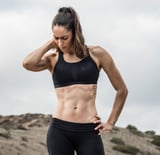
Exercise alone, especially doing hundreds of crunches or hours of treadmill miles, isn't the key to reducing belly fat. Although we can't spot-reduce fat from our bellies, all it takes is the right combo of lifestyle changes, including diet and exercise, and you'll have a leaner tummy - and you can keep it that way! Incorporate these nine simple, doable, expert-recommended habits to ditch belly fat for good. Start with one or two of these at first, and losing belly fat will feel easy.

 Articles


