


Healthy lifestyle
A healthy lifestyle is one which helps to keep and improve people's health and well-being.Many governments and non-governmental organizations have made big efforts in healthy lifestyle and health promotion.

Mental Health
Mental health can be considered a very important factor of physical health for the effects it produces on bodily functions. This type of health concerns emotional and cognitive well-being or an absence of mental disorder.

Public health
Public health can be defined in a variety of ways. It can be presented as "the study of the physical, psychosocial and socio-cultural determinants of population health and actions to improve the health of the population.

Reproductive Health
For the UN, reproductive health is a right, like other human rights. This recent concept evokes the good transmission of the genetic heritage from one generation to the next.

Health
Health is a state of complete physical, mental and social well-being, and not merely the absence of disease or infirmity.
jeudi 14 mars 2019
Crave Hard Workouts When You Travel? Get Cheap Day Passes to Local Gyms With This App

Ah, hotel gyms. Don't you just love working out in a closet? The stuffy air, the one creaky elliptical, that little strip of floor where you can almost squeeze in a plank. They get the job done in a pinch, but most hotels obviously aren't going to be able to provide the same space and equipment as a regular gym. And sure, you don't always need to work out when you're traveling, but if you're on the road a lot for work or just trying to keep up a regular training regimen on vacation, it might be a priority.
One solution? Zeamo. It's an app on iOS and Android that allows you to access local gyms (over 25,000 of them) in major metropolitan areas all over the globe through a simple pass on your phone. The app offers two options: a monthly subscription plan run through your employer (which is great if you travel frequently for your job) and a "day pass" option if you're using it on your own. What's great about that day pass: it's purely pay-per-visit, with no monthly or sign-up fee.
If you're as financial-commitment-phobic as I am, that flexibility is a big draw. I got my first-ever gym membership a few months ago, and went back and forth for so long because the year-long membership felt like a huge commitment. You don't have this issue with Zeamo. It's free to download, make an account, and scroll through gym options in different cities; you only lay down your money when you've chosen a gym. It's also a nice option for trying out new facilities in your own city without a long-term commitment. Zeamo offers daily, weekly, and monthly pass options for users, though specific gyms might not offer each choice.
Zeamo let me try a day pass for free; click through to see why I loved it.

On the Idea of a "Summer Body," and Why Working Out Should Not Be Tied to a Due Date

In case you hadn't heard, bodies have now become seasonal. See, here's how it works: each year begins with expectations and weight-loss goals that are to be met approximately after daylight saving time, when the days get longer and warmer. It's imperative that these goals are met come summertime. If not, well, you might as well not even try. What happens next is inconsequential, too, because you'll be expected to again exercise your body into submission at the start of the following year anyway.
I've been thinking about the phrase "Summer body" a lot lately. I'm a member at a gym that's truthfully a little outside of a budget I'm comfortable with, but I save elsewhere to invest in working out - something that I enjoy and seems vital to my routine at this point. While I actually really love said undisclosed gym, something's been bothering me, and it's a particular phrase instructors often use to motivate myself and others in their fitness classes around this time of year: "Summer bodies are made in the Winter."
The incentive isn't lost on me. It typically takes time to lose weight if it's done in a healthy manner, and weight-loss goals are meant to be gradually achieved. I got it. But it can also easily turn into a jab that's used both inwardly or by those around you.
I watch this reality show, Vanderpump Rules, and the phrase actually became major plot point of its fifth season. During the season premiere, two cast members - Lala Kent and James Kennedy - arrive at a party to essentially confront the rest of the cast, who they were on the outs with. After some back and forth, Lala said, "I can see that everybody here has not been working on their Summer bodies!" Chaos ensued, and body positivity went on to become a recurring talking point, one that was often inelegantly handled. (For what it's worth, no one on that show is anything but thin.)
To plainly state what might already be obvious, the phrase is problematic because it assumes that everyone is striving towards some idealized version of the body they presently posses - and that ideal body's got a due date. That sort of heightened pressure and timeline-driven thinking is also incredibly toxic for people who have struggled with negative body image and unhealthy habits in the past.
Though I've always been athletic, my weight has dramatically fluctuated in the past. When I moved to New York for college, everything around me seemed so overwhelming that I found control in a stringent diet and exercise routine - both of which were wildly unsustainable, by the way. Each time I went home, friends and family commented on my weight loss, and I would fantasize about what my next "Summer body" might look like.
Thankfully, I didn't sustain it. I gave up dieting and working out altogether, I gained weight, and, if I'm being completely honest, it didn't feel all that great at the time. I was, however, happier. Now, years later, my weight stays about the same, I attend workout classes that I legitimately enjoy several times a week, and I pretty much follow what is referred to as intuitive eating. The seasons come and go, and my body stays about the same.
Exactly How to Get Started on a Low-Carb Diet, According to a Dietitian

The idea of following a low-carb diet can feel a bit overwhelming. (Just how many carbs are we talking here?) But with so many people seemingly shedding pounds and finding a richer lifestyle after going low-carb, it's oh-so enticing. Before you decide for yourself if cutting carbs is right for you, make sure you know exactly what the plan entails. We asked Stefanie Schwartz, MS, RD, CDN, of Nutritionally Yours, some of your most pressing questions.
What Are the Benefits of a Low-Carb Diet?
Obviously, a low-carb diet can help you lose weight, as long as you're eating the right foods and watching how many calories you get each day. Eating fewer carbs helps lower your blood sugar, which allows your body to burn stored fat for energy instead of glucose.
Aside from that, Stefanie explained that a low-carb diet can help prevent cravings and lower your blood pressure and triglycerides, improving your overall health.
How Many Carbs Should You Eat?
There's no one number that's right for everyone. However, according to dietary guidelines, carbs should make up 45 to 65 percent of your daily calories. Keep in mind that one gram of carbs translates to four calories. "So, assuming a 2,000-calorie diet, an individual should consume 225 to 325 grams of carbs daily," Stefanie told POPSUGAR. However, when you're looking to lose weight, you want your carbs to be under 150 grams per day. "On average, keeping carb intake to 50 to 100 grams per day is low enough for an effective weight loss, yet not too low to put you in ketosis," she said. (Ketosis is the goal of the very low-carb ketogenic diet.)
To come up with a more precise amount of carbs you should eat based on your sex, age, and activity level, draw up a health plan with your own dietitian or doctor so you can be sure you're eating enough of the right foods.
What Foods Can You Eat on a Low-Carb Diet?
You might think that all you need to do is cut back on carbs - but this diet is really about choosing your carbs wisely. Stefanie explained that the ideal carbs to consume are from high-fiber, nonrefined sources, like oatmeal, yams, quinoa, wild and brown rice, farro, vegetables, and fruits.
The key to sticking to your low-carb diet is really nailing your grocery shopping and meal prep. So, plan to pick up a combination of lean proteins, healthy fats, and virtuous carbs that you can mix and match to create a healthy menu each week. Stefanie suggested several meal options to get you started:
- Make a vegetable or chicken soup in the slow cooker.
- Make a turkey meat loaf using oats or almond meal as the binder and serve with mashed cauliflower.
- Make a batch of turkey meat sauce to serve with zucchini noodles or spaghetti squash.
- Buy vacuum-sealed fish filets and bake them in the oven with olive oil, lemon, and capers and serve with roasted brussels sprouts.
- Make a vegetable frittata with whatever vegetables you have on hand.
Don't forget that you'll need snacks, too - Stefanie recommends hard-boiled eggs, turkey and cucumber roll-ups, a small serving of nuts or seeds, some cottage cheese, and pickles.
Is a Low-Carb Diet Safe?
According to Stefanie, there's no real drawback to sticking to a low-carb diet in the long-term. "The rewards of a low-carb lifestyle are an increase in energy, a reduced appetite and cravings, a drop in insulin levels and glucose levels, and less inflammation," she told POPSUGAR, and all of those things are absolutely positives in your life. She also pointed out that the monounsaturated and polyunsaturated fats and lean protein are excellent choices for what to put into your body.
However, if you do come off a low-carb diet, you can expect to see a little uptick in your weight, simply because added carbs means water retention. "The trick to adding more carbs after following a low-carbohydrate diet is to add them back slowly and with more fiber-rich foods. Make sure to keep your water intake high to flush your system," Stefanie said.
As always, your best bet is to discuss any dietary changes with your doctor or dietitian before actually doing it. That way, you can decide together what the best plan of action is for you.
Grab Some Water, Because This Olympian's 5-Minute Ab Routine Will Set Your Core on Fire

If we asked you to take a guess at how Olympic runners train, abs might not be the first thing that comes to mind, but Rio 2016 Olympian Colleen Quigley is here to convince you that a strong core is essential for efficiency and form. Colleen, a 2020 hopeful, just won her first US title this past February for the Mile Run at the USA Indoor Track and Field Championships.
Currently in a lull period between the indoor and outdoor track seasons, Colleen told POPSUGAR that she and her teammates at the Bowerman Track Club in Portland, OR, do what they call "base training," longer aerobic workouts that build a strong foundation. Their weekly routine consists of track workouts (oftentimes two per day), one long run, and three gym sessions with weights. She also does an hour of Pilates each week, which has made her "really strong in the past year."
Colleen posts some of her leg and ab day workouts on her website, and I tried her 3-6-9-12 ab routine. Keep reading for the workout and details about just how much my core hated me afterward (in a good way).
These Inspiring Celebs Who Are Open About Mental Health Prove You're Not Defined by a Diagnosis

An estimated 44 million US adults experience a mental illness in a given year. But if you're one of them, it's easy to feel isolated and alone. After all, there's still so much stigma attached to mental illness and seeking treatment for mental health that many people don't feel comfortable opening up about their experiences.
Fortunately, these prominent celebs have spoken out. Amid their hectic schedules and lives in the public eye, they sought help and used their platform to raise awareness about mental illness, including how much better life can get after treatment. Whether you have been diagnosed with a mental illness or just don't feel like yourself, you can find solace in these inspiring quotes.
If you are feeling anxious or depressed and need help finding help or resources, call the Anxiety and Depression Association of America (1-240-485-1001) or the National Alliance on Mental Illness (1-800-950-6264).
Yes, You Can Lose Weight Walking as Little as 30 Minutes a Day - but There's a Catch

If you're on a mission to lose weight but don't have the time or energy for a more intense workout, walking is a great place to start. And with fitness trackers and GPS apps readily available on our phones, it's easier than ever to track your steps, time, or distance every time you hit the pavement.
So, let's say you walk for an hour during the day: will you lose weight? Studies suggest you would - one in JAMA Internal Medicine found that those who walked for just 30 minutes lost body fat - but just how effective your workout is depends on a number of factors.
"The intensity at which you walk plays a key role in helping your body burn more calories and improve your cardiorespiratory system," Denise Miklasz, an ACE-certified personal trainer at Northwestern Medicine Crystal Lake Health & Fitness Center, told POPSUGAR.
If you're walking at a casual stroll, you're probably not going to achieve the weight loss you want. One way to pick up the pace? "You could include 30- to 60-second bursts of faster walking every three to five minutes, followed by a 30-second recovery walk," Denise said. You can also try walking with weights or picking a route with hills to add some intervals to your workout.
"An interval-training workout will continue to burn more calories after your workout due to a physiological effect called excess post-exercise oxygen consumption, or EPOC. EPOC is sometimes referred to as the 'afterburn effect,'" Denise explained.
Even more important is your diet. You know this, but you can't eat whatever you want or as much as you want the second you start exercising. "In order to lose weight you need to create a calorie deficit," she said. One pound is equal to 3,500 calories, so you'd need to carve out 3,500 calories each week in order to lose one pound, which experts consider a safe and healthy goal. In other words, "you need to either burn an extra 3,500 calories or remove 3,500 calories from your diet," Denise explained - or a combination of the two.
"Combining exercise with a healthy diet is more effective than restricting calories alone. Exercise can help you maintain and increase lean body mass, which results in a larger calorie burn per day," she said. To that point, when you're ready to start building muscle, remember that walking alone won't cut it. "Ideally, incorporating strength training along with aerobic exercise will increase muscle mass and boost your metabolism," Denise said.
Parents, These Invaluable Life Lessons Are Why Every Child Should Play Sports

Whenever people ask me about how I got into sports, I always laugh. Because honestly, there was a time when I didn't like sports, more so because I didn't know anything about them, and I definitely didn't know just how far they would take me. When I was seven, my dad asked me if I wanted to play soccer. I was indifferent, my dad encouraged me to "Give it a shot," and ultimately, I agreed to it because my favorite cousin, Cydnee, played soccer.
My first year as a soccer player was pretty terrible. I scored all of one goal that season whereas my best friend on the team was a natural. Although I wasn't great, I kept showing up. The following year, I got better and became one of the top scorers on my team. Around that same time, everyone realized I had a special skill: speed. After the regular season, I tried out for the all-star team, which I didn't make because I wasn't good enough, according to the coach. I remember feeling devastated and telling my dad I would prove that coach wrong by becoming the best soccer player I could be. That was one of the first lessons sports taught me: you won't always win or get what you want, but that doesn't mean you should give up on your dreams.
My love for track and field also started when I was seven, and it changed my life forever. My dad and coaches saw something in me before I knew it existed. My talent was nurtured over the years, and those years of training taught me how to set goals, I wanted to run track professionally and become an Olympian, molded my self-confidence, taught me to love my body, and taught me about sacrifice.
I also used sports, specifically track, as an outlet. Whatever I was feeling, I knew I could let it all out on there. I grew up on the track, and I'm forever grateful for the sport and all of my coaches. As much as I loved the intensity of the competition, the rush I felt whenever I scored and my team won, and sprinting across a finish line in first place and breaking records, I realize now just how small those moments were compared to what I gained from playing sports.
From a young age, sports taught me how to be a team player and work with people who were both similar and different from me. I also learned how to be a leader throughout good and bad performances. I learned how to be supportive, listen, and encourage my teammates. Sports also taught me how to be tough mentally and physically. I learned all about time management among going to school, simultaneously participating on both school and club teams, and maintaining a social life. And as much as I hated to lose, sports taught me how to learn from my losses and lose with grace.
Because of one simple question, "Do you want to play soccer?," sports opened up a world of opportunities for me. Not only have I met some of my best friends through sports, I ran track at a Division 1 university on a full-ride scholarship, I've worked with top athletic brands because of my athletic background, and most importantly, I'm an all-around stronger and better person because of sports. The lessons I learned playing sports made me an incredible athlete, and I still apply them in my everyday life.
I say all of this to let you know that sports are about far more than who has the best skills on the team. Winning championships and athlete profiles in the papers are fun, but once you hang up your cleats and put away your gear, you're left with so much more.
I've Used the Exact Same Yoga Mat For 20 Years, but This New One Made Me Switch

I started yoga way back in 1999, and since then, I have been using the exact same yoga mat: the Manduka Black Mat Pro. I think I paid $80 for it at the time, although now it costs $120. Either way, I've definitely gotten my money's worth using it for the past 20 years, and it looks as perfect as the day I got it.
I love it because it's thick, durable, and dense enough to offer cushion for my bones in any pose. I also love that it's super tacky, so when I'm in Down Dog, I don't slip. That is, until halfway through a supersweaty hot yoga class. That's when my mat becomes dangerously slippery - I once dropped into a full split without meaning to because I had forgotten my yoga towel that day.
Manduka now makes a new mat specifically for your sweaty practice - the Manduka GRP Yoga Mat ($98). I've tried dozens of yoga mats, so I wasn't expecting this one to be that amazing, but after just one class, I was shocked at how awesome it was - I instantly became a convert!
I adore my Black Mat Pro, but having to use a yoga towel over it can be annoying because it bunches up and doesn't offer the grip I love from my mat before I get sweaty. But this GRP Yoga Mat, which is made from sustainably-harvested natural tree rubber, got even more grippy the sweatier I got. In a 98-degree room with drips coming off my nose, my palms were so sweaty and they still didn't budge. I didn't have the annoyance of having to stop my practice to lay out a towel, and it still offered the thickness and denseness I love from my Black Mat Pro.
Related: I'm a Yoga Instructor, and These Are the 12 Poses I Do Every Single Day
The one tiny issue is that the surface is super smooth and slippery when your hands and feet are dry. But that was quickly remedied by dribbling a few drops from my bottle at the top and bottom of my mat to wet it a little. Boom: instant traction.
If you love hot yoga classes, or you tend to sweat and slip a lot, you must get this mat. It'll change your practice forever - I know it's changed mine. I teach hot yoga classes, and this is now the one mat I'll recommend to my students.
If Your Goal Is to Burn Fat and Build Muscle, an Expert Says to Do This While Lifting Weights
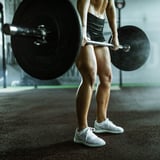
Getting stronger and building muscle is more complex than just grabbing a pair of dumbbells and doing the first five exercises that come to mind. In order to build muscle and improve your strength, you've got to go into the gym with a plan, train consistently, fuel your body with adequate nutrition, and be patient. Whether you've just finished your first strength workout ever or you hit the weights four times a week, there's an important step to lifting you need to know if you want to build muscle.
When you lift weights, your muscles are activated and they can either shorten (a concentric contraction), lengthen (an eccentric contraction), or not change in length (an isometric contraction). To find out if the eccentric contraction (the amount of time your muscles spend under tension) can help you build more muscle, POPSUGAR spoke to Heather Milton, MS, CSCS, an exercise physiologist and clinical specialist at NYU Langone's Sports Performance Center.
What Is an Eccentric Movement?
"Eccentric movement or exercise is really when the muscle is lengthening," Heather told POPSUGAR. She then explained that our muscles are different patterns of tissue and fiber that overlay over each other. If you're feeling lost, put your phone down and interlace your fingers. This is how your muscle fibers sit, she explained.
"When you're lengthening the muscle, those fibers are actually stretching away from each other," she said. As this happens, Heather explained that tiny proteins in our muscles try and hold them together. "When you're doing eccentric exercise, you're actually, in a sense, elongating the muscle in a controlled fashion, meaning that the proteins within the muscle are actually trying to control the rate that you're elongating it," she said.
To help you visualize this, think of a bicep curl. When your hands are near your shoulders and you begin to lower the weight back down toward your thighs, that's the eccentric part of the exercise.
Why Eccentric Exercises Are Important For Building Muscle
If you're trying to build muscle, you should start focusing on the eccentric portion of each exercise. Why? Because the longer the muscle is under tension (the longer it takes you to lengthen the muscle) the more that muscle has to work. For example, if your trainer or group instructor tells you to lower down in a squat for three seconds, time under tension is what they're referring to. As you lower your body down, your quadriceps (aka your thighs) muscles will lengthen.
By spending more time under tension, the proteins in our muscle have to work harder to hold the muscle and control the contraction, according to Heather. This causes tiny breaks in the muscle that get stimulated after exercise as you sleep, which is imperative to improving your muscle health, quality, and strength, she said. While you sleep, your body begins to repair the tiny filaments and fibers that were broken during exercise, and they grow back healthier and stronger than before.
How to Perform Eccentric Exercises
Eccentric exercises can help you build more muscle, but there are a few things you need to consider. Heather said, in general, "If you're doing slow, controlled time under tension (called the hypertrophy or muscle-building phase) . . . that's where you would gain the muscle mass."
You'll also need to factor in the load (how much weight you're lifting) and the types of exercises you're doing. If you're training in the hypertrophy phase, Heather said to follow a three or four count tempo. Here's how to determine how heavy you should be lifting, and a here's list of exercises that will help you build muscle.
Scared to Take Time Away From Your Phone? An Expert Shares This 1 Simple Hack That'll Help

I can't live without my phone (there, I said it) and I know I'm not alone. When I spoke to Amy Blankson, positive psychology researcher and author of The Future of Happiness, over the phone (of all things) she hit me with the hard facts: we look at our phones 150 times a day. That amounts to two-and-a-half hours in total. And, because we live in a constant world of connectivity, "the greatest challenge is that we don't have space away from it," she said. But before panic ensues, know this: she doesn't want us to bite the bullet and disconnect altogether - we need technology for our everyday lives. The key, she explained, is to learn to manage our devices instead of being managed by them.
We need 55 minutes of "me time" per day, according to a Fall 2018 survey, "The Power of Space," on which Amy was a consultant. Eighty-seven percent of participants actually said that taking time away from technology made them "better people": they were calmer, more focused and productive, friendlier even. We need to unplug, Amy said, and "in the same way we'd charge our phones, we need to recharge our minds as well." She offered one pro tip to help us get this space.
Preparation: The Secret to Unplugging
Amy said that the most common resistance she sees from people who don't want to put away their phones stems from fear: fear of missing an important call, fear of missing an email, fear of missing the latest news or photo from a friend. There's also the idea that your phone is a safety device and you don't want to leave it behind in the event of an emergency. The first step, she said, is to acknowledge that fear. Once you do that, you can actively plan for when you unplug by letting people know. It sounds simple (or maybe strange to some), but it will alleviate the anxiety you might feel.
So, tell your loved ones that you're going to be offline, post on social media, set up an email receipt saying you're away - preparation is the secret to letting yourself comfortably unplug and give yourself space because, Amy explained, "if you're worried the whole time that someone is trying to reach you and they can't, you can't truly relax and enjoy." She noted, "I'm not advocating that you unplug the rest of your life; you're just trying to hit reset on your impulse control so that you can maximize that awareness of your behavior" and get those 55 minutes throughout the day of much-needed "me time."
Not Sure What to Do When You Unplug? Here Are Some Ideas
"We say that we don't like being distracted by technology, and yet, most of us haven't taken the time to turn off notifications and push away social media feeds strategically so that, rather than information coming to you, you have to go get it," Amy said, adding that it's so important to "build in and prepare for ways to recharge and refuel your mind." Here are some things she suggested we do to unplug:
- Journal or write down moments of gratitude.
- Explore (i.e. go to a park).
- Try a new hobby. (Not sure where to start? Read this.)
- Treat yourself to a mani-pedi.
- Get coffee or go out to dinner with friends.
- At least three times throughout the day (especially if you have a desk job), move to different locations to get a new vantage point (walk around the block, go to a coffee shop, etc.).
- Put your phone away during meals.
- Put down your phone an hour before bed (I tried this, and it really works!).
Try not to have any of your devices on you when you're doing these unplugging activities, Amy advised. If you absolutely need your phone, keep it out of sight so you're not focused on getting a message. Also, when you're disconnected from technology and feel like you still want to document the moment, write about it or take a picture after the fact, she said, not during. It's this pause that helps you reflect on whatever you're posting later. Now, conquer that fear of unplugging a few times a day! We believe in you.
Starbucks Brand Evolution Fresh Debuts First Bottled Celery Juice to Be Sold at Whole Foods

Celery juice has officially hit the mainstream. If you would've told the humble green stalk 10 years ago that it would one day reach peak spotlight, it wouldn't have believed you! Bottled celery juice will now be sold in select grocery stores and through other retailers, thanks to Evolution Fresh's new flavor, Organic Celery Glow. Evolution Fresh, aka the juice and smoothie brand that Starbucks acquired in 2011, describes the beverage as "revitalizing, cold-pressed celery juice brightened with a twist of lemon."
Each 8-ounce serving has 2 grams of (natural) sugar, and the 15.2-ounce bottles will sell for $5 each at Whole Foods and other natural retailers like Sprouts beginning in April (not at Starbucks). Getting your own juicer and having a homemade cup is great and all, but it's an investment of both time and money. With the launch of the first nationally available celery juice, you can test out the trend during your next grocery run, and stock up whenever the craving strikes.
Have a Hard Time Staying Hydrated? These Water Bottles Beep or Light Up to Remind You

We know that we should at least try to stay properly hydrated every day, but sometimes we are just too busy juggling a hectic work schedule, running errands, or catching up with friends and family to keep track of whether we drank the right amount of H2O. Thankfully, we're now officially in the future, and smart water bottles exist that can help motivate you to keep drinking so that optimum hydration is reached.
Some of these water bottles light up when we have not taken a drink in awhile, and others are connected to a smartphone app that can help analyze your water intake. Whether you are looking for a smart water bottle to help you drink more at work while you go from meeting to meeting or on the search for one that'll work for you while you embark on an intense hike, you'll find your match here.
I Lost 20 Pounds in 3 Months by Combining These Popular At-Home Programs

I'm not sure how it happened. OK, maybe I do know. After a year of eating (and drinking) more calories than I should, my usually slight frame was only 10 pounds lighter than it had been when I was nine months pregnant with my now 3-year-old son. To be clear, I gained 40 pounds during my pregnancy, so three months ago when I climbed onto the scale and saw that my food baby weighed almost as much, I knew I needed to do something.
So, like millions of women before me, I turned to WW to help manage my eating. Later, I started doing the BBG fitness program, which consists of three 28-minute resistance training sessions and three to four cardio sessions per week. In three months, I lost 20 pounds, and I'm still losing weight. While I may not be at my end goal yet - after all, I'm only at week eight of the 12-week BBG program - I have found that these two programs are exactly what I needed to help me finally make fitness a priority. Here are the tips and tricks I've learned along the way and continue to use to find the healthiest version of myself.
Have Your Cake and Eat It, Too, Thanks to These 10 Low-Carb Baking Mixes

The only thing better than the way your house smells while you're baking is getting to eat your delicious creations. But, that joy shouldn't have to end if you're eating a low-carb diet, because there are plenty of low-carb baking mixes to choose from. Brownies, cookies, cakes, and waffles are now within your grasp, and they're all on Amazon! So, do you have weekend plans yet?
These Bodyweight Exercises For Your Legs and Booty Require Zero Equipment
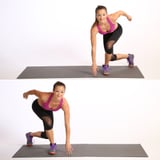
Weight training is a great way to build muscle and make you feel badass. In fact, you have to pick up the dumbbells and barbells if your goal is to effectively build muscle (reminder: eating more carbs and protein and incorporating recovery days into your schedule is also important).
But whenever you can work your body without navigating the weights at the gym or taking out the 10-pounders you keep in your closet, it's a good day - i.e., you can grow your glutes anytime, anywhere. When it comes to working your lower body equipment-free, there's a long list at your disposal. Here are 20 lower-body bodyweight exercises that bring the heat to your booty, calves, and thighs. Note: this is not a workout. Instead, take some of these moves and add them to your routine. You'll be glad you did!
If You Want to Shed Fat and Build Muscle, a Dietitian Recommends These 6 Foods
It's no secret that diet is crucial to most fitness goals, whether you're looking to burn fat, gain muscle, or both. "Abs are made in the kitchen," after all; you have to work to build the muscles and shed the fat on top of them if you want them visible, and the right eating plan is key to both of those goals. So what food should you be stocking up on to do just that?
Low-Carb Foods to Help Burn Fat
"Not having lots of carbs, especially from sugar, can help you burn fat," said registered dietitian Kristin Kirkpatrick of the Cleveland Clinic's Wellness Institute. She explained that when it comes to diet, fat loss isn't so much about the exact foods you eat, but making sure you get the right levels of macronutrients - that is, protein, fat, and carbs - while depleting your body's glucose stores. "Glucose is the body's preferred fuel," she told POPSUGAR, and carbs break down into glucose - aka sugar - in your body. Eating fewer carbs gives your body less sugar to work with. To get the energy you need, you'll start burning fat instead.
Protein Will Help Build Muscles
No surprise here. Kristin confirmed that if you're looking to build muscle, protein is crucial. That's because it's made from amino acids, which she said are helpful post-workout, when your muscle fibers are broken down. The amount of protein you need depends on a few different factors, Kristin said, including the kind of workout you're doing (cardio vs. resistance training) and its length.
Low-Carb, High Protein Foods
If you're trying to both burn fat and build muscle, you'll be looking for foods that are brimming with protein and low in carbs. Kristin highlighted six that are good to add to your cabinet:
- Nut butters
- High-protein, low-carb energy bars
- Full-fat dairy
- Meat
- Tofu
- Beans
Two other strategies can help lose fat and build muscle: intermittent fasting and tracking macros. IF has been shown to protect muscle mass, Kristin said, and she added that some studies have shown that working out in the morning before you eat can bump you into a fat-burning zone.
Hitting your macros is also key - and more important than counting calories. That's what makes the keto diet so popular, Kristin said: "Calories are sky-high, yet people lose weight."
While keto and IF might not be for you, incorporating Kristin's six key foods into your diet, whatever it is, is an effective way to start shedding body fat and building your muscles.
I'm a Former Gymnast, and These Are the 12 Stretches I Still Do For My Splits

Gymnastics was part of my life for more than half of it. We know gymnasts are strong; I've written about bodyweight moves I still do to this day. We know they're flexible - case in point: Katelyn Ohashi nailing splits several times during her perfect-10 floor routine. But when it comes to keeping up with their splits, how do ex-gymnasts go about it? I'm here to tell you that the flexibility training we used to do at my old gyms was extreme. One coach in particular would have us get into a low lunge with one leg out straight (a position similar to the Lifted Head to Knee pose in yoga); then, she'd pull that straight leg up to our noses. We'd also use mats for what's called "oversplits".
While I don't do that type of stretching anymore (are you crazy?!), I still like to maintain my splits. It makes me feel like I've still got it (and, who knows, they could be a good icebreaker at a party someday). It's important to do a little cooldown stretch after your workouts in general, and I make sure to incorporate split stretches into those cooldowns once or twice a week. Ahead, you'll find 12 of these moves, all of which are focused on the hips and hamstrings. You don't need to do every single one of them as a sequence; pick four or five moves and stretch for at least five minutes (or longer if you feel like you need it). I'd definitely suggest doing numbers five through twelve the most. Plus, check out a five-minute Class FitSugar stretch routine for splits at the end.
This Resistance Band Leaves My Lower Body Insanely Sore, and It Never Snaps or Rolls

There's a lot of annoying things that can happen at the gym: there's no space to train, the once piece of equipment you need isn't available, you forget your clothes for work, and your resistance band is always rolling up and moving. I can't control how long the guys decide to stay at the squat rack (and not squat), but I have figured out how to prevent my resistance band from moving.
This may sound dramatic, but honestly, it's one of the most annoying things that can happen at the gym that I can actually control. After doing some research, I came across the Sling Shot Hip Circle ($25). I had seen The Rock use it on his Instagram, so naturally, I figured I'd give it a shot.
My initial thought was that the Hip Circle wasn't as stretchy as the plastic resistance bands; I wasn't sure if that was a good or bad thing. It was also a lot thicker and wider than the bands I had used in the past. I put it to the test while doing glute activation exercises and my butt was on fire after just a few reps. The thickness of the band provided more resistance, meaning my glutes had to fire more, which is exactly what I wanted.
I put it through another test when I did lateral band walks, and yes, my glutes were on fire once again. I also like to use it when I'm doing exercises such as the barbell hip thrust to ensure that my knees stay in the proper position and that I'm using my glutes to move the weight, not my lower back.
Aside from it really working your glutes, the width and thickness of the band prevents it from rolling up, which I find to be one of the most annoying things about resistance bands. I know $25 sounds like a lot to spend on a resistance band, but in my opinion, it's worth it. Reason number one: when you add up how much you've spent on bad resistance bands, it probably amounts to more than $25. Reason number two: it'll last you a long time. I've had my resistance band for a little more than a year and it still looks like it's brand new (disclaimer: I use it at least three times a week). If you're tired of your resistance bands rolling up, snapping, or not being strong enough, you've got to give this one a shot.
Tea Tree Oil: Not So Good For Athlete's Foot, According to a Podiatrist

Tea tree oil is used for a lot of things: to clear acne, to repel bugs, to cure bites, cuts, and bruises . . . the list goes on, and it's even Meghan Markle-approved (she calls it a "cure-all"). Though this oil can soothe dry, itchy skin, when it comes to treating athlete's foot, an infection caused by fungus, it's not as effective as you'd think. We spoke to Miguel Cunha, founder of Gotham Footcare, about why.
Can You Treat Athlete's Foot With Tea Tree Oil?
Dr. Cunha said that tea tree oil may be somewhat effective at reducing itching, scaling, swelling, and burning caused by athlete's foot when applied twice a day. But, he advised, it's not as effective as actual antifungal medication, and it may take several months to see progress if you just stick to the oil. "Tea tree oil is only 60 percent effective," he said.
How to Properly Treat Athlete's Foot
Dr. Cunha explained that the best way to treat an infection is to first determine whether it's bacterial or fungal. "Most infections that present with scaliness and itchiness to the bottom of the foot and in between the toes are a result of athlete's foot," he said. Before you go to a doctor, you can try over-the-counter antifungal medication for athlete's foot for two to three weeks, but if the condition doesn't improve, then you'll need a prescription-strength medicine.
"It's worth pointing out that most people tend to assume their feet are just dry or scaly when they actually suffer from athlete's foot," Dr. Cunha noted. "They typically just slather their foot in lotion, thinking this will solve the problem, but they aren't treating the fungus. That means the infection could get worse and travel to your nail." In the event that it does travel up to your nails, you might need an antifungal oral medication. Other tips he gave us include spraying Lysol on your shoes regularly and avoiding walking barefoot at public pools and in gym locker rooms (seriously, don't do it!). So, sure, use tea tree oil to your heart's content, but if you're looking for an effective treatment for athlete's foot, this podiatrist wants you to choose medication specific to that infection, not just for dry skin.
Why This Cardiologist Doesn't Track Heart Rate - and Says You Don't Need to, Either
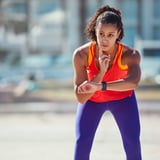
The rise of fitness trackers and classes that use them have changed the game in the fitness world, making us more aware of how much we move, sleep, stand, and walk. And many new trackers, from Fitbits to Apple Watches, have added a new feature: a heart rate monitor, which lets you track your resting heart rate, check out how high it goes during exercise, and watch how it changes over time as you get more fit.
Those stats are interesting, but we wanted to know how useful heart rate information actually is, especially during a workout. POPSUGAR talked to Ethan Weiss, MD, a cardiologist and associate professor at UC San Francisco, and what he had to say was surprising. "I don't recommend anyone really check their heart rate or follow it for anything other than curiosity," Dr. Weiss said. That's because heart rate can be pretty arbitrary, he says, and can differ greatly between people depending on fitness level. Unless you have a heart condition, you're fine ignoring those numbers, and you might even be better off.
Why Tracking Your Heart Rate Isn't That Useful
One thing that heart rate is closely connected to is your fitness level. "There is a strong correlation between how fit you are and how much your heart rate responds to exercise," Dr. Weiss said. He acknowledged that it can be interesting to watch your heart rate adapt as you get more fit but that it still isn't ultimately that useful.
Related: A Cardiologist Tells Us the Worst Thing For Heart Health
As an example, Dr. Weiss said, "Let's say I did a workout and my heart rate went from, say, 60 to 120 beats per minute in four minutes. Then, if I got myself in shape, maybe that would change to be 60 to 100 beats per minute in 20 minutes." You're increasing your stamina and cardiovascular fitness, so your heart doesn't have to work quite as hard during these tough workouts. That's interesting to know, he said, "but again, there's nothing actionable about that. It's more of a curiosity." In general, there are more useful things to pay attention to.
What You Should Track During Workouts
Dr. Weiss said that he doesn't track his heart rate, not during exercise or rest. "I encourage people to pay more attention to how they feel and to listen to their bodies," he said. "If your body tells you this is too much, don't push to the point of being exhausted." This holds especially true for people who are just starting to get in shape; he said monitoring your heart rate that closely can be a distraction more than anything, drawing you away from your body's natural exhaustion cues.
It can be hard to pick up on those, too, so really pay attention to your body's reactions and fatigue level the next time you're working out. It can be helpful to track or even write down those sensations as a way to gauge your rate of perceived exhaustion (RPE). Here's a chart with some helpful cues to get you started, like noticing how fast you're breathing and whether or not you could hold a conversation.
Related: Here's How Trainers Suggest You Start Working Out If You Find Cardio Intimidating
The main takeaway here is that unless you have a heart condition, you shouldn't stress too much over your heart rate. For the most part, your body can tell you all you need to know: when you're pushing too hard, when you're comfortable, and when you can take things up a notch. Use your fitness tracker to follow other metrics, like steps, stairs, or weight, and let your heart do its thing.
7 Experts Reveal How to Lose Belly Fat Once and For All

Belly fat seems to be the most common spot people want to target when they lose weight. And it's not just for aesthetics; too much belly fat can be dangerous. Visceral fat, the layer of fat in your abdominal cavity that surrounds vital organs, has been linked to heart disease, type 2 diabetes, and PCOS, among other conditions.
If you want to get rid of belly fat, the good news is you can implement a number of diet, exercise, and lifestyle factors to make it happen. The bad news is that you can't spot-target fat loss; every person is different and your body decides where the fat comes from when you lose it (yay, genetics!). So if you are looking to get rid of belly fat specifically, no amount of crunches is going to make it go away. But you can lose body fat overall, including from your belly.
We spoke with seven weight-loss experts, including registered dietitians, certified personal trainers, and a doctor to get the inside scoop on how to lose stubborn belly fat once and for all. These tips may not be easy, but with effort and consistency, you will be well on your way to achieving your goals.
Tired of Getting UTIs? Gynos Say This Drink Can Help - and It's Not Cranberry Juice

In today's round of scientific fact or common misconception, we have a classic: using cranberry juice to prevent or cure UTIs. If you've ever had a UTI, chances are you've heard the advice to chug cranberry juice in hopes of easing symptoms, making the infection go away, or stopping another one from taking its place. But does it actually help?
"There are some studies evaluating this, and none have shown that cranberry juice actually works," ob-gyn Erica Cahill, MD, told POPSUGAR. At the very least, the research is pretty conflicting: one comprehensive review from 2015 tentatively said that cranberries might be effective in prevention in healthy women, but that larger and higher-quality studies were necessary. "Cranberry juice probably doesn't hurt," Dr. Cahill said, but it won't work magic to keep UTIs away.
Related: 2 Doctors Talk Us Through UTIs and Why They Just Won't Quit
Water Is Better for Preventing UTIs
What can help keep you from getting UTIs? It's even simpler than cranberry juice: drink more water said Jenn Conti, MD, an ob-gyn at Stanford and the cohost of The V Word podcast with Dr. Cahill. She cited a 2018 study on 140 women with recurrent UTIs, which showed that drinking an extra 1.5 liters of water every day resulted in fewer UTIs.
So if you're worried about these pesky, painful infections, set down the cran juice and pick up your water bottle. It can help, and upping your H2O intake is good for you in a bunch of other ways, too - so it definitely won't hurt.
mercredi 13 mars 2019
The Blunt Bob Is Spring’s Prettiest Celebrity Haircut Trend and Now We Want It Too

Some of our favorite stars seemed to have rang up their stylists for one particular hair look: a face-framing, blunt bob. For those of us who didn't let the "new year, new you" mantra or endless photos of our "haircut" search on Pinterest convince us to chop our hair off - we have Khloe Kardashian, Chrissy Teigen, and Lucy Hale out here inspiring us with their new blunt haircut.
Ahead, see 15 celebrities wearing the style that's shaping up to be one of this season's top styles.
Morphe Launched 60 Shades of Foundation - This Is What They Look Like

When a new foundation hits, the first thing people have been asking as of late is, "How many shades are there?" Due to incredibly successful brands like Fenty Beauty and ColourPop upping the game when it comes to shade and undertone ranges, there has been demand for more. One company making sure everyone can find their perfect match is Morphe.
The Fluidity Foundation ($16) comes in 60 (!) shades with a range of undertones. The formula is matte, full coverage, and most importantly, affordable. If that sounds right up your alley, this foundation will be your new best friend. However, if you prefer a dewier look, simply add some oil into the product and you'll be glowing in no time. But don't just take it from us - check out all the fans who have tried the foundation ahead.
Bachelor Nation Is Applauding Chris Harrison For Calling Out Colton's Whack Haircut

Just as Chris Harrison promises with every season of The Bachelor, part one of Colton Underwood's season finale was indeed quite dramatic. The former football player had a tearful, Kim-Kardashian-post-losing-her-earring-in-Bora-Bora-style breakdown after getting rejected by Cassie Randolph and jumping that fence in Portugal. Once the producers tracked him down in the countryside, Underwood was forced to confront the two remaining women, Hannah Godwin and Tayshia Adams, to break up with them in front of the cameras and send them packing sans much closure. As if that wasn't enough drama to keep viewers amply entertained, Underwood added an unexpected cherry on top when he joined Harrison on stage at the live finale taping and debuted a brand-new haircut.
As soon as Underwood revealed his new look, which features early 2000s-esque spiky tips on top and a closer-cropped trim on the sides, viewers couldn't help but share their opinions about his divisive cut. Some compared his gravity-defying hair to that of Cameron Diaz's character in that infamous There's Something About Mary scene. Many were curious what brand of hair gel he used to craft those wave-like tips. Others likened it to Guy Fieri, Sharkboy from Sharkboy and Lavagirl, and just about every other spiky-haired character in between.
After getting a load of the fan reactions on social media, Harrison couldn't help but clue in Underwood, bluntly saying, "I think your new haircut has broken Twitter." Keep reading to see all the funny memes and tweets about Underwood's fresh hairstyle. It's safe to say this just might be the most dramatic hair transformation in Bachelor history.
I Have Worn the Same $6 Liquid Eyeliner For 10 Years, and It Gets Me So Many Compliments

I'm a girl who likes to wear a sharp, inky-black cat eye on the regular. There's something about it that makes me feel both powerful and glamorous, so I have made it my go-to look since my teenage years. Time after time, friends, coworkers, and strangers have asked me the same question: "What eyeliner do you use?" There's nothing that brings me more joy than smugly telling them it's a $6 pick from the drugstore. Yes, I have been religiously swiping Wet n Wild MegaLiner Liquid Eyeliner on my lids for 10 years now, and I don't plan on stopping any time soon.
Before you become skeptical, know that I have tried my fair share of liquid liners. I am always curious to see if any high-end or drugstore brands can match the quality of my Wet n Wild pick, but they never do. MegaLiner Liquid Eyeliner comes in a small tube with a screw-top handle. The applicator, a flexible spongy brush, is easy to maneuver as I glide it across my skin. The harder you press, the thicker the line becomes, so you have a lot of control over the intensity of your look. The formula itself is smooth and matte. Its raven-black shade makes my blue eyes pop. All it takes is one coat to get a pleasing obsidian-dark effect.
For me, pen-tip applicators and pots with angle brushes don't give me the razor-sharp line I'm looking for. Only MegaLiner provides me with that smooth edge - I won't accept anything less. What can I say, a good cat eye has become a passion. It's time to set down your pricey choice and give my favorite a try. I can confidently promise you that it won't disappoint.
Let's be real, a $6 purchase is not a big risk to take. I keep one in every purse I own. Read on to see close-ups of the liner itself and how it looks once it's applied.
This Is Your Glossy Beauty Product Starter Pack

There's something super high fashion about a high-gloss face. Look to the Spring 2019 runway shows like Tom Ford, Noon by Noor, and Cushnie for inspiration. But how do you wear this over-the-top dewy look IRL? I've found that choosing one part of your face to highlight (get it?) is the best way to tone down the trend and ensure you don't end up looking like you just stepped out of the shower.
Here are the best glossy beauty products on the market to start your experimentation.
Hold Up: Target Is Having a HUGE Sale on Beauty Products Right Now

As if you needed one more reason to spend an ungodly amount of time at Target (and we'd venture to say you don't, seeing as how this is the place where going in for "just a few things" turns into soft sobs over your monthly credit card statement), the retailer just announced a massive sale on its beauty products - and it's one you do not want to miss.
Here's what you need to know: From now until March 23, Target will be offering an exclusive, one-day-only deal on some of its bestsellers, from brands like CoverGirl, Yes To, Pixi, and more, with discounts as steep as 50 percent off. That means you can save big when buying all your Spring essentials, even if you really only walked in for a six-pack roll of toilet paper. Bullseye.
Forget Crash Diets: These Are the Habits That Will Help You Shed Those Pounds For Good

If you've ever dropped unwanted pounds only to put them back on within months, you may be understandably discouraged by this whole weight-loss thing. But losing weight and keeping it off is actually relatively simple, if you focus your efforts on developing healthy habits you can sustain long after you've become satisfied with the number on the scale. These changes to your diet and exercise routine - and even your mindset - can put you on the right path, according to experts.
- Set realistic goals. Piling on too much too soon - because you want results now - is a sure-fire way to derail your weight-loss goals and knock down your confidence. "The most common mistake I see is people trying to make too many unsustainable changes all at once, and it's less than ideal to go on a diet that severely restricts calories at the same time you start a high-intensity workout routine," Timothy Lyman, an ACE-certified personal trainer and director of training programs at Fleet Feet Pittsburgh, told POPSUGAR. "These results aren't sustainable if you haven't created the right habits and behavioral patterns to start with."
- Snack smart. Many dieters try not to snack between meals, but this means you have significant gaps where you're without fuel, Christy Brissette, MS, RD, founder of 80 Twenty Nutrition in Chicago, told POPSUGAR. "I always tell my clients that hunger is the enemy of weight loss," she said. "It's essential that you never let yourself get too hungry, which means eating something every three to four hours or so." Christy suggested reaching for a snack that's 200 calories or less and contains fiber, protein, and fat to help you feel satisfied and keep cravings at bay. A good example: 1/4 cup raw or roasted almonds.
- Eat protein throughout the day. Protein helps keep you full and bolsters your metabolism by helping to maintain muscle mass, even as you lose weight, Christy explained. "At every meal and snack, include a protein-rich food," she said. "My favorite options are a palm-sized amount of chicken breast, ground turkey, or fish - or 3/4 cup plain Greek yogurt, beans, or lentils, or two eggs."
- Choose quality carbs. "You don't need to say goodbye to carbs in order to lose weight," Christy said. "You can keep your mood and energy levels up and power through your workouts with slow-release carbs that are lower on the glycemic index, such as sweet potatoes, squash, quinoa, millet, oats, barley, beans and lentils, 100 percent whole-grain bread, berries, and apples." You can have carbs at every meal, but aim for a portion about the size of your fist.
- Load up on vegetables. They should take up half your plate at each meal. "Additionally, if you're still hungry, you can't go wrong with eating more nonstarchy vegetables, as the high water and fiber content in vegetables adds volume to your stomach, helping you feel full," Christy said.
- Find a workout you actually enjoy, then do it. "The best exercise for weight loss is whatever exercise you are going to stick with," Timothy said. "Consistency is imperative and an important part of resetting your metabolic rate, which allows you to burn more calories even when you're not working out." It might take some trial and error, but whether it's running, cycling, HIIT, or Zumba, you're bound to find a workout that you'll actually look forward to doing.
- Don't beat yourself up. While you don't want to make it a habit, missing the occasional workout won't halt your progress or cause you to put weight back on. "Just because you slept through your alarm and missed the gym on Monday doesn't mean your week is ruined," Timothy said. "Focus on being better today than you were yesterday and better tomorrow than you are today. You aren't always going to be perfect, and that's OK."
This 30-Minute HIIT Workout Is Better For Weight Loss Than a 30-Minute Run
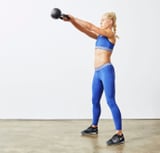
I know what it's like to exercise like crazy and not get the results you're after. I ran for years and years, and it wasn't until I started CrossFit (and monitored my calorie intake) that I started seeing results - bye-bye, belly fat!
Although lifting heavier weights was definitely part of my success, I'm convinced that trading in steady cardio for HIIT-type workouts (high-intensity interval training) was absolutely the key to my success! HIIT has proven to be one of the best workouts for weight loss, especially belly fat.
If this sounds familiar and you're tired of devoting endless hours to workouts without your body showing for it, you don't need to join a CrossFit box (unless you want to!) - just do this HIIT workout.
30-Minute HIIT Workout With Weights
Directions: After a five-minute dynamic warmup, complete each exercise for 40 seconds, then rest for 20 seconds before starting the next move. Repeat this 10-minute circuit for a total of three times to complete a 30-minute workout. Challenge yourself to see how many reps you can do of each move, and really push it during each high-intensity interval, knowing you have 20 seconds of rest to recover.
Equipment needed: Medium to heavy dumbbells (I use 15- or 20-pounders) and a kettlebell if you have it. Choose weights that tire your arms out, so don't go light - it's OK to have two sets of dumbbells on hand. If you need more details on each exercise, see the instructions ahead.
| Time | Exercise |
|---|---|
| 0:00-1:00 | 40 seconds burpees, 20 seconds rest |
| 1:01-2:00 | 40 seconds dumbbell thrusters, 20 seconds rest |
| 2:01-3:00 | 40 seconds burpees, 20 seconds rest |
| 3:01-4:00 | 40 seconds triceps push-ups, 20 seconds rest |
| 4:01-5:00 | 40 seconds burpees, 20 seconds rest |
| 5:01-6:00 | 40 seconds kettlebell swings, 20 seconds rest |
| 6:01-7:00 | 40 seconds burpees, 20 seconds rest |
| 7:01-8:00 | 40 seconds alternating dumbbell forward lunges (6 per side), 20 seconds rest |
| 8:01-9:00 | 40 seconds burpees, 20 seconds rest |
| 9:01-10:00 | 40 seconds V crunches, 20 seconds rest |
An Ob-Gyn Says Hanging Out in Sweaty Leggings Might Do This to Your Vagina

We already know that hanging out in a wet swimsuit can lead you straight to a yeast infection, which is pretty inconvenient during Spring and Summer months. It's natural to wonder if spending a long time in sweaty, post-workout leggings might have the same effect. We talked to an ob-gyn and have some tentatively good news: probably not - but you may want to change out of your sweaty clothes anyway.
A quick review: yeast infections are caused by a fungus, candida, that's naturally present in your vagina and kept in check by other bacteria. It only causes problems when it starts growing out of control. In a previous interview, ob-gyn Mache Siebel, MD, told POPSUGAR that wet swimsuits are a classic culprit for this because "yeast tends to grow in warm, moist areas." Spending time in a damp suit under the hot sun at the pool or beach can make you more prone to infection.
Related: You Definitely Shouldn't Work Out in This Kind of Underwear, According to 2 Doctors
So, what about leggings? Erica Cahill, MD, an ob-gyn and cohost of The V Word podcast, told POPSUGAR that unlike swimsuits, sweaty leggings probably won't lead to a yeast infection. That doesn't mean you're good to hang out in them for hours on end, though. "If we're talking all day," she said, "that's probably just irritating for your skin on your vulva." That could make you feel itchy and uncomfortable, but it's not necessarily a yeast infection. The sure signs of a yeast infection, Dr. Cahill said, are itchiness, thick white discharge, and confirmed overgrowth of the candida fungus (which you'll need to see your ob-gyn to check for).
Without those, the skin around your vulva might just be irritated - better than a yeast infection, but still not fun. When in doubt and when possible, it's best to change, shower, and toss those leggings in the laundry.

 Articles


