


Healthy lifestyle
A healthy lifestyle is one which helps to keep and improve people's health and well-being.Many governments and non-governmental organizations have made big efforts in healthy lifestyle and health promotion.

Mental Health
Mental health can be considered a very important factor of physical health for the effects it produces on bodily functions. This type of health concerns emotional and cognitive well-being or an absence of mental disorder.

Public health
Public health can be defined in a variety of ways. It can be presented as "the study of the physical, psychosocial and socio-cultural determinants of population health and actions to improve the health of the population.

Reproductive Health
For the UN, reproductive health is a right, like other human rights. This recent concept evokes the good transmission of the genetic heritage from one generation to the next.

Health
Health is a state of complete physical, mental and social well-being, and not merely the absence of disease or infirmity.
jeudi 23 janvier 2020
6 Lifestyle Changes That’ll Boost Your Brain Power, According to a Neurologist

Maintaining a healthy lifestyle is like wearing a helmet throughout life: it's the first line of defense when protecting your brain.
While there is "no silver bullet for promoting brain power," setting good social, physical, and nutritional habits is the key to promoting cognitive wellness, says Dr. Jennie Valles, MD, a neurologist in Burke Rehabilitation Hospital's brain injury program.
Yes, "mentally engaging" activities like reading or playing video games that include motion capture or virtual reality can help stimulate the brain, but Dr. Valles credits big-picture lifestyle choices - like eating right and perpetuating a full social calendar - to long-term prosperity.
So, instead of flipping through the app store for brain games, try evaluating your behavioral patterns first. You can start by prioritizing Dr. Valles's tips for optimizing brain power.
Spend Time With Loved Ones
Call up your friends and establish a weekly game night or solidify your Taco Tuesday plans.
According to Dr. Valles, spending quality time with friends and family can do wonders for your brain cognition.
In fact, Healthybrains.org reports that individuals with more social interaction experience the slowest rate of memory decline, due to having a support system that helps to reduce stress, combat depression, and enhances intellectual stimulation.
Try Out the Mediterranean Diet
Here's to more lean proteins, low-starch vegetables, and fruits!
The Mediterranean diet is a great option for anyone looking to boost their cognitive health, Dr. Valles says. Eating this way is believed to reduce inflammation, protect against cell damage, lower blood pressure, and improve cholesterol levels, all of which promote a healthy brain, reports Brain&life.org.
If the Mediterranean route isn't your vibe, remember that a well-balanced and calorie-controlled diet, in general, can play a protective role in overall brain health, Dr. Valles admits.
She even pointed out that malnutrition, low BMI, and insulin resistance (like type two diabetes mellitus, for example) have all been linked to higher rates of dementia and brain function.
Talk to Your Doctor About Vitamins and Supplements
If you're maintaining a well-balanced diet, you're on the right track to managing your cognitive health - keep it up.
But, if your healthcare provider suggests taking supplements due to nutritional deficiencies, it would benefit your cognitive health greatly to listen, Dr. Valles explains.
Make sure you're abiding by a doctor's orders closely - taking too many supplements and vitamins could potentially result in toxicity if one is not careful.
Recharge With Meditation
While Dr. Valles admits that "the jury is still out" on whether or not meditation affects cognitive decline, she suggests the possibility of improved brain function due to the practice.
One study divulges into this idea further, stating that the influence of meditation on cognitive functions implies a positive effect, especially on attention, memory, verbal fluency, and cognitive flexibility.
Try defaulting to meditation when your brain is feeling burnt out - science may not 100 percent back this claim, but recharging with the practice won't do any harm, either.
Get Plenty of Sleep
We all know how hard it is to function after a poor night's sleep, but what are the long-term effects?
"Many studies have shown a relationship between sleep disturbances (like fragmented sleep and disordered breathing, for example) and cognitive decline and dementia," Dr. Valles explains.
Since sleep is so important for memory consolidation, she suggests seeking help from a sleep specialist for anyone who often feels unrested.
Sweat It Out
If you're not already working out two to three times a week for at least 30 minutes of moderate exercise, your long-term cognitive health is a great reason to start.
Dr. Valles stressed the imperative relationship between exercise and the proteins in the body that promote the preservation and the growth of brain cells.
Studies have also shown that exercising slows the shrinking of your hippocampus, which is responsible for memory and cognition. Sounds like a win-win to us.
Click here for more health and wellness stories, tips, and news.

Madelaine Petsch Reveals Riverdale's Set Secrets in This Behind-the-Scenes Tour

Not everything is as it seems on the set of Riverdale. In an "Open Door" tour for Architectural Digest, Madelaine Petsch, aka Cheryl Blossom, revealed a few secrets that spoil the magic behind the screen just a little. For instance, the doughnuts at Pop's Diner are more like dog toys covered in sugar than a sweet treat, Riverdale High has a set of stairs that lead to nowhere, and all the beautiful suburban scenes we see through the set windows are the product of one especially huge curtain. With the midseason premiere airing on Jan. 22, we can only imagine what other surprises the show has in store. Watch the full video here to see what other Riverdale secrets Petsch has to share.
Storm Reid Knows Young People Play a Key Role in Racial Healing: "Listen to Us"

Storm Reid doesn't like to be called an activist. Instead, she's an "artivist" who strives to bring about social change through her work. The 16-year-old actress - who is best known for her work on Euphoria, A Wrinkle in Time, When They See Us, and 12 Years a Slave - sat down with POPSUGAR on Jan. 21, the National Day of Racial Healing, to discuss the value of racial healing and what she hopes to see from her own generation. This was Storm's second year participating in the event, which was put on by the W.K. Kellogg Foundation.
"To be able to heal, you have to have these tough conversations and you have to be able to acknowledge what goes on in the world and then try to figure out how you can change that," Storm explained. "I'm all about the equity work and being civically engaged to facilitate the integrity of life within a community, whether you're doing that politically or non-politically. I choose to do it non-politically."
"We are the present, but we are going to be the future one day."
Storm chooses to bring about healing through her career and the projects she participates in. She knows "black and brown people have been disproportionately penalized for a long time" and wants to engage in "tough conversations" through her work. Storm also uses her roles as teaching tools for herself and others. She didn't know about the Exonerated Five before becoming Lisa for Ava DuVernay's When They See Us and she knew little about slavery before starring in 12 Years a Slave because it wasn't taught at her school. She tells these stories with the intent to educate younger generations and encourage them to grow up to be respectful, "well-rounded" people.
"Hopefully, I can inspire my peers and the younger generations to try to make a change as well," she continued. Storm is motivated by her generation "as a whole," but when prompted, she spotlights actress Yara Shahidi, climate change activist Isra Hirsi, and Black Lives Matter leader Thandiwe Abdullah as exemplary changemakers. "They are trying to make the world a better place," she said.
So, what can adults do to support today's young people? Well, Storm said it all comes down to listening. "We are the present, but we are going to be the future one day," she said, addressing older generations. "We're going to be in positions of power and making these tough decisions . . . if you guys are able to listen to us, then maybe it won't be so hard for us to make those decisions when we're older."
W.K. Kellogg Foundation President and CEO La June Montgomery Tabron echoed Storm's sentiments. She too knows where the future of racial healing lies. "I just get so inspired by young people taking on the future themselves and it's kind of an attitude of leadership I think as opposed to waiting for people to do things for you," she told POPSUGAR. "I think they have a passion and an unguarded sense of action that I think has been the tipping point for a lot of the major movements in this nation and the world."
Storm Reid Knows Young People Play a Key Role in Racial Healing: "Listen to Us"
Storm Reid doesn't like to be called an activist. Instead, she's an "artivist" who strives to bring about social change through her work. The 16-year-old actress - who is best known for her work on Euphoria, A Wrinkle in Time, When They See Us, and 12 Years a Slave - sat down with POPSUGAR on Jan. 21, the National Day of Racial Healing, to discuss the value of racial healing and what she hopes to see from her own generation. This was Storm's second year participating in the event, which was put on by the W.K. Kellogg Foundation.
"To be able to heal, you have to have these tough conversations and you have to be able to acknowledge what goes on in the world and then try to figure out how you can change that," Storm explained. "I'm all about the equity work and being civically engaged to facilitate the integrity of life within a community, whether you're doing that politically or non-politically. I choose to do it non-politically."
"We are the present, but we are going to be the future one day."
Storm chooses to bring about healing through her career and the projects she participates in. She knows "black and brown people have been disproportionately penalized for a long time" and wants to engage in "tough conversations" through her work. Storm also uses her roles as teaching tools for herself and others. She didn't know about the Exonerated Five before becoming Lisa for Ava DuVernay's When They See Us and she knew little about slavery before starring in 12 Years a Slave because it wasn't taught at her school. She tells these stories with the intent to educate younger generations and encourage them to grow up to be respectful, "well-rounded" people.
"Hopefully, I can inspire my peers and the younger generations to try to make a change as well," she continued. Storm is motivated by her generation "as a whole," but when prompted, she spotlights actress Yara Shahidi, climate change activist Isra Hirsi, and Black Lives Matter leader Thandiwe Abdullah as exemplary changemakers. "They are trying to make the world a better place," she said.
So, what can adults do to support today's young people? Well, Storm said it all comes down to listening. "We are the present, but we are going to be the future one day," she said, addressing older generations. "We're going to be in positions of power and making these tough decisions . . . if you guys are able to listen to us, then maybe it won't be so hard for us to make those decisions when we're older."
W.K. Kellogg Foundation President and CEO La June Montgomery Tabron echoed Storm's sentiments. She too knows where the future of racial healing lies. "I just get so inspired by young people taking on the future themselves and it's kind of an attitude of leadership I think as opposed to waiting for people to do things for you," she told POPSUGAR. "I think they have a passion and an unguarded sense of action that I think has been the tipping point for a lot of the major movements in this nation and the world."
6 Lifestyle Changes That’ll Boost Your Brain Power, According to a Neurologist
Maintaining a healthy lifestyle is like wearing a helmet throughout life: it's the first line of defense when protecting your brain.
While there is "no silver bullet for promoting brain power," setting good social, physical, and nutritional habits is the key to promoting cognitive wellness, says Dr. Jennie Valles, MD, a neurologist in Burke Rehabilitation Hospital's brain injury program.
Yes, "mentally engaging" activities like reading or playing video games that include motion capture or virtual reality can help stimulate the brain, but Dr. Valles credits big-picture lifestyle choices - like eating right and perpetuating a full social calendar - to long-term prosperity.
So, instead of flipping through the app store for brain games, try evaluating your behavioral patterns first. You can start by prioritizing Dr. Valles's tips for optimizing brain power.
Spend Time With Loved Ones
Call up your friends and establish a weekly game night or solidify your Taco Tuesday plans.
According to Dr. Valles, spending quality time with friends and family can do wonders for your brain cognition.
In fact, Healthybrains.org reports that individuals with more social interaction experience the slowest rate of memory decline, due to having a support system that helps to reduce stress, combat depression, and enhances intellectual stimulation.
Try Out the Mediterranean Diet
Here's to more lean proteins, low-starch vegetables, and fruits!
The Mediterranean diet is a great option for anyone looking to boost their cognitive health, Dr. Valles says. Eating this way is believed to reduce inflammation, protect against cell damage, lower blood pressure, and improve cholesterol levels, all of which promote a healthy brain, reports Brain&life.org.
If the Mediterranean route isn't your vibe, remember that a well-balanced and calorie-controlled diet, in general, can play a protective role in overall brain health, Dr. Valles admits.
She even pointed out that malnutrition, low BMI, and insulin resistance (like type two diabetes mellitus, for example) have all been linked to higher rates of dementia and brain function.
Talk to Your Doctor About Vitamins and Supplements
If you're maintaining a well-balanced diet, you're on the right track to managing your cognitive health - keep it up.
But, if your healthcare provider suggests taking supplements due to nutritional deficiencies, it would benefit your cognitive health greatly to listen, Dr. Valles explains.
Make sure you're abiding by a doctor's orders closely - taking too many supplements and vitamins could potentially result in toxicity if one is not careful.
Recharge With Meditation
While Dr. Valles admits that "the jury is still out" on whether or not meditation affects cognitive decline, she suggests the possibility of improved brain function due to the practice.
One study divulges into this idea further, stating that the influence of meditation on cognitive functions implies a positive effect, especially on attention, memory, verbal fluency, and cognitive flexibility.
Try defaulting to meditation when your brain is feeling burnt out - science may not 100 percent back this claim, but recharging with the practice won't do any harm, either.
Get Plenty of Sleep
We all know how hard it is to function after a poor night's sleep, but what are the long-term effects?
"Many studies have shown a relationship between sleep disturbances (like fragmented sleep and disordered breathing, for example) and cognitive decline and dementia," Dr. Valles explains.
Since sleep is so important for memory consolidation, she suggests seeking help from a sleep specialist for anyone who often feels unrested.
Sweat It Out
If you're not already working out two to three times a week for at least 30 minutes of moderate exercise, your long-term cognitive health is a great reason to start.
Dr. Valles stressed the imperative relationship between exercise and the proteins in the body that promote the preservation and the growth of brain cells.
Studies have also shown that exercising slows the shrinking of your hippocampus, which is responsible for memory and cognition. Sounds like a win-win to us.
Click here for more health and wellness stories, tips, and news.
I Finally Figured Out How to Use a Hair Wand Thanks to This Cordless Miracle-Worker

I've always found the monotonous activity of curling my hair to be soothing, but when the beauty market became overrun by trendy hair wands, I was left scratching my head. I'm not particularly clumsy, but I couldn't figure out how I was supposed to wrap strands of my hair around a 350-degree cylinder that was rotated upside-down without burning the ever-loving sh*t out of my wrists and fingers. Was everyone around me born with the coordination needed for these clamp-less irons?
Turns out, it's not the lack of clamp that's been throwing me off - it's the cord. You know why lightsabers are such effective weapons? No cords. Just a big ol' stick of light.
The same is true for Unplugged Beauty's 1" Rose Gold Curling Iron. The barrel is a lovely hue of rose gold, but it comes in both matte white and gloss black handle versions. There are three components in the box: the tool itself, a heat-proof rubber sheath to use when you want to toss your iron in your bag, and a charging cord. The temperature, displayed on a digital face, goes up to 400 degrees, though you probably won't need to max it out. Just like your phone, it takes two to three hours to fully charge. Unlike your phone, the power lasts for around 40 minutes. But do you really need more than 40 minutes to curl your hair?
My wand came partially charged, so I fired it up to 350 and got to curling. I can't emphasize enough who must easier the process was without an obtrusive cord dangling down. Once I got the pattern down - secure a section, twist around the barrel, and hold until my fingers were just barely off the iron - it only took 15 minutes to curl my entire head. Dare I say, I looked fabulous. Seriously, look.
Miley Cyrus's Strappy Black One-Piece Makes the Perfect Day Date Swimsuit

When it comes to outfits, Miley Cyrus is always a mixed bag. But when it comes to swimwear, her taste is decidedly more simple. The star seems to prefer designer logos as of late, so we weren't surprised to spot her at Zuma beach in Malibu with Cody Simpson wearing a slick black one-piece with racerback style straps that appeared to be detailed with a designer name. Comfortable? For sure. Sexy? Yep, especially thanks to that subtle plunge - or should we say dip? - at the neckline. This is one of those designs that could double as a bodysuit under cutoffs or jeans later on.
Miley decided to layer on cozy basics for her trek out to the water. She slipped into ripped jeans and a hoodie with a graphic, plus dark sunglasses, showing off her new hairstyle all the while. Girl after our own heart, she most definitely is. Anyway, our caftans stay tucked away in the swim drawer until Summer, no questions asked, and Miley's ensemble is proof that there are so many more options than you think when it comes to beach wear. If you're a babe who belongs at the beach year round, a mid-January swim might just call for your most athletic suit and a cozy sweatshirt to throw on afterwards. Scroll down to get her look.
The Surprising Piece of Makeup That Helped Charlize Theron Transform Into Megyn Kelly

Charlize Theron underwent a pretty impressive transformation into Megyn Kelly for her role in Bombshell, and the secret behind her uncanny resemblance to the former Fox News host lies in the brilliant hands of Hollywood special effects makeup artist Kazu Hiro. In an Instagram post shared on Jan. 22, Hiro gave his followers a quick look at one of the prosthetics he built to help with Theron's transformation.
According to his caption, he 3D printed a nose plug for her that he used to make her nostrils look larger, an idea that came to him because of the tight deadline he was on. Hiro recently spoke to Elle about the job, where he further detailed the steps he took in doing Theron's makeup for the film.
"I created jaw pieces to make her jawline more of a square, and a chin piece and a mouth piece to make Charlize's mouth look like Megyn's mouth," he said. "Charlize has a really small nose, a really cute nose, and Megyn has bigger nostrils, so I had to enlarge [her nostrils], too." Hiro also mentioned that he "spent hours" studying both Theron and Kelly's faces to determine the best ways to go about creating the prosthetics. Check out his 3D portrait of Theron's nose plug ahead.
Miley Cyrus's Strappy Black One-Piece Makes the Perfect Day Date Swimsuit
When it comes to outfits, Miley Cyrus is always a mixed bag. But when it comes to swimwear, her taste is decidedly more simple. The star seems to prefer designer logos as of late, so we weren't surprised to spot her at Zuma beach in Malibu with Cody Simpson wearing a slick black one-piece with racerback style straps that appeared to be detailed with a designer name. Comfortable? For sure. Sexy? Yep, especially thanks to that subtle plunge - or should we say dip? - at the neckline. This is one of those designs that could double as a bodysuit under cutoffs or jeans later on.
Miley decided to layer on cozy basics for her trek out to the water. She slipped into ripped jeans and a hoodie with a graphic, plus dark sunglasses, showing off her new hairstyle all the while. Girl after our own heart, she most definitely is. Anyway, our caftans stay tucked away in the swim drawer until Summer, no questions asked, and Miley's ensemble is proof that there are so many more options than you think when it comes to beach wear. If you're a babe who belongs at the beach year round, a mid-January swim might just call for your most athletic suit and a cozy sweatshirt to throw on afterwards. Scroll down to get her look.
I Finally Figured Out How to Use a Hair Wand Thanks to This Cordless Miracle-Worker
I've always found the monotonous activity of curling my hair to be soothing, but when the beauty market became overrun by trendy hair wands, I was left scratching my head. I'm not particularly clumsy, but I couldn't figure out how I was supposed to wrap strands of my hair around a 350-degree cylinder that was rotated upside-down without burning the ever-loving sh*t out of my wrists and fingers. Was everyone around me born with the coordination needed for these clamp-less irons?
Turns out, it's not the lack of clamp that's been throwing me off - it's the cord. You know why lightsabers are such effective weapons? No cords. Just a big ol' stick of light.
The same is true for Unplugged Beauty's 1" Rose Gold Curling Iron. The barrel is a lovely hue of rose gold, but it comes in both matte white and gloss black handle versions. There are three components in the box: the tool itself, a heat-proof rubber sheath to use when you want to toss your iron in your bag, and a charging cord. The temperature, displayed on a digital face, goes up to 400 degrees, though you probably won't need to max it out. Just like your phone, it takes two to three hours to fully charge. Unlike your phone, the power lasts for around 40 minutes. But do you really need more than 40 minutes to curl your hair?
My wand came partially charged, so I fired it up to 350 and got to curling. I can't emphasize enough who must easier the process was without an obtrusive cord dangling down. Once I got the pattern down - secure a section, twist around the barrel, and hold until my fingers were just barely off the iron - it only took 15 minutes to curl my entire head. Dare I say, I looked fabulous. Seriously, look.
The Surprising Piece of Makeup That Helped Charlize Theron Transform Into Megyn Kelly
Charlize Theron underwent a pretty impressive transformation into Megyn Kelly for her role in Bombshell, and the secret behind her uncanny resemblance to the former Fox News host lies in the brilliant hands of Hollywood special effects makeup artist Kazu Hiro. In an Instagram post shared on Jan. 22, Hiro gave his followers a quick look at one of the prosthetics he built to help with Theron's transformation.
According to his caption, he 3D printed a nose plug for her that he used to make her nostrils look larger, an idea that came to him because of the tight deadline he was on. Hiro recently spoke to Elle about the job, where he further detailed the steps he took in doing Theron's makeup for the film.
"I created jaw pieces to make her jawline more of a square, and a chin piece and a mouth piece to make Charlize's mouth look like Megyn's mouth," he said. "Charlize has a really small nose, a really cute nose, and Megyn has bigger nostrils, so I had to enlarge [her nostrils], too." Hiro also mentioned that he "spent hours" studying both Theron and Kelly's faces to determine the best ways to go about creating the prosthetics. Check out his 3D portrait of Theron's nose plug ahead.
Thinking About Going Natural? Here Are the Haircare Terms You Should Know
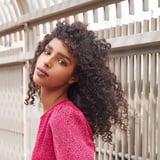
Whether you've just recently decided to go natural or if you've long been wearing your hair in its unprocessed form, there's always so much to learn about having natural hair. Before you attempt to absorb all there is to know about caring for your curls, we're here to provide you with a few useful terms that'll likely be of service to you in the long run. This, of course, is in no way a guide to everything you've ever wanted to know about natural hair, but we'd say it's a great start.
Ahead, you'll find a glossary of sorts featuring 20 haircare terms that should be in every natural's vocabulary.
Curl pattern
Curl pattern is a term used to describe the shape of your hair strands when they're in their natural state. It's usually broken down into four types: type 1 hair is typically bone straight; type 2 hair is wavy; type 3 hair is curly; and type 4 is coily. From there, the types are broken down into three subcategories each (a, b, and c) that are determined based on the width of your waves or curls.
Elasticity
This refers to your hair's ability to return to its natural shape after being pulled, stretched, or heated in any way. Hair with low elasticity normally won't return to its natural shape, while hair with high elasticity will.
Porosity
Porosity refers to your hair's ability to absorb and retain moisture. It's looked at in three different categories - low, medium, and high porosity - and it's normally determined by the way your hair's cuticles lay. Head over here for a more in-depth breakdown on what that means.
Sulfates
Think of sulfates as the reason why your shampoo lathers up and thickens the way it does when you work it into your hair. They're chemicals that are often found in cleaning products, and they're widely debated in the hair community, since many people think they're harmful and have the power to strip the hair of its natural oils and nutrients. On the other hand, there are also those who believe sulfates aren't as bad for your hair as they're made out to be.
Humectants
Humectants are chemicals found in hair products that promote moisture retention.
Sealant
Not to be confused with a moisturizer, a sealant is any product that sits on top of the cuticle to hold the moisture in your hair. These typically come in the form of oils and butters, and are to be applied after a moisturizer since some of the oil molecules aren't small enough to actually penetrate your hair shaft. Some popular sealants include jojoba oil, Jamaican black castor oil, and shea butter.
Moisturizer
On the flip side, a moisturizer is any product that - you guessed it - moisturizes your hair. When attempting to determine if a product will work as a good moisturizer, consider the amount of water that's in the product; if water is the first ingredient listed on the label, you should be okay. Leave-in conditioners and light oils (coconut, avocado) often fall into this category.
Transition
Transitioning refers to the process of . . . well . . . "transitioning" from processed or relaxed hair to natural hair. A person who's in the transitioning phase is someone who's cut the use of harsh chemicals and heat from their haircare regimen and has opted to grow their hair out in its natural state while slowly trimming off their processed ends until their natural hair has grown to a length they're comfortable with and their damaged ends are gone completely.
Big chop
This process is often looked at as an alternative to transitioning, since big chopping your hair means cutting off all of your relaxed or processed hair at once. That said, you can also transition your hair before performing a big chop, growing it out slowly until you can clearly see where your natural hair and what's left of your processed strands meet.
Shrinkage
Shrinkage refers to curly or coily hair's ability to shrink up and look a few inches shorter than it actually is. When your hair is stretched - via twist outs, braid outs, blow outs, etc. (more on that later) - it should be able to shrink back to its normal state, as shrinkage is normally a sign that your hair is healthy and properly moisturized.
LOC method
LOC is an abbreviation of "liquid, oil, cream," and it's basically a mnemonic device (think PEMDAS or ROYGBIV) that can be used to help you remember how to order certain products when you apply them to your hair. In this case, you'd use a liquid-based product or leave-in conditioner, followed by a sealing oil and a moisturizer.
Twist out
This one's a popular styling method achieved by installing several twists throughout a head of wet or damp hair before allowing them to set or dry for several hours. Some people also like to manipulate their twist outs by wrapping flexi rods at the end of each twist to give their ends a little more support in the curl department. Depending on how fast your hair dries, twists are typically taken out within a day or two of being installed, with the end result being a head of super-defined curls that can be worn for days at a time.
Braid out
A braid out is essentially the same as a twist out, except it's done with braids. Braid outs often stretch the hair more than twist outs do, which is good for anyone hoping to sport a style that shows off a little more length, but they often take a bit longer to dry as well.
Wash & go
A wash & go is exactly what it sounds like, though there's just a little more to it than literally just washing and going. It's basically when a person washes their hair and wears it out in its natural state without twisting, braiding, or using tools to curl it. Typically leave-in conditioners and other products like curl creams or styling gels are added to keep frizz at bay for these styles.
Protective style
A protective style is basically any hairstyle that tucks away the ends of your hair and protects them against possible damage from factors like weather, chemicals, and over-manipulation. Ideally, they require only a small amount of maintenance and are often a go-to for those looking to experiment with various colors and hair lengths without the risk of putting extra stress on their strands.
TWA
An abbreviation of "teeny weeny afro, a TWA is a natural hairstyle formed on hair that's typically about 1-2 inches in length.
Shrinkage
Shrinkage refers to curly or coily hair's ability to literally shrink up and look a few inches shorter than it actually is. When your hair is stretched - via twist outs, braid outs, blow outs, etc. - it should be able to shrink back to its normal state, as shrinkage is normally a sign that your hair is healthy properly moisturized.
Co-Wash
"Co-wash" is an abbreviation for "conditioner-only washing," which is pretty self-explanatory. People who use conditioner to cleanse their hair and scalp normally do so as a way to avoid the use of harsh, sulfate-filled shampoos that can often strip the hair of natural oils. Conditioners don't technically cleanse the hair, though these days, you can purchase conditioners that have special cleansing benefits.
Pre-poo
A pre-poo (or pre-shampoo) is an oil or conditioning treatment that's applied to the hair before shampoo. It's normally necessary if you're looking to detangle or add a little extra moisture to your hair ahead of a wash.
Protein treatment
Protein treatments are reparative products that are used to help strengthen damaged and porous hair by attaching a variety of proteins and nutrients directly to the follicle. Because of how intensive they are, it's best to limit yourself to using protein-rich products every 4-6 weeks.
Deep conditioning treatment
Not to be confused with protein treatments, deep conditioners are intensive conditioners that provide the hair with an extra boost of moisture after shampooing. They're usually applied to the hair and allowed to sit for at least 30 mins before being rinsed out. Depending on how dry your hair is, they can normally be used one to two times a week.
72 Valentine's Day Cards That Are Ridiculously Funny and Clever

Stop! Don't you dare reach for that generic grocery store Valentine's Day card - how boring. Show your significant other, or even a friend, how much you love them with something cheeky and clever. Even the little things - like receiving a unique card - don't go unnoticed. From cards that praise your ability to shave for the love holiday to straight-up puns that will make them chuckle, there's no room for cheesy romance here! Not to mention, there's a batch of downright dirty ones for your picking, too. Trust us, these cards won't go into the trash: they'll hang on the fridge all month long. Get a card that will make them laugh out loud with the wide variety of options, ahead!
- Additional reporting by Macy Cate Williams
Thinking About Going Natural? Here Are the Haircare Terms You Should Know
Whether you've just recently decided to go natural or if you've long been wearing your hair in its unprocessed form, there's always so much to learn about having natural hair. Before you attempt to absorb all there is to know about caring for your curls, we're here to provide you with a few useful terms that'll likely be of service to you in the long run. This, of course, is in no way a guide to everything you've ever wanted to know about natural hair, but we'd say it's a great start.
Ahead, you'll find a glossary of sorts featuring 20 haircare terms that should be in every natural's vocabulary.
Curl pattern
Curl pattern is a term used to describe the shape of your hair strands when they're in their natural state. It's usually broken down into four types: type 1 hair is typically bone straight; type 2 hair is wavy; type 3 hair is curly; and type 4 is coily. From there, the types are broken down into three subcategories each (a, b, and c) that are determined based on the width of your waves or curls.
Elasticity
This refers to your hair's ability to return to its natural shape after being pulled, stretched, or heated in any way. Hair with low elasticity normally won't return to its natural shape, while hair with high elasticity will.
Porosity
Porosity refers to your hair's ability to absorb and retain moisture. It's looked at in three different categories - low, medium, and high porosity - and it's normally determined by the way your hair's cuticles lay. Head over here for a more in-depth breakdown on what that means.
Sulfates
Think of sulfates as the reason why your shampoo lathers up and thickens the way it does when you work it into your hair. They're chemicals that are often found in cleaning products, and they're widely debated in the hair community, since many people think they're harmful and have the power to strip the hair of its natural oils and nutrients. On the other hand, there are also those who believe sulfates aren't as bad for your hair as they're made out to be.
Humectants
Humectants are chemicals found in hair products that promote moisture retention.
Sealant
Not to be confused with a moisturizer, a sealant is any product that sits on top of the cuticle to hold the moisture in your hair. These typically come in the form of oils and butters, and are to be applied after a moisturizer since some of the oil molecules aren't small enough to actually penetrate your hair shaft. Some popular sealants include jojoba oil, Jamaican black castor oil, and shea butter.
Moisturizer
On the flip side, a moisturizer is any product that - you guessed it - moisturizes your hair. When attempting to determine if a product will work as a good moisturizer, consider the amount of water that's in the product; if water is the first ingredient listed on the label, you should be okay. Leave-in conditioners and light oils (coconut, avocado) often fall into this category.
Transition
Transitioning refers to the process of . . . well . . . "transitioning" from processed or relaxed hair to natural hair. A person who's in the transitioning phase is someone who's cut the use of harsh chemicals and heat from their haircare regimen and has opted to grow their hair out in its natural state while slowly trimming off their processed ends until their natural hair has grown to a length they're comfortable with and their damaged ends are gone completely.
Big chop
This process is often looked at as an alternative to transitioning, since big chopping your hair means cutting off all of your relaxed or processed hair at once. That said, you can also transition your hair before performing a big chop, growing it out slowly until you can clearly see where your natural hair and what's left of your processed strands meet.
Shrinkage
Shrinkage refers to curly or coily hair's ability to shrink up and look a few inches shorter than it actually is. When your hair is stretched - via twist outs, braid outs, blow outs, etc. (more on that later) - it should be able to shrink back to its normal state, as shrinkage is normally a sign that your hair is healthy and properly moisturized.
LOC method
LOC is an abbreviation of "liquid, oil, cream," and it's basically a mnemonic device (think PEMDAS or ROYGBIV) that can be used to help you remember how to order certain products when you apply them to your hair. In this case, you'd use a liquid-based product or leave-in conditioner, followed by a sealing oil and a moisturizer.
Twist out
This one's a popular styling method achieved by installing several twists throughout a head of wet or damp hair before allowing them to set or dry for several hours. Some people also like to manipulate their twist outs by wrapping flexi rods at the end of each twist to give their ends a little more support in the curl department. Depending on how fast your hair dries, twists are typically taken out within a day or two of being installed, with the end result being a head of super-defined curls that can be worn for days at a time.
Braid out
A braid out is essentially the same as a twist out, except it's done with braids. Braid outs often stretch the hair more than twist outs do, which is good for anyone hoping to sport a style that shows off a little more length, but they often take a bit longer to dry as well.
Wash & go
A wash & go is exactly what it sounds like, though there's just a little more to it than literally just washing and going. It's basically when a person washes their hair and wears it out in its natural state without twisting, braiding, or using tools to curl it. Typically leave-in conditioners and other products like curl creams or styling gels are added to keep frizz at bay for these styles.
Protective style
A protective style is basically any hairstyle that tucks away the ends of your hair and protects them against possible damage from factors like weather, chemicals, and over-manipulation. Ideally, they require only a small amount of maintenance and are often a go-to for those looking to experiment with various colors and hair lengths without the risk of putting extra stress on their strands.
TWA
An abbreviation of "teeny weeny afro, a TWA is a natural hairstyle formed on hair that's typically about 1-2 inches in length.
Shrinkage
Shrinkage refers to curly or coily hair's ability to literally shrink up and look a few inches shorter than it actually is. When your hair is stretched - via twist outs, braid outs, blow outs, etc. - it should be able to shrink back to its normal state, as shrinkage is normally a sign that your hair is healthy properly moisturized.
Co-Wash
"Co-wash" is an abbreviation for "conditioner-only washing," which is pretty self-explanatory. People who use conditioner to cleanse their hair and scalp normally do so as a way to avoid the use of harsh, sulfate-filled shampoos that can often strip the hair of natural oils. Conditioners don't technically cleanse the hair, though these days, you can purchase conditioners that have special cleansing benefits.
Pre-poo
A pre-poo (or pre-shampoo) is an oil or conditioning treatment that's applied to the hair before shampoo. It's normally necessary if you're looking to detangle or add a little extra moisture to your hair ahead of a wash.
Protein treatment
Protein treatments are reparative products that are used to help strengthen damaged and porous hair by attaching a variety of proteins and nutrients directly to the follicle. Because of how intensive they are, it's best to limit yourself to using protein-rich products every 4-6 weeks.
Deep conditioning treatment
Not to be confused with protein treatments, deep conditioners are intensive conditioners that provide the hair with an extra boost of moisture after shampooing. They're usually applied to the hair and allowed to sit for at least 30 mins before being rinsed out. Depending on how dry your hair is, they can normally be used one to two times a week.
26 Rosa Diaz GIFs to Use When You're Feeling Deadpan as Hell

Portrayed by one utterly talented Stephanie Beatriz (hello, still not over her real voice!), Brooklyn Nine-Nine's Rosa Diaz is a lot of things: a queer icon, tough-as-hell cop, and purveyor of the cool leather jacket look. As the 99th Precinct's resident badass, she's one of the richest and most interesting characters on TV, never running out of hilariously dark lines delivered in her signature deadpan. Just like Shrek and onions, she has layers - you'll find her violently shaking a computer monitor in one moment and reluctantly revealing that she was at a La La Land sing-along in the next. While we wait for season seven of Brooklyn Nine-Nine (Coming in February!), here are the very best Rosa moments of all time.
72 Valentine's Day Cards That Are Ridiculously Funny and Clever
Stop! Don't you dare reach for that generic grocery store Valentine's Day card - how boring. Show your significant other, or even a friend, how much you love them with something cheeky and clever. Even the little things - like receiving a unique card - don't go unnoticed. From cards that praise your ability to shave for the love holiday to straight-up puns that will make them chuckle, there's no room for cheesy romance here! Not to mention, there's a batch of downright dirty ones for your picking, too. Trust us, these cards won't go into the trash: they'll hang on the fridge all month long. Get a card that will make them laugh out loud with the wide variety of options, ahead!
- Additional reporting by Macy Cate Williams

 Articles


