


Healthy lifestyle
A healthy lifestyle is one which helps to keep and improve people's health and well-being.Many governments and non-governmental organizations have made big efforts in healthy lifestyle and health promotion.

Mental Health
Mental health can be considered a very important factor of physical health for the effects it produces on bodily functions. This type of health concerns emotional and cognitive well-being or an absence of mental disorder.

Public health
Public health can be defined in a variety of ways. It can be presented as "the study of the physical, psychosocial and socio-cultural determinants of population health and actions to improve the health of the population.

Reproductive Health
For the UN, reproductive health is a right, like other human rights. This recent concept evokes the good transmission of the genetic heritage from one generation to the next.

Health
Health is a state of complete physical, mental and social well-being, and not merely the absence of disease or infirmity.
samedi 6 juin 2020
These Brides' Intimate Outdoor Wedding Was Filled With So Many Love-Filled Moments

Jaleesa and Amber knew each other long before before they fell in love. The two grew up in small towns that were just 10 miles away, and they crossed paths countless times over the years with their overlapping interests, from church choir to basketball. The couple officially met when Amber was hosting an event through her nonprofit organization and Jaleesa attended to show her support. Soon after, Amber reached out to Jaleesa on Facebook and told her how beautiful she thought she was. "She claimed she was just letting me know, but she was running game lol," Jaleesa wrote in an email to POPSUGAR. Since then, the two have been inseparable.
"Marriage was [and] is important to both of us, and it was something we discussed at the very beginning," Jaleesa said. "One day as we were talking, we shared our Pinterest wedding inspiration and it was the same stuff!" While the pair agreed on the theme for their April 2019 wedding, which they described as rustic-vintage-bohemian, Jaleesa took on all the decor duties to save money, and the hard work (and late-night YouTube tutorials) paid off. From the wood signage to the circular ceremony arch and "foreva eva" cake topper, every detail came together beautifully. This is even more impressive considering they had a major change of plans just days before the big day.
The couple had originally planned to have an outdoor wedding in their backyard, but due to a last-minute change in weather, they had to find a new venue. Just three days before the ceremony, Jaleesa and Amber secured a charming farmhouse in Greenville, SC, which was the perfect outdoor setting for them to host their intimate group of wedding guests.
Jaleesa walked down the aisle in a romantic off-the-shoulder lace dress, while Amber rocked a stylish white suit jacket with burgundy pants. Before the wedding, Jaleesa gave Amber a small pin that she could wear inside her jacket. "The pin included photos of some of her dear family members whom she would have wanted to be there with us, and I wanted to be sure that they could be with her as she walked down the aisle," Jaleesa said.
During the ceremony, the couple's boys joined them at the altar and the family was able to embrace in a hug for a prayer. That, along with seeing Amber wearing the handmade pin, were the two most special parts of the wedding for Jaleesa. Don't miss out on seeing the sweet photos of these moments.
Jaleesa and Amber's dreamy wedding is filled with happy tears, big smiles, and stunning decor inspiration - see all of it, captured beautifully by photographer Amber Robinson, ahead!

After a Boudoir Photo Shoot Empowered Talyia to Unapologetically Be Herself, She Did It Again

In a world dominated by body standards that society deems acceptable, photographer Tara O'Meara wanted to shake things up, so she started doing boudoir photography. "My inspiration is empowering all women to embrace what makes them themselves," Tara told POPSUGAR. When she began doing boudoir photography, she really wanted everyone to simply unapologetically be themselves. "There is so much negativity in the world, and women are putting a ton of pressure on themselves. Too often we find ourselves trying to fit into a box of the perfect friend, wife, mother, instead of celebrating what makes us, well, us," Tara said.
"After my shoot I feel like I could conquer the world."
Tara's model for this shoot, Talyia, strongly agreed with Tara's views. "The purpose of the boudoir photo shoot to me is not to show how sexy you are to other people or to prove that you have to have minimal clothes on to be sexy," Talyia told POPSUGAR. "It is to empower you and show you how beautiful you are."
Talyia adds, "After my shoot I feel like I could conquer the world. It's not for your husband, not for your girlfriend, it's not for your partner. It's for you! To show how badass you truly are. And the pictures help remind you of it when some things get hard." Amen to that.
And no, sexy boudoir shoots aren't one-size-fits-all. "You don't have to be a size 2 and naked with a perfect body, you just be you. Be empowered by you, be loved by you," Talyia wrote in an Instagram post, and we could not agree more.
In fact, the shoot was such a success that Tara scheduled a second one with Talyia, this time incorporating honey, a popular "prop" in boudoir. Some of the most striking images include Talyia on a rattan peacock chair wearing a shimmery burnt orange dress and green necklace. She looks so fierce and confident - keep reading to see these two fantastic boudoir photo shoots.
After a Boudoir Photo Shoot Empowered Talyia to Unapologetically Be Herself, She Did It Again
In a world dominated by body standards that society deems acceptable, photographer Tara O'Meara wanted to shake things up, so she started doing boudoir photography. "My inspiration is empowering all women to embrace what makes them themselves," Tara told POPSUGAR. When she began doing boudoir photography, she really wanted everyone to simply unapologetically be themselves. "There is so much negativity in the world, and women are putting a ton of pressure on themselves. Too often we find ourselves trying to fit into a box of the perfect friend, wife, mother, instead of celebrating what makes us, well, us," Tara said.
"After my shoot I feel like I could conquer the world."
Tara's model for this shoot, Talyia, strongly agreed with Tara's views. "The purpose of the boudoir photo shoot to me is not to show how sexy you are to other people or to prove that you have to have minimal clothes on to be sexy," Talyia told POPSUGAR. "It is to empower you and show you how beautiful you are."
Talyia adds, "After my shoot I feel like I could conquer the world. It's not for your husband, not for your girlfriend, it's not for your partner. It's for you! To show how badass you truly are. And the pictures help remind you of it when some things get hard." Amen to that.
And no, sexy boudoir shoots aren't one-size-fits-all. "You don't have to be a size 2 and naked with a perfect body, you just be you. Be empowered by you, be loved by you," Talyia wrote in an Instagram post, and we could not agree more.
In fact, the shoot was such a success that Tara scheduled a second one with Talyia, this time incorporating honey, a popular "prop" in boudoir. Some of the most striking images include Talyia on a rattan peacock chair wearing a shimmery burnt orange dress and green necklace. She looks so fierce and confident - keep reading to see these two fantastic boudoir photo shoots.
After a Boudoir Photo Shoot Empowered Talyia to Unapologetically Be Herself, She Did It Again
In a world dominated by body standards that society deems acceptable, photographer Tara O'Meara wanted to shake things up, so she started doing boudoir photography. "My inspiration is empowering all women to embrace what makes them themselves," Tara told POPSUGAR. When she began doing boudoir photography, she really wanted everyone to simply unapologetically be themselves. "There is so much negativity in the world, and women are putting a ton of pressure on themselves. Too often we find ourselves trying to fit into a box of the perfect friend, wife, mother, instead of celebrating what makes us, well, us," Tara said.
"After my shoot I feel like I could conquer the world."
Tara's model for this shoot, Talyia, strongly agreed with Tara's views. "The purpose of the boudoir photo shoot to me is not to show how sexy you are to other people or to prove that you have to have minimal clothes on to be sexy," Talyia told POPSUGAR. "It is to empower you and show you how beautiful you are."
Talyia adds, "After my shoot I feel like I could conquer the world. It's not for your husband, not for your girlfriend, it's not for your partner. It's for you! To show how badass you truly are. And the pictures help remind you of it when some things get hard." Amen to that.
And no, sexy boudoir shoots aren't one-size-fits-all. "You don't have to be a size 2 and naked with a perfect body, you just be you. Be empowered by you, be loved by you," Talyia wrote in an Instagram post, and we could not agree more.
In fact, the shoot was such a success that Tara scheduled a second one with Talyia, this time incorporating honey, a popular "prop" in boudoir. Some of the most striking images include Talyia on a rattan peacock chair wearing a shimmery burnt orange dress and green necklace. She looks so fierce and confident - keep reading to see these two fantastic boudoir photo shoots.
Michael Strahan on Being a Black Man in America: "The Color of Your Skin Makes People Scared of You"

In a moving video shared to his Instagram on Thursday, Good Morning America host Michael Strahan expressed his anger in the wake of the deaths of George Floyd, Ahmaud Arbery, and Breonna Taylor. Michael spoke about his frustration from seeing no resolution or justice after having the same conversation over and over again about police brutality and racial inequality.
"It's very hard to understand as a Black man why the color of your skin makes people scared of you," the former NFL player said. "As a Black man in this country - a country that's supposed to be free, a country that's supposed to have your back, supposed to be your country . . . but not have the freedoms you're fighting for others to have, not having the respect you're fighting for others to have, but expected to give respect is the hardest part."
"What a way to meet me, by pulling me over for doing nothing."
Michael shared his own experience with the police, revealing that he was pulled over for no reason while driving just a week and a half prior. However, once the officer looked into the car and saw that it was Michael driving, he changed his tune. "He goes, 'Oh, Michael, I'm such a big fan. When I was a kid, I'd go trick-or-treating just to come by your house hoping to meet you," Michael explained. "What a way to meet me, by pulling me over for doing nothing." He emphasized that this was one of many times he had been noticed by officers in the past simply because of the color of his skin.
While Michael expressed his anger, he also said he was holding on to hope. He urged his followers to stop depending on others to change for them and instead focus on making changes themselves. "I hope my kids can grow up and be in a place that's better than the place we're in right now," he said. Watch the powerful video in full above, and find out what you can do to fight for racial justice and the end to police brutality.
Michael Strahan on Being a Black Man in America: "The Color of Your Skin Makes People Scared of You"
In a moving video shared to his Instagram on Thursday, Good Morning America host Michael Strahan expressed his anger in the wake of the deaths of George Floyd, Ahmaud Arbery, and Breonna Taylor. Michael spoke about his frustration from seeing no resolution or justice after having the same conversation over and over again about police brutality and racial inequality.
"It's very hard to understand as a Black man why the color of your skin makes people scared of you," the former NFL player said. "As a Black man in this country - a country that's supposed to be free, a country that's supposed to have your back, supposed to be your country . . . but not have the freedoms you're fighting for others to have, not having the respect you're fighting for others to have, but expected to give respect is the hardest part."
"What a way to meet me, by pulling me over for doing nothing."
Michael shared his own experience with the police, revealing that he was pulled over for no reason while driving just a week and a half prior. However, once the officer looked into the car and saw that it was Michael driving, he changed his tune. "He goes, 'Oh, Michael, I'm such a big fan. When I was a kid, I'd go trick-or-treating just to come by your house hoping to meet you," Michael explained. "What a way to meet me, by pulling me over for doing nothing." He emphasized that this was one of many times he had been noticed by officers in the past simply because of the color of his skin.
While Michael expressed his anger, he also said he was holding on to hope. He urged his followers to stop depending on others to change for them and instead focus on making changes themselves. "I hope my kids can grow up and be in a place that's better than the place we're in right now," he said. Watch the powerful video in full above, and find out what you can do to fight for racial justice and the end to police brutality.
I Attended a Hawaiian Paddle Out Ceremony for BLM - and it was Incredibly Moving

As I processed the devastating and brutal murders of George Floyd, Breonna Taylor, and Ahmaud Arbery, which sent waves of heartbreak and public outcry out across the world, I found myself wondering how Maui would respond. The island where I live is filled with passionate people who care to make a change, but I'll be the first to admit: it's easy to tune out to the problems of the world when you live in a tropical paradise, surrounded by so many ways to escape. As a multiracial Black woman who has mourned and protested for the Black lives lost to police brutality over the years, I was eager to get involved in any local actions. So when a friend shared information about a paddle out ceremony at Launiupoko - a popular surf break on Maui's west side - to honor the Black lives lost in the recent months, I knew I had to participate.
While I was more than ready to put some kind of action to my emotions, I was completely unprepared for the vast number of people who showed up at 4:30 in the afternoon on Sunday, May 31 to support the Black Lives Matter movement. To see so many members of my community gathered for a cause I care so deeply about was enough to bring tears to my eyes. In total, over 300 people participated, with 256 boards in the water and at least 50 more people showing their support from shore with handmade signs. (Since then, several other ceremonies to commemorate Black lives have been organized around Hawaii.)
Photo courtesy Phil Sobolev
The woman who organized the event, Bailey Rebecca Roberts, took the time to speak with me and shared her personal experience with paddle outs as a born-and-raised Maui girl. "People join together in a gathering like that to celebrate the life of someone who's passed. Share stories, share chants, share memories, spread ashes, and spread flowers." She also went on to explain how paddle outs have served as a powerful form of protest throughout Hawaii's history. This gathering for BLM felt like a mix of both, and it was one of the most moving things I've ever been a part of.
Photo courtesy Bailey Rebecca Roberts
Roberts and I went on to have one of the most soul-feeding discussions I've had in quite some time, where we shared our contrasting upbringings and their consequential experiences - me, as one of the few non-white people in my school, and Roberts as one of the few white people in hers. Roberts spoke candidly about her naivety about the, "very real and painful dynamics of race," and the discomfort she's faced in her learning process. Speaking on the words she shared at the gathering, Roberts was able to admit, "this is uncomfortable for me, but my discomfort is not what's important right now." Roberts hope that the main takeaway from the day for people in attendance was to realize it goes beyond just the paddle out."Look, the paddle out is nice. We're together, we feel good now, and we all of a sudden feel woken up," she said. "Now let's have a conversation about real integrated steps that we can take in our everyday lives to enact actual change."
Photo courtesy Roderick Nathan, captured by Conan Gentil
I also had the pleasure of chatting with Ari Romer, a new face I met at the paddle out, who is a Black man that moved to Maui from Seattle spontaneously in February. Romer shared that he was shocked by the number of people who came out in solidarity.
"I'm very surprised and happy that there was a response here in Hawaii, because in my mind I'm thinking, 'Everyone here has their own problems.' The rest of the world is joining in out of solidarity, and Hawaii did the same exact thing - but in the Hawaiian fashion, which is 100% peaceful and harmonious," said Romer. He added that the non-existent police presence at the event was reassuring to see - though he did find it upsetting to see so many non-Black people raising the Black power fist. But overall, Romer told me, he felt the spirit of aloha from the community out in the water as flowers were released and a moment of silence was held, and that during his drive home, he reflected on how great it was to see so many people who came out with good vibes to share.
Joining hands in a circle of 255 other souls gave me an opportunity to say a prayer, to mourn, and most importantly, to celebrate the lives of those lost for the people they were and for the lives that they led before this tragedy happened to them. The paddle out was a way for me to feel seen by my community, to witness the compassion of the people around me, and to feel a sense of belonging I didn't know I was seeking. To honor these victims of racism and police brutality as people who lived incredible lives was something I had not been able to fully do until the moment I paddled through a sea of flowers sent adrift with aloha in its purest form.
I Attended a Hawaiian Paddle Out Ceremony for BLM - and it was Incredibly Moving
As I processed the devastating and brutal murders of George Floyd, Breonna Taylor, and Ahmaud Arbery, which sent waves of heartbreak and public outcry out across the world, I found myself wondering how Maui would respond. The island where I live is filled with passionate people who care to make a change, but I'll be the first to admit: it's easy to tune out to the problems of the world when you live in a tropical paradise, surrounded by so many ways to escape. As a multiracial Black woman who has mourned and protested for the Black lives lost to police brutality over the years, I was eager to get involved in any local actions. So when a friend shared information about a paddle out ceremony at Launiupoko - a popular surf break on Maui's west side - to honor the Black lives lost in the recent months, I knew I had to participate.
While I was more than ready to put some kind of action to my emotions, I was completely unprepared for the vast number of people who showed up at 4:30 in the afternoon on Sunday, May 31 to support the Black Lives Matter movement. To see so many members of my community gathered for a cause I care so deeply about was enough to bring tears to my eyes. In total, over 300 people participated, with 256 boards in the water and at least 50 more people showing their support from shore with handmade signs. (Since then, several other ceremonies to commemorate Black lives have been organized around Hawaii.)
Photo courtesy Phil Sobolev
The woman who organized the event, Bailey Rebecca Roberts, took the time to speak with me and shared her personal experience with paddle outs as a born-and-raised Maui girl. "People join together in a gathering like that to celebrate the life of someone who's passed. Share stories, share chants, share memories, spread ashes, and spread flowers." She also went on to explain how paddle outs have served as a powerful form of protest throughout Hawaii's history. This gathering for BLM felt like a mix of both, and it was one of the most moving things I've ever been a part of.
Photo courtesy Bailey Rebecca Roberts
Roberts and I went on to have one of the most soul-feeding discussions I've had in quite some time, where we shared our contrasting upbringings and their consequential experiences - me, as one of the few non-white people in my school, and Roberts as one of the few white people in hers. Roberts spoke candidly about her naivety about the, "very real and painful dynamics of race," and the discomfort she's faced in her learning process. Speaking on the words she shared at the gathering, Roberts was able to admit, "this is uncomfortable for me, but my discomfort is not what's important right now." Roberts hope that the main takeaway from the day for people in attendance was to realize it goes beyond just the paddle out."Look, the paddle out is nice. We're together, we feel good now, and we all of a sudden feel woken up," she said. "Now let's have a conversation about real integrated steps that we can take in our everyday lives to enact actual change."
Photo courtesy Roderick Nathan, captured by Conan Gentil
I also had the pleasure of chatting with Ari Romer, a new face I met at the paddle out, who is a Black man that moved to Maui from Seattle spontaneously in February. Romer shared that he was shocked by the number of people who came out in solidarity.
"I'm very surprised and happy that there was a response here in Hawaii, because in my mind I'm thinking, 'Everyone here has their own problems.' The rest of the world is joining in out of solidarity, and Hawaii did the same exact thing - but in the Hawaiian fashion, which is 100% peaceful and harmonious," said Romer. He added that the non-existent police presence at the event was reassuring to see - though he did find it upsetting to see so many non-Black people raising the Black power fist. But overall, Romer told me, he felt the spirit of aloha from the community out in the water as flowers were released and a moment of silence was held, and that during his drive home, he reflected on how great it was to see so many people who came out with good vibes to share.
Joining hands in a circle of 255 other souls gave me an opportunity to say a prayer, to mourn, and most importantly, to celebrate the lives of those lost for the people they were and for the lives that they led before this tragedy happened to them. The paddle out was a way for me to feel seen by my community, to witness the compassion of the people around me, and to feel a sense of belonging I didn't know I was seeking. To honor these victims of racism and police brutality as people who lived incredible lives was something I had not been able to fully do until the moment I paddled through a sea of flowers sent adrift with aloha in its purest form.
6 Ways to Be a Valuable Ally at a Black Lives Matter Protest
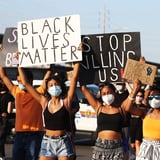
As a white or non-Black ally to the Black Lives Matter movement, there are many ways to put in valuable work and make a difference: speaking out on social media platforms, making donations, regularly shopping at Black-owned businesses, voting for representatives who support the movement, and attending Black Lives Matter protests in your area – just for a start. All of these actions require thought, research, follow-through, and consistency; but if you're an ally planning to take part in marches and demonstrations, it's especially essential that you're aware of and careful about your actions. At large demonstrations, including those currently taking place nationwide to protest the killing of George Floyd, there is often major police presence. As an ally, your actions can contribute to making the area safer or more dangerous for the Black people in attendance.
Ahead, you'll find a few specific ways you can be a more valuable ally at protests. (Reminder: if you're unable to attend in-person, there are important ways you can help from home. Start here.)
Attend Protests Organized By Black-Led Organizations
Do your research beforehand. As digital strategist and anti-racism trainer Leslie Mac told Mashable, it's important to make sure the rally is organized by a Black-led group that's actively doing anti-racism work in your area. Demonstrations may be listed in local news media, on social media, or on the organizations' websites.
Listen to Direction
"When white people show up to protests for the Movement for Black Lives, they are our guests," said Ben O'Keefe, an activist and former senior aide to Elizabeth Warren, in an interview with Vox. "They are new for this. This might be exciting to them now, but this has been something that we have been living for generations and fighting for generations. So, you are showing up, and we're happy to have you, you are our guests."
That means that, as an ally at a protest, it's important to listen to those around you and follow direction from leaders, who will clearly lay out the goals for the protest and expectations for allies.
Put Your Privilege to Use
As an ally, be aware of your privilege and be prepared to use it at protests. For white people, O'Keefe explained, this may mean physically coming between Black protesters and the police for protection. You can also use any financial privilege you have to provide essential supplies at protests, such as water bottles, face masks, snacks, hand sanitizer, and first aid. Mac said one of the most useful things you can do as an ally is to provide jail support: waiting while protesters are detained and helping them with food, transportation, and legal advice upon release.
Document the Protest - With Caution
On-the-ground footage of protests is a powerful tool. Recording or taking pictures at a demonstration provides a different perspective than the one often shown by news media, which sometimes cannot or will not show what protests truly look like. Documenting demonstrations also holds police accountable.
One important caveat: avoid taking photos or filming peoples' uncovered faces or shoes. These are some of the easiest ways to identify people and that could pose a danger for some, said Allissa Richardson, PhD, a USC journalism professor who studies how marginalized communities use social media. In an interview with Mashable, she recommended blurring out faces or shoes if you've caught them on camera.
Continue the Work After the Protest
The work of overcoming racial injustice doesn't end when the protest does. As an ally, continue to donate money and time to organizations that work for racial equality and against police brutality (here's a list of orgs to start with); use your platform to amplify those causes and spread awareness of injustice when it happens; vote for local, state, and nationwide representatives who support the movement; and talk to family and friends about Black Lives Matter, even when those conversations are uncomfortable. Here are five actionable ways to fight racial injustice now and moving forward.
What Not to Do as an Ally at a Black Lives Matter Protest
If you're an ally at a Black Lives Matter protest, do not:
- Vandalize property or antagonize police. You're putting yourself as well as the Black people around you at risk, and they are likely to face harsher consequences than you for your actions.
- Co-opt Black experiences. In an interview with The Washington Post, Simon Balto, PhD, a professor of history and African American studies at the University of Iowa, noted that "a white person saying 'I can't breathe' at a protest when they are at essentially zero risk of ever enduring a police chokehold is not a particularly meaningful act." Rather, "it is a centering of the white self that at least partly dislodges focus from the matter at hand - black safety from the police." As an ally, chanting or creating signs with these kind of slogans mimics the pain and death of Black people while drawing attention away from their crisis. While you can never live the reality of a Black person in America, you can work to amplify their voices and change the system alongside them.
- Make it about yourself. These protests are about creating change and addressing the systemic racism against Black people in American society; they're not the place to talk about your personal feelings or experiences as a white person. Those feelings are valid, but in this moment and especially at a protest, your job is to put your own fears and discomfort aside, show up, listen, learn, and do what you can to help.
Celebrate Pride by Immersing Yourself in These 27 Books by LGBTQ+ Authors

There are plenty of ways to support and celebrate Pride this year, and one of them is to dive into LGBTQ+ stories. Throughout the month and beyond, check out LGBTQ+ films, TV shows, and moving essays that spotlight individual identities. And as you're looking for new books to add to your collection, keep reading to learn more about some books across genres with LGBTQ+ characters written by LGBTQ+ authors.
Real to the People Launches Free Mental Health Services for Black Women, People of Color, and Allies

Real, a membership-based organization for therapy and mental health services, launched Real to the People in March 2020 to offer free therapy services to cope with the COVID-19 pandemic. Now, in the aftermath of the killings of Black Americans George Floyd, Ahmaud Arbery, Breonna Taylor, Tony McDade, and Nina Pop, among others, Real to the People is offering free group support sessions via large digital events that hold up to 400 people. These sessions are specifically for "Black womxn, people of color, and allies."
The group sessions are led by Real therapists Luisa Bonifacio and Naiyah Warren, and each is an hour long. The sessions will take place four times a week "for people to grieve, feel, connect, and process what they're going through," according to a press release. Taking care of your mental health is imperative, and Real to the People aims to make mental health care more accessible. The sessions start on June 5 and run for four weeks. Find the full schedule here, and visit the website to sign up and get more info. The sessions are as follows:
Free Group Therapy for Black Womxn: Friday, June 5, Friday, June 12, Friday June 19, Friday, June 26, 6-7 p.m. ET.
Real x Unplug Collective: Free Group Therapy for Young Black Womxn + Gender-Expansive People: Monday, June 8, Monday, June 15, Monday, June 22, Monday, June 29 2-3 p.m. ET.
Growth and Allyship: Free Group Therapy for Allies: Tuesday, June 9, Tuesday, June 16, Tuesday, Tuesday, June 23, Tuesday, June 30, 6-7 p.m. ET
Free Group Therapy for People of Color: Wednesday, June 10, Wednesday, June 17, Wednesday, June 24, Wednesday, July 1, 6-7 p.m. ET.
Free digital group sessions are a great way to tend to your mental health, especially with many people still under shelter-in-place orders amid the pandemic. But if you feel like you need other help or resources, check out this guide on "44 Mental Health Resources for Black People Trying to Survive in This Country" from SELF, and this guide on signing up for teletherapy during the coronavirus. Also, hotlines, while not a form of teletherapy, can also be useful; the Anxiety and Depression Association of America (1-240-485-1001) and the National Alliance on Mental Illness (1-800-950-6264) have resources available. Another important hotline is the National Suicide Prevention Lifeline. Call 1-800-273-8255 or text 741741 for 24-hour crisis support.
Celebrate Pride by Immersing Yourself in These 27 Books by LGBTQ+ Authors
There are plenty of ways to support and celebrate Pride this year, and one of them is to dive into LGBTQ+ stories. Throughout the month and beyond, check out LGBTQ+ films, TV shows, and moving essays that spotlight individual identities. And as you're looking for new books to add to your collection, keep reading to learn more about some books across genres with LGBTQ+ characters written by LGBTQ+ authors.
6 Ways to Be a Valuable Ally at a Black Lives Matter Protest
As a white or non-Black ally to the Black Lives Matter movement, there are many ways to put in valuable work and make a difference: speaking out on social media platforms, making donations, regularly shopping at Black-owned businesses, voting for representatives who support the movement, and attending Black Lives Matter protests in your area – just for a start. All of these actions require thought, research, follow-through, and consistency; but if you're an ally planning to take part in marches and demonstrations, it's especially essential that you're aware of and careful about your actions. At large demonstrations, including those currently taking place nationwide to protest the killing of George Floyd, there is often major police presence. As an ally, your actions can contribute to making the area safer or more dangerous for the Black people in attendance.
Ahead, you'll find a few specific ways you can be a more valuable ally at protests. (Reminder: if you're unable to attend in-person, there are important ways you can help from home. Start here.)
Attend Protests Organized By Black-Led Organizations
Do your research beforehand. As digital strategist and anti-racism trainer Leslie Mac told Mashable, it's important to make sure the rally is organized by a Black-led group that's actively doing anti-racism work in your area. Demonstrations may be listed in local news media, on social media, or on the organizations' websites.
Listen to Direction
"When white people show up to protests for the Movement for Black Lives, they are our guests," said Ben O'Keefe, an activist and former senior aide to Elizabeth Warren, in an interview with Vox. "They are new for this. This might be exciting to them now, but this has been something that we have been living for generations and fighting for generations. So, you are showing up, and we're happy to have you, you are our guests."
That means that, as an ally at a protest, it's important to listen to those around you and follow direction from leaders, who will clearly lay out the goals for the protest and expectations for allies.
Put Your Privilege to Use
As an ally, be aware of your privilege and be prepared to use it at protests. For white people, O'Keefe explained, this may mean physically coming between Black protesters and the police for protection. You can also use any financial privilege you have to provide essential supplies at protests, such as water bottles, face masks, snacks, hand sanitizer, and first aid. Mac said one of the most useful things you can do as an ally is to provide jail support: waiting while protesters are detained and helping them with food, transportation, and legal advice upon release.
Document the Protest - With Caution
On-the-ground footage of protests is a powerful tool. Recording or taking pictures at a demonstration provides a different perspective than the one often shown by news media, which sometimes cannot or will not show what protests truly look like. Documenting demonstrations also holds police accountable.
One important caveat: avoid taking photos or filming peoples' uncovered faces or shoes. These are some of the easiest ways to identify people and that could pose a danger for some, said Allissa Richardson, PhD, a USC journalism professor who studies how marginalized communities use social media. In an interview with Mashable, she recommended blurring out faces or shoes if you've caught them on camera.
Continue the Work After the Protest
The work of overcoming racial injustice doesn't end when the protest does. As an ally, continue to donate money and time to organizations that work for racial equality and against police brutality (here's a list of orgs to start with); use your platform to amplify those causes and spread awareness of injustice when it happens; vote for local, state, and nationwide representatives who support the movement; and talk to family and friends about Black Lives Matter, even when those conversations are uncomfortable. Here are five actionable ways to fight racial injustice now and moving forward.
What Not to Do as an Ally at a Black Lives Matter Protest
If you're an ally at a Black Lives Matter protest, do not:
- Vandalize property or antagonize police. You're putting yourself as well as the Black people around you at risk, and they are likely to face harsher consequences than you for your actions.
- Co-opt Black experiences. In an interview with The Washington Post, Simon Balto, PhD, a professor of history and African American studies at the University of Iowa, noted that "a white person saying 'I can't breathe' at a protest when they are at essentially zero risk of ever enduring a police chokehold is not a particularly meaningful act." Rather, "it is a centering of the white self that at least partly dislodges focus from the matter at hand - black safety from the police." As an ally, chanting or creating signs with these kind of slogans mimics the pain and death of Black people while drawing attention away from their crisis. While you can never live the reality of a Black person in America, you can work to amplify their voices and change the system alongside them.
- Make it about yourself. These protests are about creating change and addressing the systemic racism against Black people in American society; they're not the place to talk about your personal feelings or experiences as a white person. Those feelings are valid, but in this moment and especially at a protest, your job is to put your own fears and discomfort aside, show up, listen, learn, and do what you can to help.
This Video Shares 5 Tips Explaining How to Be a Better Ally to the Black Community

As powerful protests against police brutality continue to take over the streets of major cities across the country, we should all be doing our part to stay informed and take action to address systems of injustice. In a reminder that confronting racism and white privilege is not a new problem, comedian and activist Franchesca Ramsey resurfaced a video she created in 2014 sharing five tips for becoming a better ally to the Black community. Her video is included in writer and academic Rachel Cargle's 30-Day #DoTheWork course, and Franchesca reshared the video on Instagram this week.
"Lots of people are grappling with how to talk about what's happening in our country, commit to being actively anti-racist & support #BlackLivesMatter, and Rachel's free course is a great place to start," Ramsey said in her caption.
"Imagine your friend is building a house and they ask you to help but you've never built a house before," Ramsey said in the video. "So it would probably be a good idea for you to put on some protective gear and listen to the person in charge; otherwise, someone's gonna get seriously hurt. It's the exact same idea when it comes to being an ally . . . Saying you're an ally is not enough. You've gotta do the work." She then went on to share her five tips, including helping white people understand their own white privilege and how to move forward and apologize if they make a mistake.
In the video description box on her YouTube video, Ramsey also added several resources to help those who want to learn more about how to be a good ally, including lessons about privilege, how to be a better friend, and resources on how to embrace white antiracism. "I'm flattered and proud that it continues to speak to so many," Ramsey added. Watch the full video here.
6 Ways to Be a Valuable Ally at a Black Lives Matter Protest
As a white or non-Black ally to the Black Lives Matter movement, there are many ways to put in valuable work and make a difference: speaking out on social media platforms, making donations, regularly shopping at Black-owned businesses, voting for representatives who support the movement, and attending Black Lives Matter protests in your area – just for a start. All of these actions require thought, research, follow-through, and consistency; but if you're an ally planning to take part in marches and demonstrations, it's especially essential that you're aware of and careful about your actions. At large demonstrations, including those currently taking place nationwide to protest the killing of George Floyd, there is often major police presence. As an ally, your actions can contribute to making the area safer or more dangerous for the Black people in attendance.
Ahead, you'll find a few specific ways you can be a more valuable ally at protests. (Reminder: if you're unable to attend in-person, there are important ways you can help from home. Start here.)
Attend Protests Organized By Black-Led Organizations
Do your research beforehand. As digital strategist and anti-racism trainer Leslie Mac told Mashable, it's important to make sure the rally is organized by a Black-led group that's actively doing anti-racism work in your area. Demonstrations may be listed in local news media, on social media, or on the organizations' websites.
Listen to Direction
"When white people show up to protests for the Movement for Black Lives, they are our guests," said Ben O'Keefe, an activist and former senior aide to Elizabeth Warren, in an interview with Vox. "They are new for this. This might be exciting to them now, but this has been something that we have been living for generations and fighting for generations. So, you are showing up, and we're happy to have you, you are our guests."
That means that, as an ally at a protest, it's important to listen to those around you and follow direction from leaders, who will clearly lay out the goals for the protest and expectations for allies.
Put Your Privilege to Use
As an ally, be aware of your privilege and be prepared to use it at protests. For white people, O'Keefe explained, this may mean physically coming between Black protesters and the police for protection. You can also use any financial privilege you have to provide essential supplies at protests, such as water bottles, face masks, snacks, hand sanitizer, and first aid. Mac said one of the most useful things you can do as an ally is to provide jail support: waiting while protesters are detained and helping them with food, transportation, and legal advice upon release.
Document the Protest - With Caution
On-the-ground footage of protests is a powerful tool. Recording or taking pictures at a demonstration provides a different perspective than the one often shown by news media, which sometimes cannot or will not show what protests truly look like. Documenting demonstrations also holds police accountable.
One important caveat: avoid taking photos or filming peoples' uncovered faces or shoes. These are some of the easiest ways to identify people and that could pose a danger for some, said Allissa Richardson, PhD, a USC journalism professor who studies how marginalized communities use social media. In an interview with Mashable, she recommended blurring out faces or shoes if you've caught them on camera.
Continue the Work After the Protest
The work of overcoming racial injustice doesn't end when the protest does. As an ally, continue to donate money and time to organizations that work for racial equality and against police brutality (here's a list of orgs to start with); use your platform to amplify those causes and spread awareness of injustice when it happens; vote for local, state, and nationwide representatives who support the movement; and talk to family and friends about Black Lives Matter, even when those conversations are uncomfortable. Here are five actionable ways to fight racial injustice now and moving forward.
What Not to Do as an Ally at a Black Lives Matter Protest
If you're an ally at a Black Lives Matter protest, do not:
- Vandalize property or antagonize police. You're putting yourself as well as the Black people around you at risk, and they are likely to face harsher consequences than you for your actions.
- Co-opt Black experiences. In an interview with The Washington Post, Simon Balto, PhD, a professor of history and African American studies at the University of Iowa, noted that "a white person saying 'I can't breathe' at a protest when they are at essentially zero risk of ever enduring a police chokehold is not a particularly meaningful act." Rather, "it is a centering of the white self that at least partly dislodges focus from the matter at hand - black safety from the police." As an ally, chanting or creating signs with these kind of slogans mimics the pain and death of Black people while drawing attention away from their crisis. While you can never live the reality of a Black person in America, you can work to amplify their voices and change the system alongside them.
- Make it about yourself. These protests are about creating change and addressing the systemic racism against Black people in American society; they're not the place to talk about your personal feelings or experiences as a white person. Those feelings are valid, but in this moment and especially at a protest, your job is to put your own fears and discomfort aside, show up, listen, learn, and do what you can to help.

 Articles


