


Healthy lifestyle
A healthy lifestyle is one which helps to keep and improve people's health and well-being.Many governments and non-governmental organizations have made big efforts in healthy lifestyle and health promotion.

Mental Health
Mental health can be considered a very important factor of physical health for the effects it produces on bodily functions. This type of health concerns emotional and cognitive well-being or an absence of mental disorder.

Public health
Public health can be defined in a variety of ways. It can be presented as "the study of the physical, psychosocial and socio-cultural determinants of population health and actions to improve the health of the population.

Reproductive Health
For the UN, reproductive health is a right, like other human rights. This recent concept evokes the good transmission of the genetic heritage from one generation to the next.

Health
Health is a state of complete physical, mental and social well-being, and not merely the absence of disease or infirmity.
vendredi 31 juillet 2020
27 Refreshing Ways to Reorganize Your Closet Like Never Before

I just moved into a new apartment with a dramatically smaller closet. While I love my place, adjusting to a tiny closet has been stressful. I realized I needed to make the most of my space by investing in helpful tools that will double the storage. When I starting shopping for these useful products, I was blown away by how many options were out there that I had never thought about using before.
Ahead, I've gathered a list of my favorite choices that will blow you away too and help you get your own closet in order. From shoe racks to hangers for your bags, these finds are all loved by customers and bestsellers online. Keep reading to shop them all.

jeudi 30 juillet 2020
I Was Intimidated by Boxing Until I Learned It's Not Really About Arm Strength
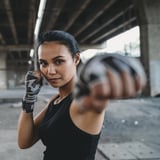
Arm toning is the bane of my fitness existence, which is why I've always copped out of boxing classes - even virtually. And guess what? I was wrong to think I needed impressive arm strength to keep up with a class.
"It's a misconception that boxing is an upper-body focused workout" are words I wasn't expecting to hear from FitReserve boxing coach Steph Dietz after inquiring about the sport.
"In reality, [boxing] is truly a full-body workout, as your power comes from your core and the engagement of your lower body."
Dietz described boxing as a 2-for-1 strength and cardio workout, stating how it's actually one of the best aerobic exercises you can do. Improved balance, coordination, reactivity, and agility are some other physical benefits, too.
"While arm strength is important while boxing, strength and stability in your legs and core are just as important when it comes to throwing powerful punches," Dietz explained.
What really shifted my POV was when Dietz referred to boxing as an endurance-heavy arm workout, as you are consistently moving your arms through punches and various combinations.
Muscle power plays a role in throwing long, strong punches and keeping your arms up to block your face, she added. But that's just a small part of the overall workout, and comes with practice.
Since boxing constantly strengthens muscle throughout the body (not just the arms!), Dietz noted that the sport could be great for injury prevention, too.
Keep in mind, though, that too much of a good thing can be harmful. Listening to your body is an important part of avoiding overuse injuries - especially if you're more susceptible to shoulder or knee injuries. According to Dietz, these joints are most frequently used during throwing punches and defensive moves.
Oh, and did I mention that Dietz loves boxing's meditative benefits, too? To her, boxing is cathartic, as you have to focus on executing each punch and defensive move when you are hitting the heavy bag.
Dietz has basically given me no reason not to "be fearless and up for a challenge." (Yes, those were her exact words!) "You will feel so strong, powerful, and confident after your first time boxing and won't want to stop from there," she explained to me - which applies to other newbies out there, too.
Click here for more health and wellness stories, tips, and news.
I Was Intimidated by Boxing Until I Learned It's Not Really About Arm Strength
Arm toning is the bane of my fitness existence, which is why I've always copped out of boxing classes - even virtually. And guess what? I was wrong to think I needed impressive arm strength to keep up with a class.
"It's a misconception that boxing is an upper-body focused workout" are words I wasn't expecting to hear from FitReserve boxing coach Steph Dietz after inquiring about the sport.
"In reality, [boxing] is truly a full-body workout, as your power comes from your core and the engagement of your lower body."
Dietz described boxing as a 2-for-1 strength and cardio workout, stating how it's actually one of the best aerobic exercises you can do. Improved balance, coordination, reactivity, and agility are some other physical benefits, too.
"While arm strength is important while boxing, strength and stability in your legs and core are just as important when it comes to throwing powerful punches," Dietz explained.
What really shifted my POV was when Dietz referred to boxing as an endurance-heavy arm workout, as you are consistently moving your arms through punches and various combinations.
Muscle power plays a role in throwing long, strong punches and keeping your arms up to block your face, she added. But that's just a small part of the overall workout, and comes with practice.
Since boxing constantly strengthens muscle throughout the body (not just the arms!), Dietz noted that the sport could be great for injury prevention, too.
Keep in mind, though, that too much of a good thing can be harmful. Listening to your body is an important part of avoiding overuse injuries - especially if you're more susceptible to shoulder or knee injuries. According to Dietz, these joints are most frequently used during throwing punches and defensive moves.
Oh, and did I mention that Dietz loves boxing's meditative benefits, too? To her, boxing is cathartic, as you have to focus on executing each punch and defensive move when you are hitting the heavy bag.
Dietz has basically given me no reason not to "be fearless and up for a challenge." (Yes, those were her exact words!) "You will feel so strong, powerful, and confident after your first time boxing and won't want to stop from there," she explained to me - which applies to other newbies out there, too.
Click here for more health and wellness stories, tips, and news.
PJ Masks Is Adding 4 New Characters to the Team This Season - Meet the First!

The PJ Masks team is getting some new pajama-clad heroes - and villains - in season four! The first of four new characters, Newton Star, will make his debut in the Aug. 3 episode, titled "Asteroid Accident / All About Asteroids." In the episode, Owlette causes an asteroid accident that Gekko and Catboy then attempt to help her fix, but as it turns out, Newton is a new nighttime hero and scientist who's emerged from the outer space incident.
Newton's first two episodes will air on Disney Junior on Aug. 3 and 17, and after that, the animated show will introduce three more new characters: Munki-Gu, Octobella, and Pharaoh Boy.
Meet Newton in the clip above, and get your PJ Masks-lovers excited for the rest of season four and all of the new faces the preschool show is welcoming to the party!
Brie Larson's Sweet Cover of Taylor Swift's "The 1" Has Us Dreaming of a Duet

Brie Larson is blessing our ears once more with another beautiful cover. Like many of us these days, the Captain Marvel actress is listening to Taylor Swift's surprise album, Folklore, and it's inspiring her to make music. On Wednesday, she shared a clip of herself singing Swift's lead track "The 1" in an Instagram video dedicated to her friend, Jessie Ennis.
Larson is no stranger to an at-home jam session. Over the past few months, we've been lucky enough to hear her play Ariana Grande's "Be Alright" and "God Is a Woman," and Noah Cyrus's "July." Watch her ethereal cover above, and join us as we dream of the day when she and Swift collaborate IRL.
Brie Larson's Sweet Cover of Taylor Swift's "The 1" Has Us Dreaming of a Duet
Brie Larson is blessing our ears once more with another beautiful cover. Like many of us these days, the Captain Marvel actress is listening to Taylor Swift's surprise album, Folklore, and it's inspiring her to make music. On Wednesday, she shared a clip of herself singing Swift's lead track "The 1" in an Instagram video dedicated to her friend, Jessie Ennis.
Larson is no stranger to an at-home jam session. Over the past few months, we've been lucky enough to hear her play Ariana Grande's "Be Alright" and "God Is a Woman," and Noah Cyrus's "July." Watch her ethereal cover above, and join us as we dream of the day when she and Swift collaborate IRL.
You Know You Were a Teenager in the 2000s If . . .

Remember last decade, how you used to quote Mean Girls word for word while talking to your best friend on your Nokia cell phone? You wore low-rise jeans with tiny t-shirts and Rocket Dog sandals and spent your afternoons requesting music videos on TRL and learning the dance moves to "I'm a Slave 4 U." We'll be honest; we still quote Mean Girls and try to copy Britney Spears routines, but we look back on those days with equal parts dreamy nostalgia and sheer horror. We're taking a trip down memory lane with all the best (and worst) things about coming of age in the aughts. So here we go: you know you were a teenager in the 2000s if . . .
- Additional reporting by Lauren Harano
You Know You Were a Teenager in the 2000s If . . .
Remember last decade, how you used to quote Mean Girls word for word while talking to your best friend on your Nokia cell phone? You wore low-rise jeans with tiny t-shirts and Rocket Dog sandals and spent your afternoons requesting music videos on TRL and learning the dance moves to "I'm a Slave 4 U." We'll be honest; we still quote Mean Girls and try to copy Britney Spears routines, but we look back on those days with equal parts dreamy nostalgia and sheer horror. We're taking a trip down memory lane with all the best (and worst) things about coming of age in the aughts. So here we go: you know you were a teenager in the 2000s if . . .
- Additional reporting by Lauren Harano
This Stylish Feline's Strut Down the "Catwalk" Is Proof He's the Purrfect Runway Model
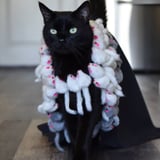
Some cats talk the talk (when it comes to mealtimes, that is), but Rover the cat knows how to walk the walk, and he might just be our new favorite runway model. Rover, a 5-year-old rescue from Washington state, embarked upon his journey into fashion after his owner Angelina noticed that he seemed cold during their outdoor adventures in the winter. To combat the chilly weather, she decided to dress him in a parka, and his plunge into the world of kitty fashion officially began.
Some cats might approve of a cozy pet store sweater or a even a funny hat if the mood strikes, but all of Rover's outfits are handmade to fit his haute cat-ture sense of style and bring out his unique personality. "We've never had him wear anything that was restricting or uncomfortable, which is most likely why he goes along with it," Angelina told POPSUGAR. "Any outfit that we put together, or any parka that we buy for him has to pass the 'comfort' test by the meow-del himself . . . Anything that makes Rover uncomfortable would be his least favorite. In that respect, he's 'approved' all of the themed fashion shows because you see him strutting his little heart out."
"Rover is a prime example of how shelter pets can blossom with love, care and affection."
While Rover still prefers to go au naturel most of the time, he also loves wearing parkas on hikes and will happily pose for photo shoots, as long as he can wear his favorite outfits. Of course, a cat this stylish always accessorizes (those retro tinted sunglasses), and he has a busy team of stylists (his humans) at hand to help him plan for his next big Instagram or TikTok fashion show. "Some of these outfits take hours to put together, they are all handmade, so we approach the 'production' with thorough planning," Angelina said. "The inspiration comes from just about anywhere: a fun song, current pop culture events, or items we find laying around the house."
From his breakfast dish to his favorite nap spot, the world is Rover's catwalk, and he hopes that other shelter cats - especially black cats, who are often overlooked at shelters - can have the opportunity to explore their own sense of style in a loving home. "Rover is a prime example of how shelter pets can blossom with love, care and affection." Check out all of his adorable videos ahead, and be sure to have some kitty-friendly snacks nearby because this cat's pawesome runway moves are worthy of all the treats.
This Stylish Feline's Strut Down the "Catwalk" Is Proof He's the Purrfect Runway Model
Some cats talk the talk (when it comes to mealtimes, that is), but Rover the cat knows how to walk the walk, and he might just be our new favorite runway model. Rover, a 5-year-old rescue from Washington state, embarked upon his journey into fashion after his owner Angelina noticed that he seemed cold during their outdoor adventures in the winter. To combat the chilly weather, she decided to dress him in a parka, and his plunge into the world of kitty fashion officially began.
Some cats might approve of a cozy pet store sweater or a even a funny hat if the mood strikes, but all of Rover's outfits are handmade to fit his haute cat-ture sense of style and bring out his unique personality. "We've never had him wear anything that was restricting or uncomfortable, which is most likely why he goes along with it," Angelina told POPSUGAR. "Any outfit that we put together, or any parka that we buy for him has to pass the 'comfort' test by the meow-del himself . . . Anything that makes Rover uncomfortable would be his least favorite. In that respect, he's 'approved' all of the themed fashion shows because you see him strutting his little heart out."
"Rover is a prime example of how shelter pets can blossom with love, care and affection."
While Rover still prefers to go au naturel most of the time, he also loves wearing parkas on hikes and will happily pose for photo shoots, as long as he can wear his favorite outfits. Of course, a cat this stylish always accessorizes (those retro tinted sunglasses), and he has a busy team of stylists (his humans) at hand to help him plan for his next big Instagram or TikTok fashion show. "Some of these outfits take hours to put together, they are all handmade, so we approach the 'production' with thorough planning," Angelina said. "The inspiration comes from just about anywhere: a fun song, current pop culture events, or items we find laying around the house."
From his breakfast dish to his favorite nap spot, the world is Rover's catwalk, and he hopes that other shelter cats - especially black cats, who are often overlooked at shelters - can have the opportunity to explore their own sense of style in a loving home. "Rover is a prime example of how shelter pets can blossom with love, care and affection." Check out all of his adorable videos ahead, and be sure to have some kitty-friendly snacks nearby because this cat's pawesome runway moves are worthy of all the treats.
This Organization Is Training Black Girls to Become Pro Surfers, One Wave at a Time

Rhonda Harper has been in Senegal since January. It was meant to be a short trip for Harper, the founder of Black Girls Surf, to do some filming with Khadjou Sambe, a Senegalese surfer whom she's training for the Olympics and the pro World Surf League. But days before Harper was due to return to the US, she said, the country was "locked down" due to COVID-19-related travel restrictions.
Out of the extended overseas stay has come something groundbreaking: a Senegal-based Black Girls Surf camp with the explicit goal of not only teaching young Senegalese women to surf, but seriously training them to enter the pro ranks. It's not perhaps the exact timeline Harper had had in mind, but to hear her tell the story of her career, leading up to the 2014 founding of Black Girls Surf, that's only fitting.
Falling in Love With Surfing
Harper was born in Kansas City, KS, where she fell in love with the culture of surfing through so-called "beach party movies" in the '70s. When she moved to San Jose, CA, with her family at age 10, and got a glimpse of the Pacific Ocean in nearby Santa Cruz, it was love at first sight.
A strong swimmer, Harper loved being in the water, but didn't try surfing until she started running into trouble at school. Harper recalled that her family was probably the largest population of Black people in her school system. She and her siblings and cousins were constantly harassed, she said, and it came to a head when three kids walked into class one day dressed as members of the KKK. "I remember throwing a shoe at them," Harper said. Concerned that Harper would "end up in jail," her mom sent the 15-year-old to live with her older sister on the North Shore of Hawaii.
At the resort where her sister lived, Harper spent all day watching surfers on the breaks. Finally, a crew member from the TV show Magnum P.I., filming there at the time, asked her if she wanted to try surfing tandem (two people on one board). The first attempt was disastrous: "We both stand up for like two seconds. I go one way, he goes one way. He comes up with clothes. I come out without a top. I said, 'I'm never surfing again.'" But Harper couldn't stay away. She was given an old board and surfed every chance she got.
It wasn't until Harper went home to California that she felt the stirrings of racial tension in the surfing community. One day, when she was around 18 or 19, she brought her shortboard to a beach in Santa Cruz, "the same place where I fell in love with the ocean." The water was flat (no waves to catch), so she hiked back up to her car. "Lo and behold, on the side of my car it said: 'go home n-----.'" Shaken, Harper wouldn't even drive her car, letting her boyfriend at the time get rid of the vandalism and drive her home.
It happened again when Harper moved to San Diego just a few years later. She was paddling into a wave when another surfer yelled a racial slur at her. The hatred and racism drove Harper from surfing for years. "I just stopped, because I didn't want to deal with that," she said. "It bums you out. You don't want to get back in the water."
Founding Black Girls Surf
Harper stayed connected to the surf community, though, and it was that link - and her love for fashion - that eventually led to the creation of Black Girls Surf. Harper had designed clothes for celebrities in the past, and had a vision of creating a fashion line that was "beach-oriented, but Afrocentric." She quickly realized the problem: there was no target market. "Where were the surfers?" Harper remembered thinking. "Let me find surfers of color. And there weren't any."
Harper had been working with surfers on the men's tour as well as reporting on surfing for the Black Athlete Sports Network. She was familiar with the competition circuit, and decided that the best way to find and showcase Black surfers would be to hold a new competition. In 2014, she helped launch Africa Surf International, inviting surfers from the African diaspora to compete in Sierra Leone. They only had one woman surfer, Kadiatu Kamara from Sierra Leone, so Harper went to surf camps across the continent to scout out more female talent. She eventually found Khadjou Sambe, and with two female athletes signed on, Harper was about to launch a "final push." That's when the first case of Ebola was reported in Guinea. It soon spread across West Africa.
"This is my second pandemic," Harper says of coronavirus. "The first one was Ebola. We watched every single day and the body count went higher." They were forced to postpone the contest, but Harper realized the extra time was a perfect opportunity to find girls to train. Black Girls Surf was born, with the expectation that when Sierra Leone opened up again, they'd showcase the surfers at the contest.
Back in California, Black Girls Surf gained slow but steady momentum, organizing quarterly meet-ups in regions including the US, Jamaica, and Sierra Leone and gathering steam on social media. The organization evolved; originally a way to promote Black surfers in contests and build awareness of the lack of representation, Harper was now using it as a way to seriously train Black female surfers for the pros.
It wasn't until 2018 that Harper was able to navigate political roadblocks get one of her two main surfers to the United States to train. When Khadjou Sambe arrived in San Jose, according to Harper, "surfing started changing right then." The Senegalese surfer attracted publicity from outlets as big as CNN as she set her sights on the Tokyo Olympics, where surfing is set to debut. "An African surfer, a West African female surfer coming into play - that's never happened before," Harper said. "The publicity was nonstop."
If it hadn't been, Harper added, "I wouldn't be stuck in Senegal right now. I came to Senegal to film her with the WSL, and I got locked in."
Training the Next Generation
As Sambe continues to train for a spot on the Senegalese national team and, hopefully, a chance at qualifying for the Olympics, Harper has taken Black Girls Surf to the next level. The elite training center she's opened for Senegalese girls and young women follows a rigorous daily schedule: the athletes, who range in age from 11 to 17 years old, have two to three hours of workouts followed by in-water training. They work with personal trainers and online yoga instructors, balancing their training with school, which is required for every athlete. Black Girls Surf often foots the bill for its students' education, Harper said, because many families don't see girls' schooling as high-priority. Harper wants to open these surf training centers across West Africa - Senegal, Sierra Leone, Nigeria, Liberia, and Côte d'Ivoire - with the ultimate goal of funneling Black girls and women into the professional ranks of surfing. (She also trains boys through a separate organization.) Right now, Harper's elite squad members have their sights set on the 2022 Junior Olympics in Dakar, Senegal.
Having Black women at the top of the surfing world is crucial, Harper said, because it opens the door for young athletes like those in her training centers. "It's very important for self-esteem and just basic motivation to do something better with their lives, to strive for something bigger and larger," she said. Sambe is already making waves; Erika Berra from Costa Rica, and Brazilians Yanca Costa, Potira Castaman, and Maria Eduarda are other up-and-coming talents that Harper is excited about.
With all the work Black Girls Surf is continuing to do, Harper said that as of now, her biggest accomplishment came on June 20, International Surfing Day. After working with the WSL for a year, Harper said, the WSL officially released a statement decrying racism and discrimination in surfing and beyond. "We stand . . . with the belief that the ocean is the great equalizer and that surfing is for everyone," the WSL said on Instagram. The organization also committed to pushing for equality and inclusion in its competitions and community, "starting to help develop athletes who don't have access," Harper said. So far, "that was the biggest win that I've had in the surf industry."
Harper said that statements like that give her hope. Despite her job, she doesn't actually surf very often; when people ask why, her response is that she'll surf when the work is done. "You work, work, work, work. Then once you get your goal, you can surf for the rest of your life," she said. "I'm not getting in the water until we're free."
Follow Black Girls Surf on Instagram and support its work on GoFundMe.
The Weight of Gold: The Details on Gracie Gold's Emotional Return to Figure Skating
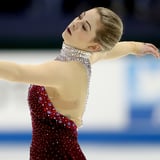
Figure skater Gracie Gold is one of several Olympians featured in HBO's documentary The Weight of Gold, which exposes the pressures athletes face in the pursuit of medals and the emptiness they often feel when that chapter of their life is over. Gold's rise and fall - and eventual comeback - has been one of the most important stories in figure skating in recent years. If you're wondering if she's still skating, the answer is yes, but it's been a long, complicated journey.
Following a fairytale Olympic season in 2014, during which Gold won a team bronze medal and came just shy of the podium in the individual ladies' event, she hit bottom in 2016. At the World Championships in Boston, Gold faltered badly in her free skate, falling from first place in the short program to fourth overall. In a 2019 profile in The New York Times, she revealed that the loss sent her into a deep spiral, and her already-disordered eating resulted in weight gain and depression. "Can't anybody see the cry for help that is my existence right now?" she recalled screaming at a 2017 pre-season session. It marked the first year she finished off the podium at nationals, falling all the way to sixth. Her longtime coach bailed on her in very public fashion.
Gold entered inpatient treatment for the eating disorder that year and also sought treatment for anxiety and depression. "It wasn't just one thing," Gold told the Guardian in 2020. "That's where people don't always fully understand at times. They want it to be this happened, you got depressed and then this was the result." She described the events that led up to her seeking treatment as a perfect storm of "a bunch of tiny things." After finishing the program, she tried to get back to the ice.
"There is not an Olympic medal for who can suffer in silence the longest."
- Olympic Channel (@olympicchannel) July 29, 2020
Figure skater @GraceEGold encourages athletes to speak up about mental health ahead of the release of 'Weight of Gold,' produced by @MichaelPhelps.
Full interview: https://t.co/QO43vRnNpi@HBO @TeamUSA pic.twitter.com/RxGIZzgZs3
Gold began preparing for a comeback and chose to take advantage of a qualification process for athletes who have stepped away, which gained her a spot at the 2018 Rostelcom Cup. She competed there in the fall (against the recommendation of her coach, she admitted to the Times), but faltered again and withdrew after the short program. She also withdrew from the 2019 national championships to take more time to rebuild.
By the following year, Gold was prepared, but according to the sport's rules, she now had to qualify through lower-level rounds in order to make it to nationals, rather than getting a bye as a top-tier skater. She managed to do so, paving the way for her first appearance at nationals since 2017. Gold went into the 2020 competition as a dark horse: an ex-Olympian, but one who'd been away for some time. She wound up finishing in 12th place, but her free skate - set to Sara Bareilles's "She Used to Be Mine" from the musical Waitress - delivered one of the most emotional moments of the night. Gold was in tears by the time the crowd gave her a standing ovation at the end of her program.
Her 12th place finish wasn't enough to earn her a spot on the Worlds team, but that ultimately didn't matter, because the competition was one of the many sporting events cancelled due to the coronavirus pandemic. Officially, Gold is still an active skater, and another season is hopefully in the cards. "I think we've earned that," she told NBC Sports after nationals.
The Dramatic Haircut You'll Start Seeing A Lot More Of These Next Few Months
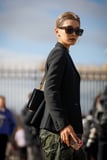
Cliché dictates that pixie cuts are reserved for the Zoë Kravitz's and Cara Delevingne's of the world, or people with jawlines that look like they've been sculpted by Michelangelo himself, but anyone who's tried the haircut trend knows how baseless that line of thinking can be. In truth, pulling off a pixie comes down to one of two things: confidence, and the capacity for a major hair change.
And change, it seems, is exactly what people are looking for post stay-at-home orders. "Something about the pandemic fueled us to chop our hair for a different look and sense of change," Michael Dueñas, celebrity hairstylist and co-founder of Support Creatives, so eloquently told POPSUGAR. That's why, now that salons are reopening across the country, pros are predicting you'll see a rise in pixie cuts and shorter hairstyles popping up on your feed in the coming months.
"Post-quarantine, I see women doing something drastic that they haven't tried before but have always wanted to."
"Post-quarantine, I see women doing something drastic that they haven't tried before but have always wanted to - taking a risk and letting themselves welcome new beginnings," said celebrity hairstylist and Unite hair ambassador Graham Nation. This style lets you be bold without buzzing it all off. Plus, he adds, it's easy to manage: "The pixie cut is totally chic and no fuss when it comes to styling. While wet, apply a detangling spray and rough dry into place. Once dry, add a small amount of pomade for a light hold that will last all day."
If you're looking to try out the trend yourself, you'll find plenty of pixie inspiration ideas ahead. No modeling contract (or Italian artist connections) required.
8 Times The Baby-Sitters Club Made Us Feel Extra Nostalgic With Their Hairstyles

Netflix's new series The Baby-Sitters Club served up a ton of nostalgia when it debuted on the streaming service this month. The show is a modernized retelling of the '90s book series of the same name, which sees a group of preteen girls teaming up to form a coalition of baby-sitters in their neighborhood. It brings back a lot of memories for those of us who read the books as children and teens with its subject matter and its fashion and beauty choices.
Most of the characters on the show have their own signature styles, which are usually made clear throughout the season. Read ahead to check out some of our favorite beauty moments from the show.
This Stylish Feline's Strut Down the "Catwalk" Is Proof He's the Purrfect Runway Model
Some cats talk the talk (when it comes to mealtimes, that is), but Rover the cat knows how to walk the walk, and he might just be our new favorite runway model. Rover, a 5-year-old rescue from Washington state, embarked upon his journey into fashion after his owner Angelina noticed that he seemed cold during their outdoor adventures in the winter. To combat the chilly weather, she decided to dress him in a parka, and his plunge into the world of kitty fashion officially began.
Some cats might approve of a cozy pet store sweater or a even a funny hat if the mood strikes, but all of Rover's outfits are handmade to fit his haute cat-ture sense of style and bring out his unique personality. "We've never had him wear anything that was restricting or uncomfortable, which is most likely why he goes along with it," Angelina told POPSUGAR. "Any outfit that we put together, or any parka that we buy for him has to pass the 'comfort' test by the meow-del himself . . . Anything that makes Rover uncomfortable would be his least favorite. In that respect, he's 'approved' all of the themed fashion shows because you see him strutting his little heart out."
"Rover is a prime example of how shelter pets can blossom with love, care and affection."
While Rover still prefers to go au naturel most of the time, he also loves wearing parkas on hikes and will happily pose for photo shoots, as long as he can wear his favorite outfits. Of course, a cat this stylish always accessorizes (those retro tinted sunglasses), and he has a busy team of stylists (his humans) at hand to help him plan for his next big Instagram or TikTok fashion show. "Some of these outfits take hours to put together, they are all handmade, so we approach the 'production' with thorough planning," Angelina said. "The inspiration comes from just about anywhere: a fun song, current pop culture events, or items we find laying around the house."
From his breakfast dish to his favorite nap spot, the world is Rover's catwalk, and he hopes that other shelter cats - especially black cats, who are often overlooked at shelters - can have the opportunity to explore their own sense of style in a loving home. "Rover is a prime example of how shelter pets can blossom with love, care and affection." Check out all of his adorable videos ahead, and be sure to have some kitty-friendly snacks nearby because this cat's pawesome runway moves are worthy of all the treats.
The Dramatic Haircut You'll Start Seeing A Lot More Of These Next Few Months
Cliché dictates that pixie cuts are reserved for the Zoë Kravitz's and Cara Delevingne's of the world, or people with jawlines that look like they've been sculpted by Michelangelo himself, but anyone who's tried the haircut trend knows how baseless that line of thinking can be. In truth, pulling off a pixie comes down to one of two things: confidence, and the capacity for a major hair change.
And change, it seems, is exactly what people are looking for post stay-at-home orders. "Something about the pandemic fueled us to chop our hair for a different look and sense of change," Michael Dueñas, celebrity hairstylist and co-founder of Support Creatives, so eloquently told POPSUGAR. That's why, now that salons are reopening across the country, pros are predicting you'll see a rise in pixie cuts and shorter hairstyles popping up on your feed in the coming months.
"Post-quarantine, I see women doing something drastic that they haven't tried before but have always wanted to."
"Post-quarantine, I see women doing something drastic that they haven't tried before but have always wanted to - taking a risk and letting themselves welcome new beginnings," said celebrity hairstylist and Unite hair ambassador Graham Nation. This style lets you be bold without buzzing it all off. Plus, he adds, it's easy to manage: "The pixie cut is totally chic and no fuss when it comes to styling. While wet, apply a detangling spray and rough dry into place. Once dry, add a small amount of pomade for a light hold that will last all day."
If you're looking to try out the trend yourself, you'll find plenty of pixie inspiration ideas ahead. No modeling contract (or Italian artist connections) required.
8 Times The Baby-Sitters Club Made Us Feel Extra Nostalgic With Their Hairstyles
Netflix's new series The Baby-Sitters Club served up a ton of nostalgia when it debuted on the streaming service this month. The show is a modernized retelling of the '90s book series of the same name, which sees a group of preteen girls teaming up to form a coalition of baby-sitters in their neighborhood. It brings back a lot of memories for those of us who read the books as children and teens with its subject matter and its fashion and beauty choices.
Most of the characters on the show have their own signature styles, which are usually made clear throughout the season. Read ahead to check out some of our favorite beauty moments from the show.
This Organization Is Training Black Girls to Become Pro Surfers, One Wave at a Time
Rhonda Harper has been in Senegal since January. It was meant to be a short trip for Harper, the founder of Black Girls Surf, to do some filming with Khadjou Sambe, a Senegalese surfer whom she's training for the Olympics and the pro World Surf League. But days before Harper was due to return to the US, she said, the country was "locked down" due to COVID-19-related travel restrictions.
Out of the extended overseas stay has come something groundbreaking: a Senegal-based Black Girls Surf camp with the explicit goal of not only teaching young Senegalese women to surf, but seriously training them to enter the pro ranks. It's not perhaps the exact timeline Harper had had in mind, but to hear her tell the story of her career, leading up to the 2014 founding of Black Girls Surf, that's only fitting.
Falling in Love With Surfing
Harper was born in Kansas City, KS, where she fell in love with the culture of surfing through so-called "beach party movies" in the '70s. When she moved to San Jose, CA, with her family at age 10, and got a glimpse of the Pacific Ocean in nearby Santa Cruz, it was love at first sight.
A strong swimmer, Harper loved being in the water, but didn't try surfing until she started running into trouble at school. Harper recalled that her family was probably the largest population of Black people in her school system. She and her siblings and cousins were constantly harassed, she said, and it came to a head when three kids walked into class one day dressed as members of the KKK. "I remember throwing a shoe at them," Harper said. Concerned that Harper would "end up in jail," her mom sent the 15-year-old to live with her older sister on the North Shore of Hawaii.
At the resort where her sister lived, Harper spent all day watching surfers on the breaks. Finally, a crew member from the TV show Magnum P.I., filming there at the time, asked her if she wanted to try surfing tandem (two people on one board). The first attempt was disastrous: "We both stand up for like two seconds. I go one way, he goes one way. He comes up with clothes. I come out without a top. I said, 'I'm never surfing again.'" But Harper couldn't stay away. She was given an old board and surfed every chance she got.
It wasn't until Harper went home to California that she felt the stirrings of racial tension in the surfing community. One day, when she was around 18 or 19, she brought her shortboard to a beach in Santa Cruz, "the same place where I fell in love with the ocean." The water was flat (no waves to catch), so she hiked back up to her car. "Lo and behold, on the side of my car it said: 'go home n-----.'" Shaken, Harper wouldn't even drive her car, letting her boyfriend at the time get rid of the vandalism and drive her home.
It happened again when Harper moved to San Diego just a few years later. She was paddling into a wave when another surfer yelled a racial slur at her. The hatred and racism drove Harper from surfing for years. "I just stopped, because I didn't want to deal with that," she said. "It bums you out. You don't want to get back in the water."
Founding Black Girls Surf
Harper stayed connected to the surf community, though, and it was that link - and her love for fashion - that eventually led to the creation of Black Girls Surf. Harper had designed clothes for celebrities in the past, and had a vision of creating a fashion line that was "beach-oriented, but Afrocentric." She quickly realized the problem: there was no target market. "Where were the surfers?" Harper remembered thinking. "Let me find surfers of color. And there weren't any."
Harper had been working with surfers on the men's tour as well as reporting on surfing for the Black Athlete Sports Network. She was familiar with the competition circuit, and decided that the best way to find and showcase Black surfers would be to hold a new competition. In 2014, she helped launch Africa Surf International, inviting surfers from the African diaspora to compete in Sierra Leone. They only had one woman surfer, Kadiatu Kamara from Sierra Leone, so Harper went to surf camps across the continent to scout out more female talent. She eventually found Khadjou Sambe, and with two female athletes signed on, Harper was about to launch a "final push." That's when the first case of Ebola was reported in Guinea. It soon spread across West Africa.
"This is my second pandemic," Harper says of coronavirus. "The first one was Ebola. We watched every single day and the body count went higher." They were forced to postpone the contest, but Harper realized the extra time was a perfect opportunity to find girls to train. Black Girls Surf was born, with the expectation that when Sierra Leone opened up again, they'd showcase the surfers at the contest.
Back in California, Black Girls Surf gained slow but steady momentum, organizing quarterly meet-ups in regions including the US, Jamaica, and Sierra Leone and gathering steam on social media. The organization evolved; originally a way to promote Black surfers in contests and build awareness of the lack of representation, Harper was now using it as a way to seriously train Black female surfers for the pros.
It wasn't until 2018 that Harper was able to navigate political roadblocks get one of her two main surfers to the United States to train. When Khadjou Sambe arrived in San Jose, according to Harper, "surfing started changing right then." The Senegalese surfer attracted publicity from outlets as big as CNN as she set her sights on the Tokyo Olympics, where surfing is set to debut. "An African surfer, a West African female surfer coming into play - that's never happened before," Harper said. "The publicity was nonstop."
If it hadn't been, Harper added, "I wouldn't be stuck in Senegal right now. I came to Senegal to film her with the WSL, and I got locked in."
Training the Next Generation
As Sambe continues to train for a spot on the Senegalese national team and, hopefully, a chance at qualifying for the Olympics, Harper has taken Black Girls Surf to the next level. The elite training center she's opened for Senegalese girls and young women follows a rigorous daily schedule: the athletes, who range in age from 11 to 17 years old, have two to three hours of workouts followed by in-water training. They work with personal trainers and online yoga instructors, balancing their training with school, which is required for every athlete. Black Girls Surf often foots the bill for its students' education, Harper said, because many families don't see girls' schooling as high-priority. Harper wants to open these surf training centers across West Africa - Senegal, Sierra Leone, Nigeria, Liberia, and Côte d'Ivoire - with the ultimate goal of funneling Black girls and women into the professional ranks of surfing. (She also trains boys through a separate organization.) Right now, Harper's elite squad members have their sights set on the 2022 Junior Olympics in Dakar, Senegal.
Having Black women at the top of the surfing world is crucial, Harper said, because it opens the door for young athletes like those in her training centers. "It's very important for self-esteem and just basic motivation to do something better with their lives, to strive for something bigger and larger," she said. Sambe is already making waves; Erika Berra from Costa Rica, and Brazilians Yanca Costa, Potira Castaman, and Maria Eduarda are other up-and-coming talents that Harper is excited about.
With all the work Black Girls Surf is continuing to do, Harper said that as of now, her biggest accomplishment came on June 20, International Surfing Day. After working with the WSL for a year, Harper said, the WSL officially released a statement decrying racism and discrimination in surfing and beyond. "We stand . . . with the belief that the ocean is the great equalizer and that surfing is for everyone," the WSL said on Instagram. The organization also committed to pushing for equality and inclusion in its competitions and community, "starting to help develop athletes who don't have access," Harper said. So far, "that was the biggest win that I've had in the surf industry."
Harper said that statements like that give her hope. Despite her job, she doesn't actually surf very often; when people ask why, her response is that she'll surf when the work is done. "You work, work, work, work. Then once you get your goal, you can surf for the rest of your life," she said. "I'm not getting in the water until we're free."
Follow Black Girls Surf on Instagram and support its work on GoFundMe.
The Weight of Gold: The Details on Gracie Gold's Emotional Return to Figure Skating
Figure skater Gracie Gold is one of several Olympians featured in HBO's documentary The Weight of Gold, which exposes the pressures athletes face in the pursuit of medals and the emptiness they often feel when that chapter of their life is over. Gold's rise and fall - and eventual comeback - has been one of the most important stories in figure skating in recent years. If you're wondering if she's still skating, the answer is yes, but it's been a long, complicated journey.
Following a fairytale Olympic season in 2014, during which Gold won a team bronze medal and came just shy of the podium in the individual ladies' event, she hit bottom in 2016. At the World Championships in Boston, Gold faltered badly in her free skate, falling from first place in the short program to fourth overall. In a 2019 profile in The New York Times, she revealed that the loss sent her into a deep spiral, and her already-disordered eating resulted in weight gain and depression. "Can't anybody see the cry for help that is my existence right now?" she recalled screaming at a 2017 pre-season session. It marked the first year she finished off the podium at nationals, falling all the way to sixth. Her longtime coach bailed on her in very public fashion.
Gold entered inpatient treatment for the eating disorder that year and also sought treatment for anxiety and depression. "It wasn't just one thing," Gold told the Guardian in 2020. "That's where people don't always fully understand at times. They want it to be this happened, you got depressed and then this was the result." She described the events that led up to her seeking treatment as a perfect storm of "a bunch of tiny things." After finishing the program, she tried to get back to the ice.
"There is not an Olympic medal for who can suffer in silence the longest."
- Olympic Channel (@olympicchannel) July 29, 2020
Figure skater @GraceEGold encourages athletes to speak up about mental health ahead of the release of 'Weight of Gold,' produced by @MichaelPhelps.
Full interview: https://t.co/QO43vRnNpi@HBO @TeamUSA pic.twitter.com/RxGIZzgZs3
Gold began preparing for a comeback and chose to take advantage of a qualification process for athletes who have stepped away, which gained her a spot at the 2018 Rostelcom Cup. She competed there in the fall (against the recommendation of her coach, she admitted to the Times), but faltered again and withdrew after the short program. She also withdrew from the 2019 national championships to take more time to rebuild.
By the following year, Gold was prepared, but according to the sport's rules, she now had to qualify through lower-level rounds in order to make it to nationals, rather than getting a bye as a top-tier skater. She managed to do so, paving the way for her first appearance at nationals since 2017. Gold went into the 2020 competition as a dark horse: an ex-Olympian, but one who'd been away for some time. She wound up finishing in 12th place, but her free skate - set to Sara Bareilles's "She Used to Be Mine" from the musical Waitress - delivered one of the most emotional moments of the night. Gold was in tears by the time the crowd gave her a standing ovation at the end of her program.
Her 12th place finish wasn't enough to earn her a spot on the Worlds team, but that ultimately didn't matter, because the competition was one of the many sporting events cancelled due to the coronavirus pandemic. Officially, Gold is still an active skater, and another season is hopefully in the cards. "I think we've earned that," she told NBC Sports after nationals.

 Articles


